Negotiations between Malaysia and the European Union on their landmark free trade agreement have reached a significant milestone, with negotiators completing work on five substantial chapters and charting a course toward finalisation within the next three years. The Malaysia-European Union Free Trade Agreement (MEUFTA) represents an ambitious attempt to deepen economic ties between Southeast Asia's largest economy and the world's largest trading bloc, a development with profound implications for regional commerce and Malaysia's strategic positioning in global trade networks.
The fourth round of formal negotiations, conducted in Kuala Lumpur from June 8 to 12, yielded three concluded chapters covering Customs and Trade Facilitation, Trade Remedies, and Good Regulatory Practices. These technical domains form the operational foundation of modern trade agreements, addressing the mechanics through which goods move across borders and disputes are resolved. According to Investment, Trade and Industry Deputy Minister Sim Tze Tzin, previous negotiation rounds had already settled the transparency chapter in the second round and small and medium enterprises provisions in the third round, demonstrating steady progress across the agenda.
The deliberate pacing toward a 2027 completion date reflects both the complexity of harmonising regulations between vastly different economic systems and the political commitment from both sides to reach a comprehensive agreement. Malaysia faces the dual challenge of negotiating with a multi-member bloc possessing diverse interests while protecting sectors sensitive to its own economy. The European Union, conversely, must balance the strategic objective of strengthening ties across Asia with the concerns of member states and domestic industries that may face competition from Malaysian producers.
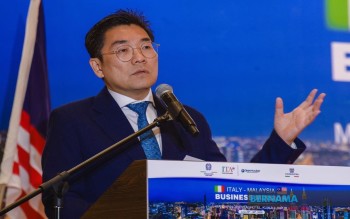
Deputy Minister Sim characterised the emerging agreement as a transformative instrument that would anchor Malaysia more securely within global value chains whilst opening access to high-value sectors including advanced services, renewable energy technologies, and digital commerce. For Malaysian businesses, the benefits extend beyond tariff reductions to encompassing regulatory alignment and mutual recognition of standards that currently create friction in bilateral transactions. The agreement's potential to facilitate investment flows in both directions addresses a structural imbalance in Malaysia's economic engagement with Europe, where European companies have historically dominated the relationship.
Bilateral trade between Malaysia and Italy, one of Europe's manufacturing powerhouses, underscores the commercial potential embedded in the broader MEUFTA framework. Malaysian trade with Italy reached approximately RM17 billion in 2025, marking a year-on-year increase of 14.2 per cent and establishing Italy as Malaysia's fifth-largest European trading partner. Exports from Malaysia to Italy, valued at RM7.6 billion, consist primarily of commodities traditionally associated with Malaysian production—palm oil and derivative products, iron and steel, electrical and electronics components, and industrial machinery. These sectors represent Malaysia's established manufacturing strengths, yet they also indicate where the agreement could unlock opportunities for upgrading and diversification.
Malaysian imports from Italy reveal the complementary nature of the two economies, comprising precision machinery, optical and scientific instruments, specialty chemicals, jewellery, and advanced electronics. This pattern demonstrates that deepening the Malaysia-Italy relationship through free trade arrangements would benefit both parties by enabling Italian manufacturers to access lower-cost production bases and distribution networks while allowing Malaysian companies to acquire sophisticated technologies and expertise. Over eighty Italian manufacturing projects valued at US$442 million have already established operations across Malaysia, concentrated in food processing, chemicals, machinery, equipment manufacturing, and aerospace—sectors reflecting Italy's global specialisation in high-precision engineering.
The comprehensive industrial ecosystem that Malaysia has cultivated over decades serves as an attraction for European investors seeking to establish or expand Asian operations. Italy's particular strength in machinery manufacturing aligns closely with Malaysia's aspirations in semiconductor assembly, test operations, and related high-technology manufacturing. Deputy Minister Sim observed that collaboration opportunities remain substantial, particularly in electrical and electronics manufacturing where both economies possess complete production ecosystems capable of serving regional demand. This convergence of capabilities suggests that a successful MEUFTA could catalyse significant investment increases beyond existing levels.
Malaysia's ambitions in semiconductor manufacturing and advanced production have gained tangible policy support through the New Investment Incentive Framework implemented in March 2025, which provides tax incentives targeting front-end semiconductor activities, integrated circuit design, and value-added manufacturing more broadly. The framework represents a deliberate effort to move beyond labour-intensive assembly operations toward higher-margin, technology-intensive production. Importantly, the government has structured incentives to support both multinational corporations and domestic Malaysian enterprises, addressing previous perceptions that incentive mechanisms favoured foreign investors. This approach recognises that Malaysia's future competitiveness depends on developing indigenous technological capabilities and entrepreneurial capacity alongside attracting international capital.
The planned fifth round of MEUFTA negotiations, scheduled for September 21-25 in Brussels, will bring negotiators to the European side of the partnership to continue work on remaining chapters. These subsequent rounds will likely address more contentious issues including agricultural protections, intellectual property frameworks, labour standards, and environmental provisions—domains where EU and Malaysian positions historically diverge. The shift in venue signals the agreement's progression toward higher-level decision-making within EU institutional structures, as complex trade agreements of this magnitude require increasing political engagement to resolve outstanding contentions.
For Malaysia specifically, successful completion of the MEUFTA would represent a strategic achievement complementing existing trade relationships with China, Japan, South Korea, and Australia. The agreement would position Malaysia as an essential node connecting Southeast Asian markets to European consumers and investors, potentially attracting companies seeking to establish regional hubs servicing both Asian and European markets simultaneously. Within Southeast Asia, Malaysia's negotiation of this agreement carries implications for regional integration efforts, particularly regarding how ASEAN members collectively approach relations with major trading blocs.
The 2027 target completion date appears achievable given the steady progress already demonstrated, though significant technical and political obstacles almost certainly remain. Chapters addressing services, investment protections, digital trade, and government procurement typically generate the most contentious negotiations in modern free trade agreements, as they touch directly on domestic policy autonomy and employment. Both Malaysia and the European Union must navigate these sensitive areas whilst maintaining the momentum established through the first four rounds. Success would generate substantial economic benefits for both parties and provide momentum for deeper Southeast Asia-European engagement across multiple domains beyond trade.

