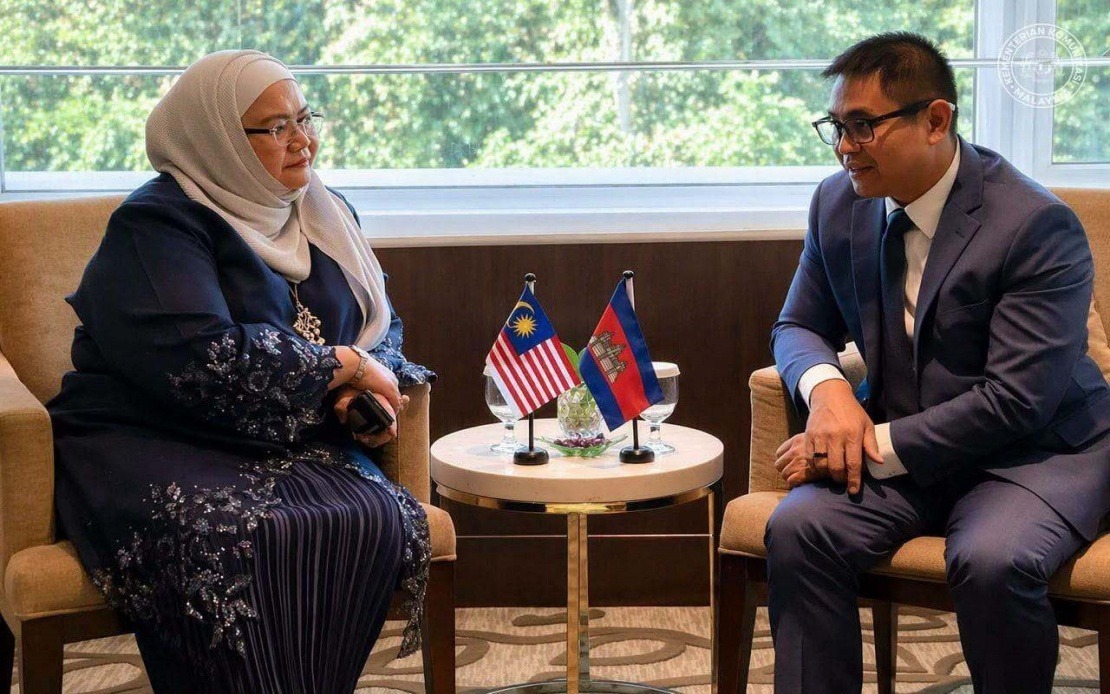
Malaysia and Cambodia are moving forward with concrete plans to deepen cooperation in the information and media sectors, following substantive talks held during ASEAN's top-level communications forum in Brunei. The two Southeast Asian neighbours convened a bilateral meeting on the sidelines of the 23rd ASEAN Senior Officials Responsible for Information (SOMRI) Meeting in Bandar Seri Begawan on Wednesday to chart implementation strategies for their freshly signed Memorandum of Understanding on Information and Media Development Cooperation.
The accord itself was formalised earlier in June at the National Journalists' Day (HAWANA) 2026 celebrations in Penang, representing a formal commitment by both governments to collaborate across a spectrum of media-related initiatives. Communications Minister Datuk Fahmi Fadzil and Cambodian Information Minister Neth Pheaktra's delegate Secretary of State Prak Thaveak Amida signed the document on behalf of their respective nations, establishing the legal framework for expanded bilateral engagement.
At the Brunei discussion, Malaysia's delegation was steered by Deputy Secretary-General for Strategic Communications and Creative Industry Datuk Bahria Mohd Tamil, while Cambodia dispatched the same official, Prak Thaveak Amida, underlining the importance both nations attached to the conversation. The presence of high-level officials at these preliminary implementation discussions signals genuine intent to move beyond ceremonial paperwork toward substantive partnership. This continuation of engagement at SOMRI, where regional information ministers and their senior representatives convene to coordinate policy approaches, places the Malaysia-Cambodia initiative within the broader architecture of ASEAN coordination.
The bilateral agenda extended well beyond administrative mechanics. Both delegations explored how their cooperation might advance across multiple dimensions: structured information exchange mechanisms, targeted media sector development programmes, digital transformation initiatives aligned with each nation's technological trajectories, and joint efforts to safeguard information integrity. These elements reflect contemporary challenges facing news organisations and government communications units throughout Southeast Asia, where digital platforms have simultaneously expanded reach whilst complicating the task of maintaining factual accuracy and countering misinformation.
For Malaysia, this partnership carries particular strategic weight. As a middle-income nation with sophisticated media infrastructure competing against regional rivals and grappling with its own information ecosystem complexities, cooperation with Cambodia—a country undertaking its own media modernisation—offers opportunities to export expertise whilst learning from divergent approaches. The focus on digital transformation acknowledges that both nations must navigate the rapid evolution of how citizens access and evaluate news, where social media influence rivals traditional broadcasting and where disinformation campaigns can mobilise populations swiftly.
The emphasis on strengthening information integrity reflects shared vulnerabilities. Across ASEAN, governments confront coordinated campaigns by bad-faith actors seeking to exploit divisions, weaponise identity issues, and undermine institutional credibility. Cambodia's recent experience with digital political contestation and Malaysia's well-documented battles with online falsehoods mean the two countries bring relevant operational experience to this partnership. By establishing joint mechanisms to identify, analyse, and counter inaccurate narratives, they could develop models potentially applicable throughout the region.
Median sector development cooperation opens additional dimensions. Malaysia's established broadcast standards, journalistic training infrastructure, and media regulatory frameworks could benefit Cambodian counterparts seeking to strengthen professional standards. Conversely, Cambodia's experience adapting media practice to resource constraints and developing coverage models for underserved communities might offer Malaysian practitioners alternative perspectives on inclusivity and reach. Such reciprocal learning occurs most naturally through formalised partnerships with dedicated implementation pathways.
The MoU's positioning within SOMRI proceedings also situates it within broader ASEAN information cooperation architecture. Regional organisations increasingly recognise that fragmented, nationally siloed approaches to media challenges prove insufficient when audiences, content and threats transcend borders. ASEAN's commitment to information cooperation, even amid divergent political systems and press freedom records, reflects acknowledgment that shared challenges demand coordinated responses. Malaysia-Cambodia initiatives contribute to building this regional capacity.
Implementation will present practical tests. Translating high-level commitments into functioning programmes requires sustained attention, allocated budgets, designated personnel, and realistic timelines. Bilateral cooperation succeeds when both sides maintain momentum through early obstacles and bureaucratic friction. The deployment of mid-level officials to oversee initial implementation phases, as suggested by the composition of both delegations, indicates preparation for this work rather than mere ceremonial conclusion.
Looking forward, this partnership's evolution may influence how other ASEAN dyads approach media cooperation. Should Malaysia and Cambodia establish credible mechanisms for information exchange, develop training programmes generating tangible professional outcomes, or demonstrate measurable improvements in digital literacy and misinformation resilience, their model could gain traction elsewhere. Conversely, implementation difficulties would equally offer valuable lessons about realistic timelines and resource requirements for similar initiatives across the region.

