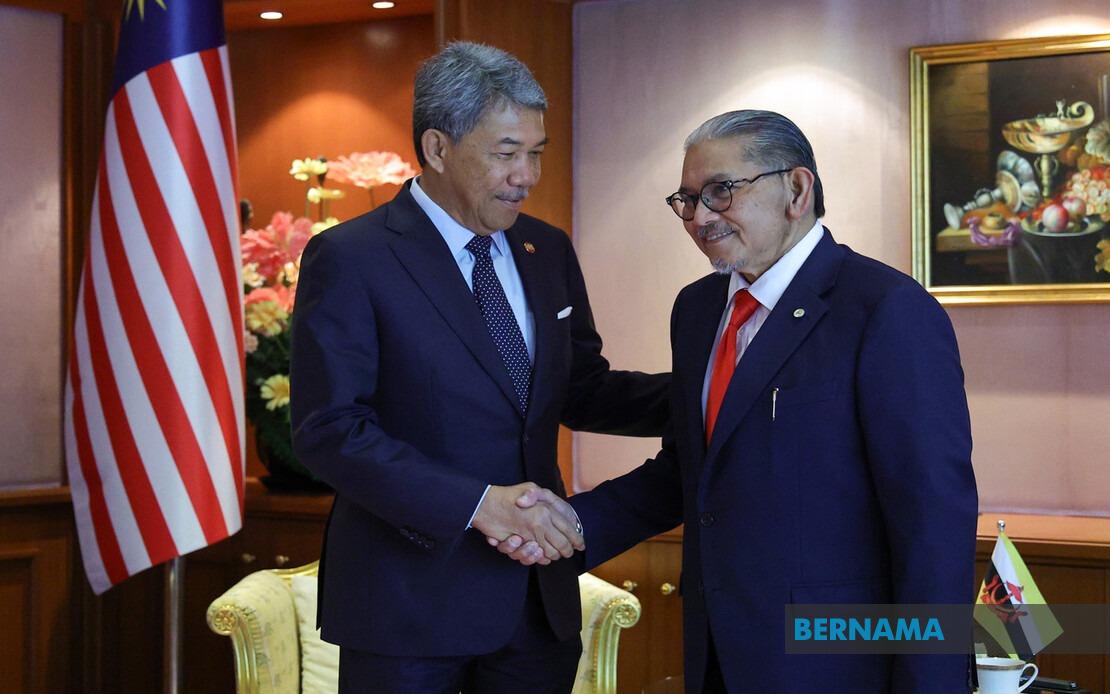
Diplomatic officials from Malaysia and Brunei gathered in Bandar Seri Begawan to mark progress on longstanding regional cooperation efforts, with Foreign Minister Datuk Seri Mohamad Hasan chairing the 27th Meeting on the Implementation of the Exchange of Letters alongside Brunei Second Minister of Foreign Affairs Datuk Seri Setia Erywan Mohd Yusof. The bilateral engagement reflects the two neighbours' commitment to resolving outstanding matters that have shaped their relationship for decades, particularly concerning the precise demarcation of their shared terrestrial and maritime frontiers.
At the heart of discussions lay the painstaking process of defining and marking the boundary between the two nations. Mohamad revealed that technical teams have achieved approximately halfway completion of the formal demarcation exercise, despite the boundary itself having been established previously through international agreement. This distinction between established boundaries and their physical demarcation on the ground is crucial for understanding the complexity involved—surveyors and officials must account for varied terrain, existing settlements, environmental features, and historical usage patterns that complicate the straightforward drawing of lines on maps.
The demarcation initiative operates under a framework established by the 2009 Terms of Reference, which provides detailed protocols for how the boundary work should proceed. Mohamad explained that ground conditions and local circumstances require careful harmonization with these reference documents, necessitating ongoing coordination between technical committees from both nations. This methodical approach, while potentially lengthy, helps ensure that the final demarcation serves the interests of both countries and minimises future disputes arising from ambiguity about territorial limits.
Beyond boundary matters, the two governments have prioritized establishing a formal Search and Rescue mechanism to better coordinate emergency responses across their shared waters and terrestrial zones. The forthcoming memorandum of understanding on SAR represents a practical acknowledgment that maritime safety and disaster response benefit substantially from bilateral cooperation, particularly given the overlapping jurisdictions and shared responsibility for protecting lives in the region. Such agreements enable rapid information sharing, coordinated operations, and clarified authority during emergencies that might otherwise be complicated by unclear protocols.
Facilitating the movement of citizens across borders emerged as another substantive agenda item, with particular attention to inhabitants of Sarawak and Sabah. Enhanced protocols for cross-border travel not only improve convenience for ordinary citizens engaged in commerce, employment, and family visits, but also signal confidence between the two governments in their respective immigration and security frameworks. For Malaysians in the East Malaysian states, smoother passage to neighbouring Brunei reduces transaction costs and encourages legitimate economic interchange.
The 27th iteration of the Exchange of Letters meetings underscores the incremental but persistent nature of bilateral diplomacy in Southeast Asia. Unlike grand summits that announce transformative agreements, these specialised technical gatherings address the granular issues that ultimately determine whether bilateral relationships function smoothly in practice. Malaysia and Brunei have maintained this institutional rhythm despite the relative low profile such meetings receive in public discourse, demonstrating that substantive partnership involves consistent attention to implementation details.
From a regional perspective, Malaysia-Brunei cooperation carries significance beyond the two nations themselves. Their ability to manage boundary questions through dialogue and technical consultation provides a constructive model for neighbouring states grappling with similar demarcation challenges. The resolution of maritime and terrestrial boundary questions reduces potential friction points and allows both governments to direct resources toward development and security cooperation rather than protracted disputes. In a region where maritime boundaries remain contested in several areas, the methodical Malaysian-Brunei approach offers lessons in patience and institutional commitment.
The emphasis on Search and Rescue coordination also reflects evolving priorities in Southeast Asian security architecture. As maritime traffic increases and weather patterns grow more unpredictable, robust SAR capabilities become essential public goods that benefit all states in the area. Bilateral SAR agreements like the one Malaysia and Brunei are formalizing create the foundation for potentially broader multilateral maritime safety initiatives across Southeast Asia.
For Malaysian policymakers, the advancement in boundary demarcation—reaching the 50 percent milestone—provides tangible evidence that persistent diplomatic effort yields results. The timeline for completing the remaining demarcation work remains unclear from available information, but the existence of structured technical committees with defined reference frameworks suggests that both governments anticipate eventual completion. This represents a concrete outcome from the kind of sustained bilateral engagement that international relations specialists often emphasise but general audiences rarely witness.
The agreements and progress reported through Foreign Minister Mohamad's statements also reinforce ASEAN's foundational principle that regional stability depends on peaceful resolution of bilateral matters. Neither Malaysia nor Brunei has allowed boundary questions to escalate into public disputes or military posturing, instead channelling disagreements through diplomatic and technical channels. This restraint, while unremarkable to observers accustomed to peaceful relations between Southeast Asian democracies, distinguishes the region from areas where similar territorial questions generate conflict.
Looking forward, the successful conclusion of the land boundary demarcation and implementation of the new SAR and movement facilitation agreements would represent a substantial advancement in Malaysia-Brunei relations. These practical accomplishments would reduce administrative friction, enhance security cooperation, and provide a foundation for deepening engagement in other areas including economic collaboration, cultural exchange, and educational partnerships. The institutional mechanisms established through the Exchange of Letters meetings, while technical in nature, ultimately serve the broader objective of fostering stable, prosperous, and mutually beneficial relations between two important Southeast Asian neighbours.

