%22%2F%3E%3C%2Fpattern%3E%3C%2Fdefs%3E%3Crect%20width%3D%22100%25%22%20height%3D%22100%25%22%20fill%3D%22url(%23ph1aafag)%22%2F%3E%3Crect%20width%3D%22100%25%22%20height%3D%22100%25%22%20fill%3D%22url(%23ph1aafap)%22%2F%3E%3Ctext%20x%3D%2250%25%22%20y%3D%2250%25%22%20text-anchor%3D%22middle%22%20dominant-baseline%3D%22central%22%20fill%3D%22rgba(255%2C255%2C255%2C0.95)%22%20font-family%3D%22Georgia%2C%20'Times%20New%20Roman'%2C%20serif%22%20font-weight%3D%22700%22%20font-size%3D%22170%22%20letter-spacing%3D%22-0.02em%22%3EMalaysia%3C%2Ftext%3E%3C%2Fsvg%3E)
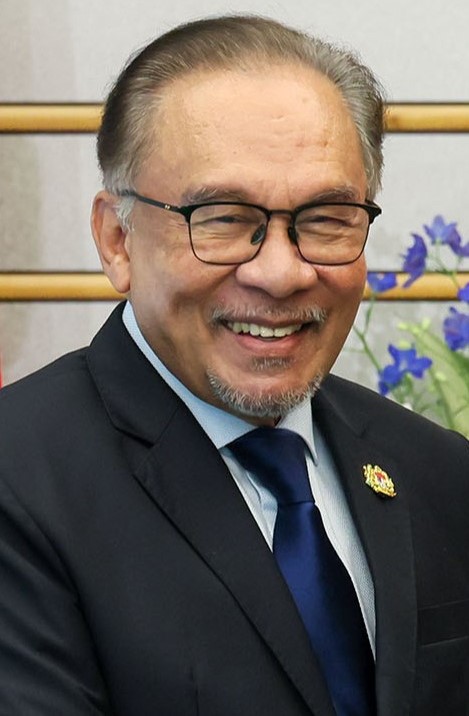
Prime Minister Anwar Ibrahim and visiting Bangladesh counterpart Tarique Rahman have committed to strengthening bilateral efforts on the Rohingya refugee issue through ASEAN's institutional framework, signalling a coordinated regional approach to one of Southeast Asia's most intractable humanitarian challenges. Speaking at a joint press conference in Putrajaya on June 22, Anwar outlined plans for Malaysia and Bangladesh to work alongside their respective foreign ministers and leverage ASEAN mechanisms to engage with Myanmar authorities on resolving the crisis affecting refugee populations sheltered in both countries.
The shared commitment reflects the gravity of the Rohingya situation for Malaysia and Bangladesh, which together host hundreds of thousands of displaced Rohingya despite limited international burden-sharing. Bangladesh, which hosts the overwhelming majority of Rohingya refugees in sprawling camps around Cox's Bazar, has borne the primary humanitarian and economic burden for nearly a decade. Tarique, speaking during the same forum, underscored his nation's deep concern for the displaced Rohingya population while expressing gratitude for Malaysia's continued solidarity in supporting efforts toward safe, dignified and sustainable repatriation to Myanmar.
The diplomatic alignment between Kuala Lumpur and Dhaka carries strategic significance for ASEAN's collective standing on the issue. For years, the bloc has struggled to present a unified voice on Myanmar's internal affairs, balancing its cherished principle of non-interference against humanitarian imperatives. By framing the Rohingya challenge as a regional concern requiring coordinated engagement through ASEAN's good offices rather than external pressure, both countries signal an attempt to work within the bloc's diplomatic constraints while maintaining pressure on Myanmar's authorities to facilitate returns.
Tarique's visit marks his first bilateral official journey abroad since assuming office in February 2026, underscoring the priority both nations place on their partnership. The timing suggests Bangladesh views strengthened ties with Malaysia as crucial to advancing its regional agenda, particularly on issues affecting its national interests. Malaysia's prominent role as a middle-income nation with growing regional clout makes it an important partner for Bangladesh's diplomatic initiatives across Southeast Asia.
Beyond the Rohingya question, Anwar and Tarique explored opportunities to deepen bilateral relations across multiple sectors during their formal talks. The discussions encompassed trade and investment expansion, human resource development, semiconductor manufacturing, energy cooperation, agricultural collaboration and educational exchanges. These broader conversations reflect recognition that lasting diplomatic partnerships require diversified engagement across economic and social dimensions, not merely crisis management.
Trade ties between the two nations demonstrate considerable growth momentum and untapped potential. In 2025, bilateral commerce reached RM12.18 billion, with Malaysian exports dominating at RM10.08 billion, predominantly petroleum products reflecting Bangladesh's energy demands. Malaysian imports from Bangladesh totalled RM2.10 billion, primarily consisting of textiles, apparel and footwear sectors where Bangladesh maintains competitive advantages. Bangladesh ranked as Malaysia's 28th largest trading partner globally and second largest within South Asia after India, indicating room for expansion in both directions.
The two countries formalized their growing cooperation through several mechanisms during the visit. An agreement on cultural cooperation was signed, alongside exchanges of notes addressing counter-terrorism research collaboration and investment promotion frameworks. These instruments, while appearing procedural, embed cooperation across security, economic and people-to-people dimensions. The counter-terrorism research initiative reflects shared regional security concerns, while investment facilitation measures signal mutual interest in attracting cross-border capital flows in priority sectors.
For Malaysia, deepening Bangladesh engagement serves strategic purposes beyond immediate bilateral gains. As Southeast Asia's largest Muslim-majority nation and an influential voice within ASEAN and the broader Islamic world, Malaysia's prominence in advocating for Rohingya solutions carries weight that smaller nations cannot match. The country's position as a major regional economy and diplomatic player enables it to champion humanitarian causes while maintaining relationships with all ASEAN members, including Myanmar.
The ASEAN-centric approach to resolving the Rohingya question reflects pragmatic diplomacy constrained by regional norms. Direct military intervention or overwhelming external pressure faces resistance from ASEAN members protective of the bloc's foundational principle of non-interference. By channelling efforts through ASEAN's institutional mechanisms, Malaysia and Bangladesh position themselves as working within accepted frameworks while still advancing substantive progress. This approach requires patience and incremental gains rather than breakthrough resolutions, but respects the political realities within which ASEAN operates.
For Malaysian readers, the bilateral deepening with Bangladesh carries implications across multiple domains. Enhanced trade opportunities could benefit Malaysian exporters seeking diversified markets and importers of Bangladeshi textiles and manufacturing goods. Educational and professional exchanges offer opportunities for Malaysian students and professionals to engage with a South Asian nation of 170 million people. Simultaneously, Malaysia's continued advocacy on the Rohingya issue aligns with domestic constituencies deeply concerned about fellow Muslims' welfare, reinforcing the nation's moral standing on humanitarian questions.
The visit also illustrates how Malaysia navigates complex regional dynamics by maintaining robust partnerships with non-ASEAN South Asian nations while preserving its central position within Southeast Asia. Bangladesh, despite geographic proximity to Southeast Asia, remains primarily South Asian in its regional orientation. Malaysia's ability to serve as a bridge between these regions enhances its diplomatic utility and soft power influence. As Bangladesh increasingly looks toward Southeast Asia for economic opportunities and diplomatic partnerships, Malaysia positions itself as a natural gateway and preferred partner.
Looking forward, the sustainability of Malaysia-Bangladesh cooperation depends on translating commitments into concrete outcomes across agreed areas. The Rohingya resolution particularly requires demonstrable progress in engaging Myanmar authorities and facilitating conditions for voluntary, safe and dignified returns. While neither country expects rapid breakthroughs given Myanmar's complex political environment and internal security challenges, the collaborative framework established during this visit provides institutional channels for pursuing longer-term solutions. The test will be whether ASEAN's engagement mechanisms prove sufficiently robust to advance humanitarian objectives while respecting the diplomatic constraints within which regional institutions operate.