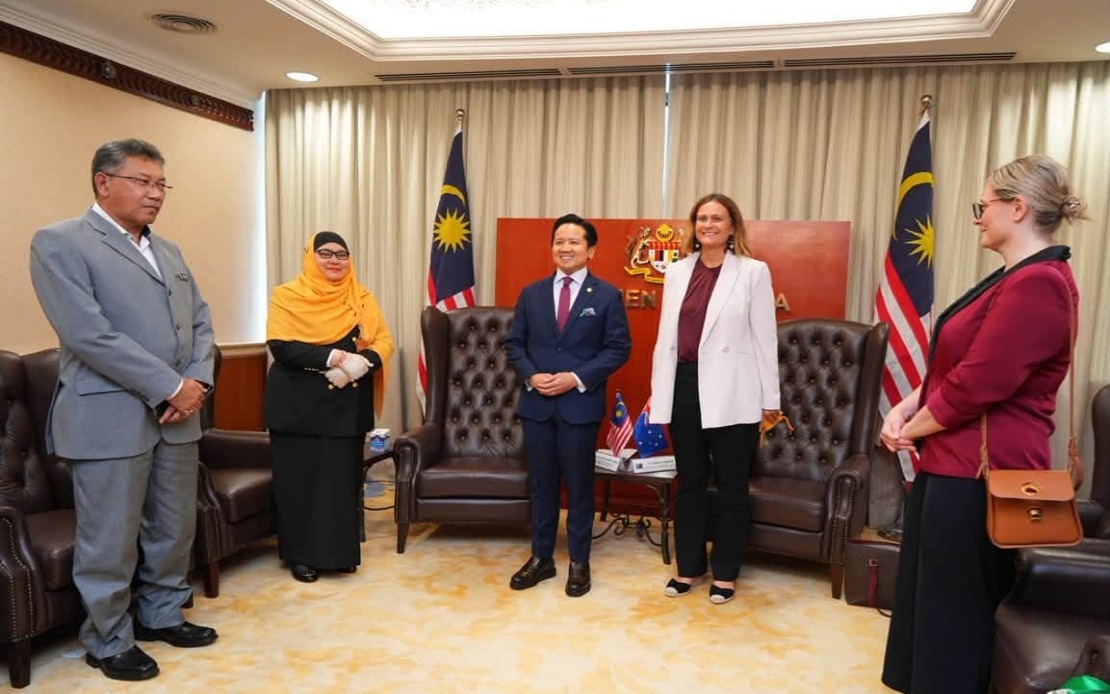
Malaysia and Australia have initiated discussions aimed at forging a stronger partnership in the rare earth elements and critical minerals industries, signalling a strategic shift toward bolstering regional supply chains and reducing dependency on external sources. The engagement came during a high-level meeting between Malaysia's Natural Resources and Environmental Sustainability Minister Datuk Seri Arthur Joseph Kurup and Australian High Commissioner to Malaysia Danielle Heinecke at the Parliament building yesterday, reflecting the growing importance both nations place on securing access to materials vital for the global energy transition.
The dialogue represents a significant development in the Malaysia-Australia Comprehensive Strategic Partnership, established in 2021, which has progressively expanded beyond traditional areas of bilateral cooperation. By focusing on rare earth elements—a category of minerals essential for renewable energy technologies, defence systems, and advanced electronics—both countries are positioning themselves at the forefront of a global reshuffling of mineral supply networks. This timing is particularly strategic, as nations worldwide increasingly seek alternatives to traditional suppliers amid geopolitical tensions and supply chain vulnerabilities highlighted in recent years.
Australia brings considerable technical expertise and established leadership in the critical minerals sector, attributes that Malaysia recognises as valuable for developing its own domestic capabilities. Malaysia's comparative advantage lies in its historical experience with rare earth processing and its geographic proximity to major markets across Southeast Asia and the Indo-Pacific region. The complementary strengths suggest potential for a partnership that extends beyond simple resource extraction and encompasses the entire value chain from processing to manufacturing.
Central to the discussions was Malaysia's commitment to developing a comprehensive domestic rare earth elements value chain spanning midstream to downstream operations, a cornerstone of the National Mineral Policy 3. Rather than exporting raw materials in their unprocessed state, Malaysia aims to capture greater economic value by establishing local manufacturing facilities. Neodymium magnets—which require refined rare earth elements as inputs—represent a particularly promising focus area, given their critical applications in electric vehicle motors, wind turbines, and industrial equipment. By building manufacturing capacity locally, Malaysia can position itself not merely as a resource supplier but as a producer of higher-value finished goods.
The handling of processing residues emerged as another key priority. Rare earth element extraction generates significant waste streams, particularly neutralisation underflow residue, or NUF, which poses environmental challenges if not managed properly. The exchange of best practices with Australia suggests both nations are prioritising sustainable processing methodologies that minimise ecological impact while maximising resource recovery. This approach aligns with growing international standards and consumer expectations regarding responsible sourcing of critical minerals, particularly among developed-market manufacturers increasingly concerned with supply chain ethics.
Beyond critical minerals, the bilateral agenda encompasses environmental and climate considerations, reflecting a broader recognition that resource development and sustainability must proceed in tandem. Discussions included hazardous waste management frameworks, marine ecosystem conservation protocols, and climate financing mechanisms. Malaysia's upcoming commitment to the United Nations Climate Change Conference—expected to be COP31—also featured in talks, suggesting both countries view their mineral sector cooperation as integral to broader climate mitigation objectives.
The strategic partnership between Malaysia and Australia signals the emergence of a more regionally integrated approach to securing critical mineral supplies. Rather than competing for the same resources, the two nations are exploring complementary roles within a coordinated framework. Australia's established mining and processing infrastructure combined with Malaysia's downstream manufacturing aspirations could create a vertically integrated supply chain that reduces transportation costs, enhances supply security, and strengthens economic ties across the Indo-Pacific.
For Malaysia, this cooperation carries particular significance given the country's aspirations to transition toward higher-value manufacturing and reduce reliance on commodities exports. The critical minerals sector offers pathways to advanced manufacturing, technology transfer, and skills development. Success in building a competitive neodymium magnet industry could catalyse broader industrial upgrades and establish Malaysia as a hub for high-tech mineral processing within Southeast Asia.
The emphasis on competitive green economic growth reflects recognition that critical minerals represent a convergence of environmental, economic, and geopolitical concerns. Nations securing stable supplies and developing advanced processing and manufacturing capabilities will gain competitive advantages in the growing clean energy economy. For both Malaysia and Australia, deeper cooperation in this sector provides insurance against future supply shocks while positioning them as reliable partners for international manufacturers seeking diversified and ethical sourcing alternatives.
Implementing this partnership will require navigating complex technical, regulatory, and investment challenges. Both countries will need to align environmental standards, labour practices, and investment frameworks. The private sector will play a crucial role in translating government-level commitments into concrete projects and manufacturing facilities. Establishing the institutional mechanisms to facilitate technology transfer, joint research initiatives, and coordinated policy development will be essential for transforming these discussions into tangible outcomes.
The broader geopolitical context cannot be overlooked. As major powers compete for influence and resources across the Indo-Pacific, strategic partnerships in critical minerals have become central to national security strategies. Malaysia-Australia cooperation in this domain strengthens regional resilience and provides both nations greater autonomy in their technology and energy strategies, reducing vulnerability to supply disruptions or coercive economic measures by competing powers.
Looking forward, the success of this initiative will be measured not just by diplomatic statements but by concrete investments in processing facilities, magnet manufacturing plants, and supporting infrastructure. Government support mechanisms, research and development initiatives, and private sector incentives will be necessary to overcome the capital intensity and technical barriers that have historically limited Malaysia's progression into downstream mineral processing and manufacturing.

