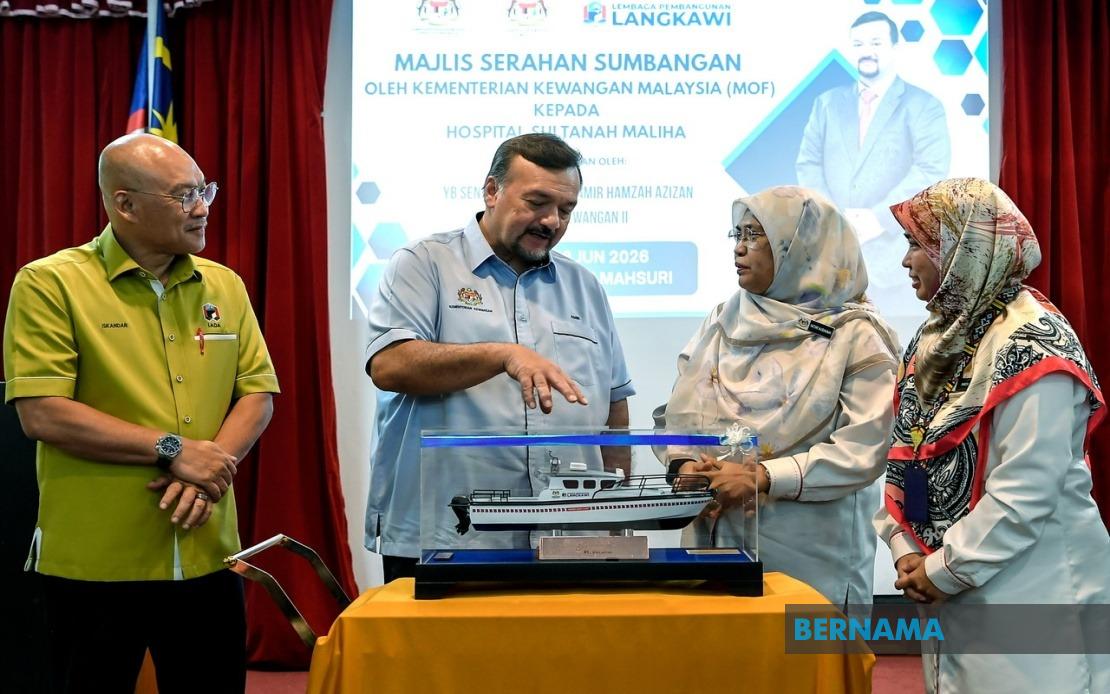
The Malaysian Ministry of Finance has committed RM5.5 million towards establishing a dedicated sea ambulance service for Langkawi, a strategic investment designed to revolutionise emergency medical transportation between the island and mainland healthcare facilities. Finance Minister II Datuk Seri Amir Hamzah Azizan announced the funding package, which encompasses both vessel procurement and initial operational expenses, with service commencement anticipated in the opening months of 2024. The initiative represents a significant policy shift in addressing long-standing logistical constraints that have hampered timely medical interventions for the island's population and its substantial tourist base.
Current emergency medical operations rely heavily on commercial passenger ferry services, a reliance that introduces substantial operational vulnerabilities. When ferry schedules become irregular or frequencies diminish—a recurring seasonal challenge—critically ill or injured patients face dangerous delays in reaching advanced treatment facilities on the peninsula. This dependency has created a healthcare access gap that disproportionately affects those requiring urgent tertiary care unavailable locally. The new sea ambulance programme directly targets this vulnerability by establishing a dedicated maritime health transport infrastructure independent of civilian passenger operations.
Hospital Sultanah Maliha will serve as the operational base and managing authority for the sea ambulance service, positioning the facility as the strategic hub for inter-island medical logistics. The vessel has been specified to carry two stretchers simultaneously alongside 12 medical and support personnel, enabling not merely transportation but comprehensive in-transit clinical care. This capacity ensures that patients receive continuous monitoring and intervention during the journey to mainland hospitals, addressing both the physical demands of emergency transfer and the psychological wellbeing of patients during transport. The specialised maritime medical environment will maintain regulated conditions, privacy protections, and professional protocols typically unavailable on standard ferry operations.
Amir Hamzah emphasised that the service encompasses both clinical and humanitarian dimensions. The designated medical vessel environment contrasts sharply with improvised emergency arrangements previously employed, where patients occasionally travelled on regular ferries without dedicated medical infrastructure. Enhanced safety provisions, passenger privacy, and professional medical supervision represent qualitative improvements beyond basic transportation. For tourists requiring emergency evacuation, the service offers assurance that medical crises will be met with world-class response standards, potentially influencing travel decisions and insurance considerations for the region.
Beyond the sea ambulance initiative, the Finance Ministry simultaneously announced a RM700,000 healthcare equipment donation to Hospital Sultanah Maliha, reflecting a comprehensive capacity-building approach. This complementary investment includes modern diagnostic devices, information technology platforms, mobility furniture, transport vehicles, and security infrastructure. The equipment portfolio targets operational efficiency and service modernisation across multiple hospital functions. Rather than isolated technology insertions, these resources support systemic upgrade of the facility's diagnostic, administrative, and logistical capabilities.
Digitalisation represents a particularly consequential component of the equipment allocation. The Electronic Medical Record system implementation will integrate Hospital Sultanah Maliha into a peninsula-wide digital health ecosystem. Bedside computing stations enable clinical staff to enter patient information directly during ward rounds, eliminating transcription delays and documentation errors. More critically, this digital integration permits instant access to comprehensive medical histories, previous investigations, and treatment records across participating institutions. Patients transferred to mainland specialist centres arrive with their complete medical documentation immediately accessible to receiving physicians, accelerating diagnostic confirmation and treatment planning.
The EMR system deployment reflects Malaysia's broader healthcare modernisation strategy, positioning digital integration as foundational to service improvement. For a smaller regional hospital like Hospital Sultanah Maliha, connection to centralised digital systems equalises information access and reduces the diagnostic delays previously endemic to peripheral facilities. Visiting specialists or consultants can review complete patient records remotely, enabling preliminary assessment before patient arrival. Emergency departments at receiving hospitals can prepare appropriate resources when notification of incoming patients includes verified clinical information.
Langkawi's status as both a permanent residential community and a major tourism destination amplifies the strategic importance of these healthcare investments. The island attracts millions of international and domestic visitors annually, creating seasonal surges in demand for emergency services. Foreign tourists requiring urgent medical intervention may lack familiarity with local systems, making streamlined, professionally staffed emergency transport particularly valuable. Improved maritime medical capacity reduces operational stress on Hospital Sultanah Maliha and enhances the island's healthcare safety profile as a destination attribute.
The sea ambulance programme also carries implications for healthcare equity within Peninsular Malaysia's island communities. Langkawi's relatively developed infrastructure and tourism significance have historically received more policy attention than smaller or less economically prominent islands. This initiative may establish a template for addressing similar transportation barriers in other insular regions where geographic isolation constrains emergency response capabilities. The RM5.5 million investment signals government commitment to resolving maritime healthcare logistics comprehensively rather than treating such challenges as inherent limitations of island living.
Operational considerations for service sustainability warrant attention as the programme transitions from planning to implementation. The sea ambulance will require trained medical crews, maintenance infrastructure, fuel allocation, and coordination protocols with Hospital Sultanah Maliha's clinical departments. Integration with mainland receiving facilities demands establishment of communication standards, transfer protocols, and medical responsibility frameworks. Training maritime paramedics accustomed to working in moving vessels and potentially challenging sea conditions differs from conventional hospital-based emergency medicine. These operational requirements will determine whether the service achieves projected responsiveness in practice.
The funding allocation reflects recognition that healthcare quality increasingly depends on infrastructural enablement beyond clinical expertise. Even excellent physicians working with limited transportation capacity cannot deliver timely care to geographically isolated populations. By addressing the maritime logistics barrier, Malaysia removes a constraint that previously channelled healthcare inequality through geography rather than clinical factors. Residents and visitors to Langkawi will increasingly receive emergency treatment decisions based on medical necessity rather than transportation availability.
Looking forward, the sea ambulance service launch in early 2024 provides an opportunity to establish operational benchmarks for maritime emergency medicine within Southeast Asia's context. Langkawi's experience may inform health policy across the region's island communities, which face comparable geographic isolation challenges. Success metrics should encompass response times, patient outcomes, staff retention, and integration effectiveness with receiving hospitals. Such data will illuminate whether dedicated maritime ambulance services represent scalable approaches to healthcare access in comparable geographic contexts throughout the region and beyond.

