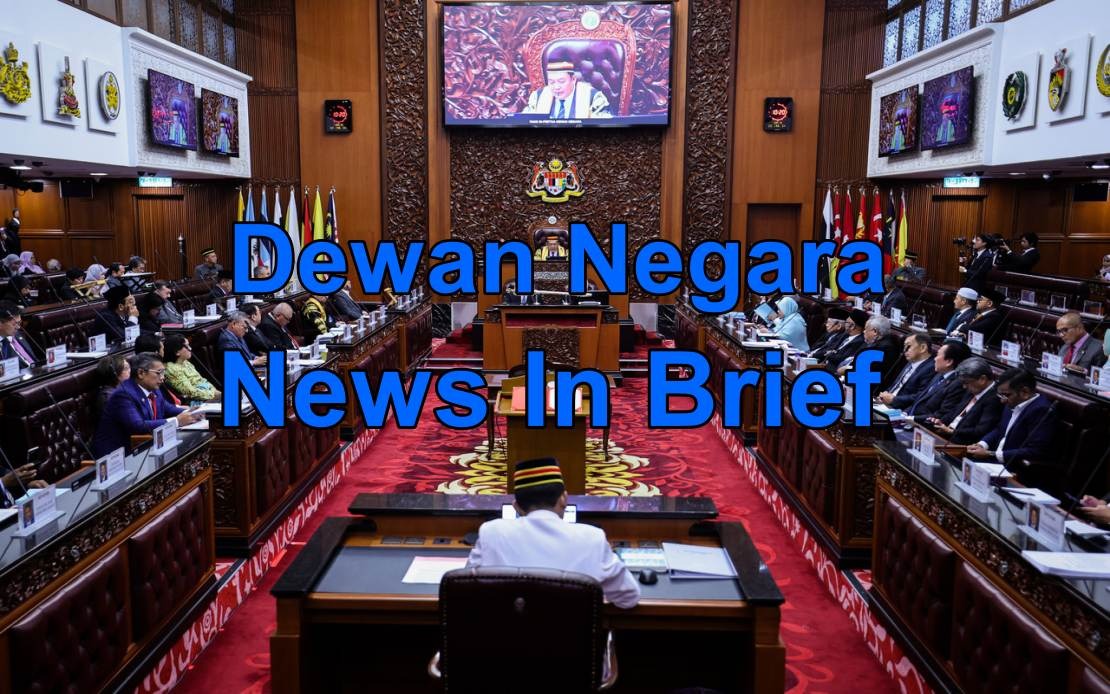
The Malaysian government is doubling down on climate resilience initiatives as El Niño conditions threaten water security across the region. Between February and June, authorities executed 35 cloud seeding operations at strategically selected locations nationwide, part of a comprehensive strategy to mitigate prolonged dry spells and protect critical water infrastructure. Deputy Natural Resources and Environmental Sustainability Minister Syed Ibrahim Syed Noh disclosed the scale of this intervention during parliamentary Question Time, framing the effort as essential to sustaining reservoir levels and managing the broader impacts of extended heat and moisture scarcity.
The cloud seeding programme reflects an increasingly sophisticated approach to weather management in Southeast Asia, where water stress poses mounting challenges to agriculture, urban supply chains and power generation. Conducted in partnership with the National Disaster Management Agency and the Royal Malaysian Air Force, these operations depend heavily on favourable atmospheric conditions and represent a growing consensus that passive adaptation is insufficient. The initiative addresses multiple environmental hazards simultaneously—from direct water scarcity to haze episodes that compound public health risks—suggesting policymakers recognise interconnected climate vulnerabilities across economic sectors.
Senator Michael Mujah Lihan's parliamentary question highlighted legitimate concerns about El Niño's persistence through early 2027, particularly its implications for food security and health outcomes beyond simple water availability. The government's cloud seeding response demonstrates a willingness to invest in technological solutions, yet experts note such measures work optimally within broader watershed management and conservation frameworks. Malaysia's approach may serve as a regional reference point as neighbouring countries face similar climatic pressures, though cost-effectiveness and long-term scalability remain subjects requiring rigorous assessment.
In a parallel development with immediate implications for household economics, Malaysia's Progressive Wage Policy has exceeded initial targets and delivered tangible income gains for lower-wage workers. The scheme has lifted entry-level worker median earnings from RM1,900 to RM2,200 monthly—a 15.79 per cent increase—while benefiting 51,363 employees across 4,025 participating employers. Economy Minister Akmal Nasrullah Mohd Nasir disclosed these figures, underscoring progress toward addressing wage stagnation that has historically constrained consumer spending and household financial stability in the broader economy.
The wage initiative carries significance beyond headline wage figures, as it signals government commitment to improving bargaining power for workers in lower-income tiers who typically lack professional credentials or unionisation. Non-entry-level participants also benefited, with median wages climbing 10.86 per cent to RM2,438 monthly, representing a monthly gain of RM238.86. These improvements may stimulate domestic consumption, a recognised vulnerability in Malaysia's economic structure, though sustained impact depends on continuation beyond the initially allocated RM300 million budget earmarked for 2025-2027. The government has commissioned a comprehensive impact assessment to evaluate expansion feasibility, suggesting policymakers recognise the policy's potential as a structural intervention rather than temporary relief.
The Progressive Wage Policy's success rate—attracting over 4,000 employers and exceeding participation targets—indicates private sector receptiveness when policy design aligns commercial and social objectives. However, sustainability questions persist: whether firms genuinely embed wage progression into cost structures or view participation as temporary compliance, and whether the policy's benefits extend to informal and gig economy workers who constitute a substantial proportion of Malaysia's labour force. The comprehensive assessment now underway should address these dynamics to inform potential nationwide scaling.
Cultural heritage recognition has emerged as another parliamentary priority, with the Tourism, Arts and Culture Ministry signalling openness to designating Malaysian Tamil music as National Heritage. Deputy Minister Chiew Choon Man outlined the procedural pathway under the National Heritage Act 2005, emphasising that artistic, cultural and historical significance must be established through formal research, documentation and evaluation processes. Senator K. Saraswathy's question acknowledged the broader imperative: preserving and archiving local musical traditions that embody Malaysia's multicultural identity before such knowledge systems face erosion from generational discontinuity or cultural displacement.
The Tamil music heritage initiative reflects growing recognition that intangible cultural assets require institutional protection equivalent to architectural or archaeological treasures. Malaysia's diverse communities represent accumulated artistic traditions spanning centuries, yet many remain inadequately documented or formally recognised within national frameworks. Establishing Tamil music as National Heritage would create foundations for systematic archiving, educational integration and cultural promotion while setting precedent for recognising other community traditions. The procedural requirements—research, documentation, and historical evaluation—ensure designation maintains scholarly rigour while opening dialogue about which cultural expressions merit formal protection.
Simultaneously, the government addressed affordability concerns within the Sumbangan Asas Rahmah assistance programme, which distributes targeted subsidies to lower-income households. Finance Minister II Datuk Seri Amir Hamzah Azizan acknowledged parliamentary scrutiny regarding the one per cent merchant discount rate imposed on participating retailers, pledging periodic review to prevent undue burden on small traders. This concession reflects sensitivity to small enterprise vulnerabilities, as discount rates, however modest in percentage terms, compound across high-transaction-volume retailers operating on narrow margins.
The SARA programme's architecture—channelling merchant charges through Yayasan MyKasih to cover operational costs including system maintenance, merchant training and transaction monitoring—represents an attempt to distribute programme costs across stakeholder groups rather than concentrating burden on either recipients or government budgets. However, the merchant discount mechanism effectively transfers costs to business operators who then navigate pressure to absorb charges or pass them to consumers. The government's commitment to periodic review suggests recognition that flat-rate merchant fees may disproportionately impact small retailers lacking the transaction volume to absorb such charges efficiently.
These parliamentary disclosures collectively illustrate Malaysia's multi-dimensional approach to contemporary challenges: climate adaptation through technological intervention, employment equity through wage policy, cultural preservation through heritage recognition, and social welfare through subsidy programmes. The interconnections merit attention—climate security underpins food production and employment stability, cultural preservation reinforces social cohesion, and wage growth sustains consumer demand essential to economic resilience. However, realising synergies requires integrated policymaking and robust impact assessment, areas where Malaysian governance could strengthen its institutional capacity.
The three-year budget allocations and review commitments embedded within these initiatives suggest policymakers envision them as medium-term experiments subject to evidence-based recalibration rather than permanent fixtures. This learning orientation offers potential for adaptive governance, though it requires transparent performance metrics and willingness to pivot when evidence suggests alternative approaches. For Malaysian stakeholders and regional observers monitoring domestic policy innovation, these parliamentary disclosures provide glimpses into how one Southeast Asian economy attempts balancing climate resilience, wage justice, cultural preservation and targeted assistance within constrained fiscal conditions.

