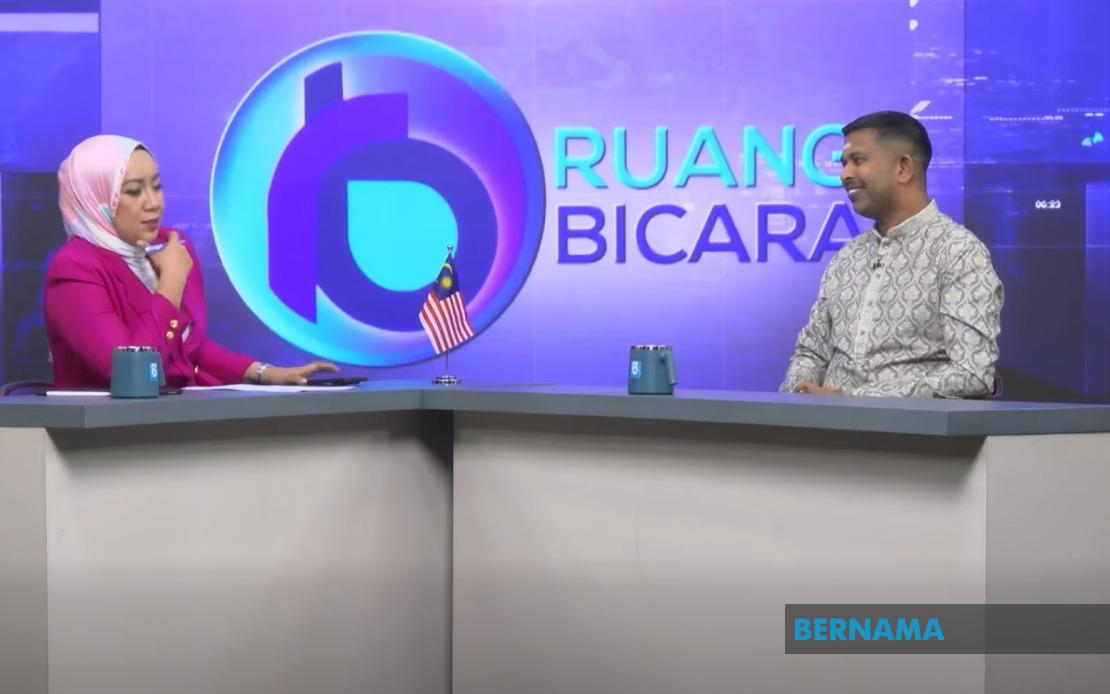
Safeguarding and advancing the Malay language's position as Malaysia's national language cannot be achieved through isolated institutional efforts but requires a coordinated, whole-of-society approach encompassing government bodies, universities, businesses, and citizens alike, according to Prof Dr Ramalinggam Rajamanickam, a constitutional law specialist at Multimedia University and member of the Dewan Bahasa dan Pustaka Board of Governors.
The professor's assessment comes at a time when Malaysia faces complex linguistic challenges arising from digital communication, globalisation, and technological advancement. While Article 152 of the Federal Constitution explicitly designates Malay as the national language, and the National Language Act 1963/67 mandates its use in official contexts, the practical imperative to maintain linguistic standards has become increasingly urgent. Ramalinggam emphasised that constitutional protections alone are insufficient without sustained commitment from all segments of society to preserve and elevate the language's standing.
The fundamental challenge confronting the Malay language today is not its prevalence—which remains broadly satisfactory across Malaysian society—but rather the deteriorating quality of usage in an era marked by linguistic contamination and structural degradation. The phenomenon of "bahasa rojak," characterised by the blending of Malay with English and other languages, alongside widespread use of abbreviations and shorthand on digital platforms, has become endemic, particularly among younger demographics. While such informal code-switching poses limited concern in casual social settings, Ramalinggam stressed that official communications, governmental documentation, educational materials, and formal discourse demand rigorous adherence to proper grammatical standards and syntactic precision.
The constitutional and legislative framework governing Malay language usage is more comprehensive than many citizens realise. Beyond the constitutional guarantee under Article 152, the National Language Act 1963/67 provides statutory teeth to the requirement that Malay be employed in all official government functions and administrative proceedings. However, Ramalinggam noted that these legal instruments require active monitoring and enforcement by relevant ministry bodies to ensure consistent implementation across all government agencies and public institutions. Without such oversight, the statutory framework risks becoming ornamental rather than operationally binding.
Higher education institutions bear particular responsibility in this regard. Universities must strike a delicate balance between promoting Malay as a legitimate language of scholarly discourse and scientific knowledge while simultaneously maintaining English proficiency as an international academic necessity. Ramalinggam contended that this dual commitment is not inherently contradictory; institutions should actively develop Malay terminology in scientific and technical fields, ensuring that university-level instruction in Malay does not compromise either linguistic rigour or academic competitiveness on the global stage.
The intersection of language policy with emerging technologies presents perhaps the most complex frontier. Rather than passively waiting for artificial intelligence systems and digital platforms to naturally accommodate Malay language processing, Malaysia should proactively invest in empowering the language to command technological innovation. This requires coordinated effort involving government agencies, academic researchers, computational linguists, and technology sector specialists working collaboratively to develop robust AI capabilities, natural language processing systems, and digital infrastructure that treats Malay with the same technical sophistication currently extended to English and Mandarin.
Ramalinggam highlighted Malay's historical significance as a regional lingua franca and its contemporary relevance in countries including China, Japan, and India where academic institutions maintain programmes dedicated to its study. This international recognition underscores the language's potential to function as a gateway for Malaysia's technological and cultural engagement with the region. Strengthening Malay's capacity to serve as a language of knowledge in science, technology, economics, and artificial intelligence would position Malaysia as a thought leader within Southeast Asia while simultaneously reinforcing national identity and cohesion.
Crucially, the expert clarified that advocating for elevated status and enhanced usage of Malay does not require marginalisation of other languages or abandonment of multilingual capability. Rather, the goal is to ensure that the national language maintains its primacy as a symbol of national identity and unity while citizens remain competent in English, Mandarin, Arabic, or other languages valuable for individual advancement and international engagement. This pluralistic approach recognises that linguistic diversity strengthens rather than weakens national identity when anchored to a clear commitment to the national language.
The responsibility for language elevation extends beyond government ministries and educational administrators. Private sector enterprises, media organisations, publishing houses, digital content creators, and civil society groups all play essential roles in normalising high-quality Malay usage and demonstrating its viability across economic and cultural domains. When businesses conduct operations primarily in English or when commercial media content privileges English over Malay, the cumulative effect diminishes the language's perceived relevance and practical utility, particularly for younger Malaysians calibrating their linguistic investments.
Implementing such a comprehensive strategy requires establishing clear benchmarks, accountability mechanisms, and resource allocation across institutional boundaries. Ramalinggam's framework suggests that a dedicated task force convening representatives from the Education Ministry, higher education institutions, Dewan Bahasa dan Pustaka, technology companies, and media organisations could coordinate initiatives ranging from curriculum development to terminology standardisation to digital infrastructure investment. Such coordination would transform language elevation from a diffuse cultural aspiration into a measurable policy objective with defined timelines and performance indicators.
The timing of this renewed emphasis on Malay language advancement reflects broader regional dynamics whereby Southeast Asian nations increasingly assert their linguistic and cultural sovereignty in response to English language dominance and standardised globalisation. Malaysia's commitment to strengthening Malay usage positions the country as a leader in this movement while simultaneously addressing legitimate concerns about national cohesion and identity amid rapid technological and social change. By treating language preservation and advancement not as nostalgic cultural preservation but as a forward-looking strategic investment, Malaysia can ensure that Malay remains intellectually vibrant and economically relevant for future generations.

