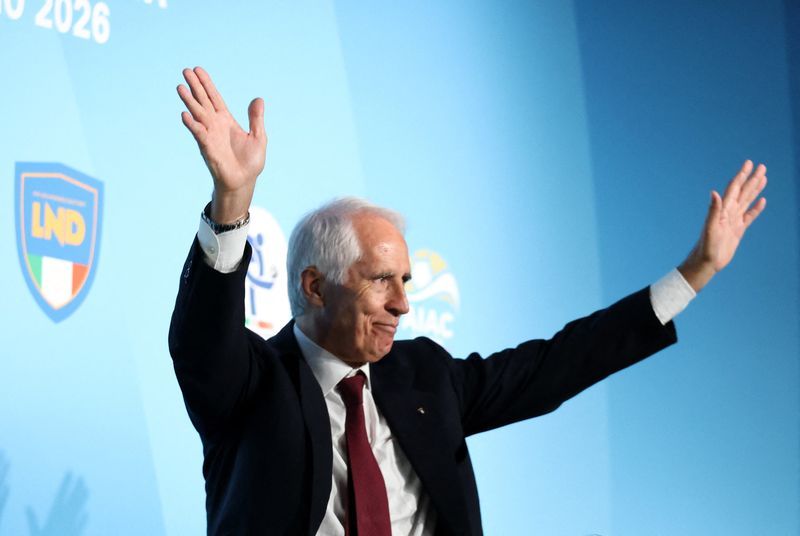
Giovanni Malago has assumed leadership of the Italian Football Federation following his election as president on Monday, stepping into one of European football's most demanding administrative roles. The 67-year-old businessman inherits a federation reeling from catastrophic results on the international stage, most recently Italy's playoff defeat to Bosnia & Herzegovina that prevented qualification for the 2026 World Cup—marking an unprecedented third consecutive tournament absence for the four-time world champions. With Italian clubs simultaneously eliminated from European competitions, the national game faces what observers characterise as its worst crisis in four decades, creating immense pressure on Malago to chart a recovery path.
Malago's appointment came decisively at an assembly in Rome, where he secured 68.58 per cent of the vote in defeating Giancarlo Abete for the presidency. His election represents a clean break from the previous administration of Gabriele Gravina, whose departure had become inevitable following the World Cup qualification collapse and the subsequent wave of public and political condemnation that swept through Italy. Gravina, who had presided over the federation since 2018, acknowledged during the assembly proceedings that he should have resigned earlier, offering a candid assessment of his tenure's conclusion. The change in leadership signals an institutional desire to move beyond the failed strategies and approaches that characterised recent years.
Before assuming his federation role, Malago accumulated substantial experience managing large institutional projects, most notably as head of the organising committee for the Milano Cortina Winter Olympics held in February. That event earned widespread recognition for its efficient execution and smooth operations, suggesting Malago possesses the administrative capabilities required to oversee complex national sporting infrastructure. He previously served as head of the Italian National Olympic Committee, demonstrating familiarity with the broader Olympic and sporting governance landscape. Additionally, Malago's background as a former futsal player provides him with direct experience of competitive football, distinguishing him from purely external appointees and lending credibility within the sporting community.
The scale of Malago's immediate challenges cannot be understated. His first critical task involves recruiting a new men's national team coach following Gennaro Gattuso's resignation in the aftermath of the Bosnia & Herzegovina defeat. This appointment will fundamentally shape Italy's tactical direction and selection strategy as the team prepares for the Euro 2032 tournament. Beyond the senior coaching position, Malago must oversee comprehensive restructuring of Italy's youth development systems, an area that has faced sustained criticism from prominent figures including retired striker Roberto Baggio, who warned that the current framework for nurturing young talent had become obsolete and failed to meet contemporary standards.
Euro 2032 presents both challenge and opportunity for Malago's federation. Italy will co-host the championship alongside Turkey, creating the expectation that the hosts should be competitive at the tournament proper rather than serve as opening-round participants. This hosting responsibility demands accelerated preparation timelines and elevated performance targets, concentrating the federation's strategic focus across the next eight years. The tournament represents a critical opportunity for Malago to demonstrate tangible progress in rebuilding Italian football's competitive standing and restoring national confidence in the team's trajectory.
The depth of Italian football's institutional crisis extends beyond the national team's on-field failures. The simultaneous elimination of Italian clubs from European competitions—the Champions League, Europa League, and other continental competitions—reflected systemic weaknesses pervading the entire ecosystem rather than isolated problems affecting single departments. This broader collapse suggested that difficulties with talent development, coaching standards, tactical innovation, and competitive conditioning affected multiple levels simultaneously, requiring comprehensive rather than piecemeal solutions. Malago's vision of transforming the federation from an administrative body into an inspirational institution implies recognition that cultural and philosophical renewal must accompany structural reforms.
Malago's public statements since his election reveal an acute awareness of the expectations surrounding his appointment while demonstrating determination to move beyond nostalgia concerning Italy's historical achievements. He articulated the position that the federation's distinguished past should serve as motivation for future success rather than becoming a source of regret or paralysis. This framing acknowledges that excessive focus on four World Cup titles and multiple European championships could inhibit the bold decision-making and experimental approaches necessary for contemporary football. His emphasis on turning roots into incentive rather than burden suggests a philosophical shift toward pragmatic modernisation rather than defensive preservation of traditional methods.
The federation's lowest point in four decades reflects a dramatic decline from Italy's position as a global football superpower. The nation that reached the Euro 2020 final just four years ago has now experienced sustained failure across multiple competitive cycles, suggesting systemic failures rather than temporary setbacks. This context underscores the transformation required under Malago's leadership—not merely tactical adjustments or personnel changes, but fundamental reassessment of how Italian football develops talent, identifies emerging prospects, and structures competitive environments across youth, club, and national team levels.
For Malaysian and Southeast Asian observers, Italy's crisis offers instructive lessons regarding the consequences of failing to adapt youth development systems to evolving global standards. Several nations in the region have invested substantially in football infrastructure without achieving proportional results, suggesting that administrative structures and investment alone prove insufficient without corresponding modernisation of coaching pedagogy, talent identification methodologies, and competitive frameworks. Malago's emphasis on addressing youth development deficiencies directly reflects recognition that sustainable success requires grassroots renewal rather than exclusively senior-level interventions.
Malago's call for institutional cooperation—expressed through his statement that collaborative effort could accomplish what individual effort could not—acknowledges that federation renewal cannot succeed through top-down mandate alone. Rebuilding Italian football's standing depends on securing buy-in from club administrators, coaches at all levels, youth development specialists, and the broader footballing community. This collaborative imperative becomes particularly significant given the politicisation of recent Italian football failures, with public figures and politicians criticising the federation's direction and demanding accountability.
The federation must also address substantial financial considerations inherent in ambitious reconstruction programmes. Enhanced youth development infrastructure, improved coaching education systems, modern training facilities, and competitive preparation programmes all require significant investment. Whether Italian football's governing structures and the broader sporting economy can generate and allocate resources adequate to Malago's ambitions remains uncertain, particularly given the financial pressures affecting Italian clubs and the federation itself. Resource constraints could materially limit the scope and pace of institutional transformation despite clear strategic intent.
Malago's inaugural months will prove decisive in establishing whether his appointment represents genuine institutional renewal or merely symbolic leadership change. Early decisions regarding coaching appointments, youth development priorities, and internal governance reforms will signal whether the federation genuinely intends comprehensive change or merely cosmetic adjustments. Italian football's revival—and the restoration of the Azzurri to their historical standing as regular World Cup competitors and continental champions—depends fundamentally on the execution of strategic vision across sustained timeframes rather than rhetorical commitment to transformation.