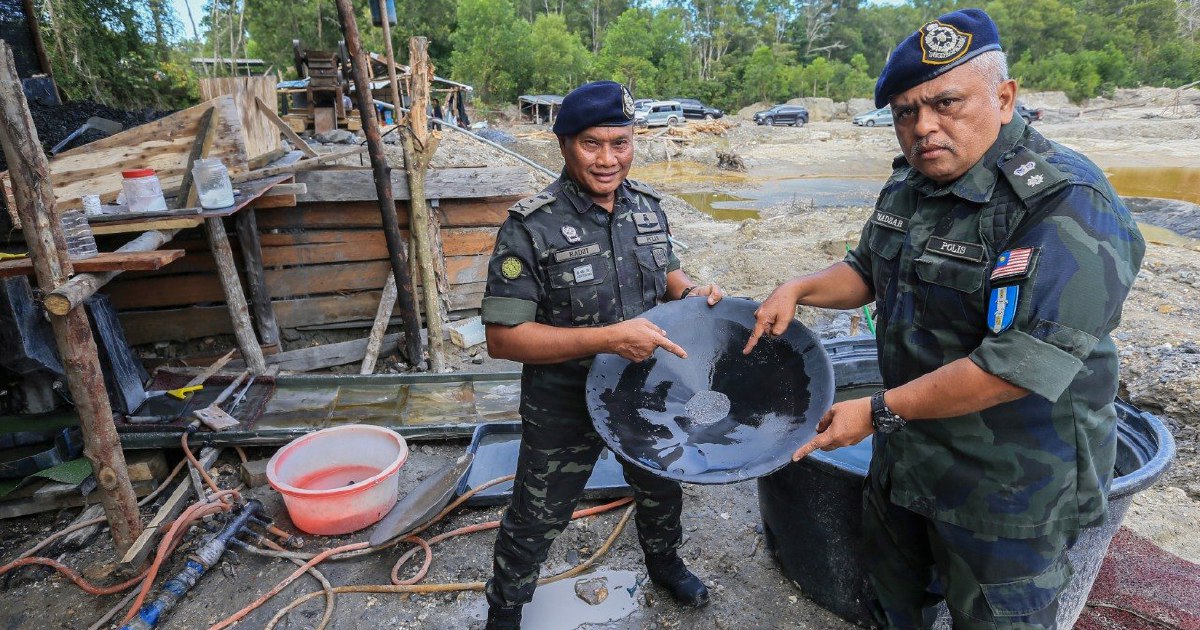
Police have successfully dismantled a substantial illegal gold mining operation in the Marang district of Terengganu, capturing 15 individuals suspected of leading and participating in the unlicensed extraction enterprise. The bust at Bukit Kor represents a significant victory against organised resource trafficking in Malaysia's east coast region, where such operations have become increasingly sophisticated and profitable.
According to law enforcement officials, the syndicate—known locally as the 'Mak Siti' operation—was generating extraordinary daily revenues estimated at RM13,000. This level of income indicates a well-organised criminal network with established distribution channels and considerable market demand for illegally extracted precious metals. The scale of operations reveals how underground mining has evolved from small-scale artisanal activity into a coordinated commercial enterprise capable of extracting and moving significant quantities of gold.
The raid at Bukit Kor was conducted with substantial police resources, reflecting the authorities' commitment to combating illegal mining activities that damage both the environment and the legitimate economy. The arrest of 15 individuals suggests a hierarchical structure within the syndicate, likely ranging from field operatives to logistical coordinators and financial handlers. Such networks typically employ workers on various tiers, with profits concentrated at leadership levels whilst ground-level participants face greater legal exposure.
Illegal gold mining represents a growing challenge across Southeast Asia, with Malaysia experiencing recurring problems in forested and rural areas. These operations inflict severe environmental damage, contaminating soil and water sources with mercury and cyanide used in extraction processes. The ecological consequences can persist for years, affecting agricultural productivity and water safety in surrounding communities. Beyond environmental harm, illegal mining undermines government mineral royalties and creates unsafe working conditions for labourers who often lack proper safety equipment and legal protections.
The Terengganu operation's profitability highlights the economic incentives driving individuals into illegal mining sectors. With gold prices remaining elevated globally, the margins available from underground extraction and informal sales networks create powerful motivations for criminal entrepreneurs. These financial returns often outweigh perceived legal risks, particularly in regions where enforcement capacity may be stretched across vast territories and numerous violations.
The syndicate's operational capacity at Bukit Kor presumably involved equipment for extraction, processing, and storage. Police seizures in such raids typically recover mining machinery, containers of extracted material, and documentation revealing supply chains and customer networks. Evidence from the site will be crucial in establishing the full scope of the enterprise and potentially identifying downstream buyers and financial intermediaries involved in converting illegally mined gold into currency through formal or informal channels.
From a regulatory perspective, this case underscores the importance of coordinated enforcement between police, environmental agencies, and mining authorities. Malaysia's formal mining sector operates under strict licensing requirements, environmental impact assessments, and revenue-sharing arrangements. Illegal operations completely circumvent these mechanisms, depriving the government of royalties that fund infrastructure and social services. The estimated daily revenue of RM13,000 translates to annual losses exceeding RM4.7 million if extrapolated, representing significant foregone public revenue.
The detention of 15 suspects initiates criminal investigation procedures that will determine individual culpability and sentencing recommendations. Prosecution under Malaysia's mining and environmental laws can result in substantial penalties including imprisonment and fines, though outcomes depend on specific charges filed and evidence quality. Authorities will likely examine whether suspects were engaged in core criminal activity or served as workers with limited knowledge of the operation's full scope, a distinction that typically influences judicial outcomes.
The geographical location of this syndicate in Terengganu carries specific significance for regional mining enforcement. The state encompasses areas with historical small-scale mining activity and challenging terrain that complicates surveillance and regulation. Community awareness campaigns alongside increased police patrols in known mining regions can deter future operations, though permanently eliminating illegal extraction requires sustained commitment and adequate resource allocation to enforcement agencies.
Beyond immediate law enforcement success, this bust provides intelligence for understanding broader illegal mining networks operating across Malaysia. Authorities can analyse the syndicate's operational methods, market connections, and financial flows to identify vulnerabilities in other underground mining enterprises. Information gathered may reveal links to other criminal activities or international smuggling networks, as precious metals trafficking frequently connects to broader transnational crime.
The case also highlights opportunities for economic redirection. Former mining workers facing legal consequences might be recruited into legitimate economic activities through skills training and employment facilitation programs. Rather than simply punishing participants, strategic interventions addressing the economic drivers of illegal mining can prevent recidivism and provide sustainable livelihoods for affected communities.
Moving forward, the success at Bukit Kor should prompt reflection on enforcement strategies across Malaysian mining regions. Technology deployment including aerial surveillance and real-time monitoring systems can improve detection rates. Enhanced inter-agency coordination between police, the Ministry of Energy and Natural Resources, and environmental authorities strengthens investigative capability. Community engagement initiatives that encourage reporting of illegal mining activity provide additional intelligence channels for authorities.

