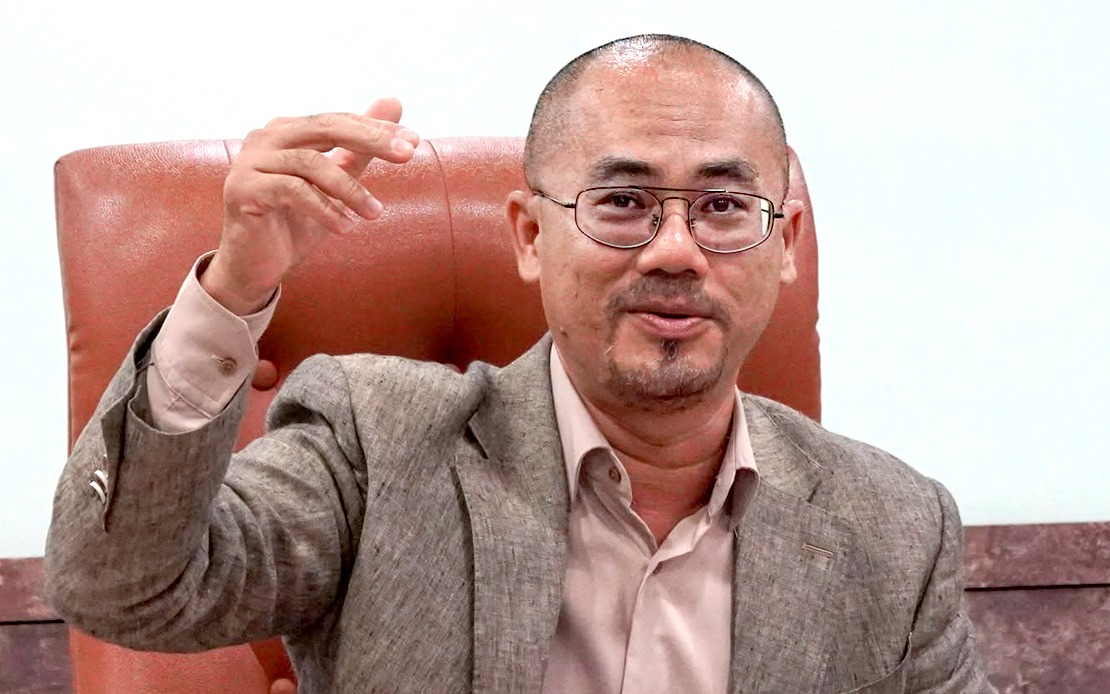
The Perak Islamic Religious and Malay Customs Council (MAIPk) has moved to clarify its position after social media allegations that it unilaterally ordered traders to cease operations at a commercial site on Jalan Panglima Bukit Gantang Wahab in Ipoh. The council issued a statement denying any eviction directive, instead characterising its notice as an administrative communication explaining its institutional responsibilities regarding deteriorating infrastructure at the location.
According to Syamsul Hazeman Md Salleh, the council's chief executive officer, the primary trigger for the notice was the discovery of a leaking main water pipeline serving the premises and accumulated water bills reaching approximately RM100,000. During an engagement session held on July 14, MAIPk engaged directly with affected traders to explain the situation and the necessity for temporarily disconnecting water supply to enable essential repair operations. This dialogue appears designed to demonstrate that MAIPk had consulted stakeholders rather than imposed unilateral restrictions.
The distinction MAIPk draws is significant for Malaysian commercial relations. The council emphasises that its notice contained no instruction for traders to vacate, framing it instead as a clarification of the institution's stance to protect itself from what it considers unfounded liability claims. This framing suggests the council sought to establish clear boundaries regarding responsibility for the inherited infrastructure problem rather than pursue an aggressive real estate consolidation strategy. The statement reflects a tension common in Malaysian property disputes: distinguishing between temporary service disruptions and permanent displacement.
The timeline reveals a crucial complication. MAIPk acquired ownership of the land only in 2024, discovering subsequent to that transfer the long-standing pipeline deterioration and substantial arrears. This inheritance of existing liabilities positions the council as an innocent party to systemic problems predating its stewardship. The accumulated debt was not generated by trader consumption patterns, as users paid according to individual metering, but rather stemmed from systemic losses in the main distribution infrastructure itself. This distinction carries legal weight in determining liability apportionment.
The RM100,000 arrears presents a genuine institutional dilemma for MAIPk. Syamsul Hazeman articulated a constraint that resonates across Malaysia's Islamic organisations: restricted fund usage. Zakat and waqf contributions exist under specific religious and legal frameworks, and deploying such monies for infrastructure debt settlement falls outside permitted applications. This limitation forces the council toward negotiation with state authorities rather than unilateral debt resolution, reflecting the practical constraints governing Malaysia's religious institutions when they operate commercial properties.
Current discussions with the Perak Water Board represent an attempted technical and administrative solution to what the council frames as a systemic utility problem rather than a trader accountability issue. The characterisation of the matter as "beyond MAIPk's capacity" implicitly acknowledges that resolving outstanding utility debts requires intervention from the water authority and potentially state government assistance. This positioning seeks to shift responsibility toward entities with greater financial capacity and regulatory authority over water infrastructure governance.
The council's concurrent attempt to secure state government involvement introduces a political dimension to what initially appears as a simple property management dispute. For Perak's administration, inherited utility debts on religious institution property create fiscal complications affecting state-managed water boards. Any settlement involving government subvention would represent a de facto subsidy to the religious institution, raising questions about public resource allocation and the financial sustainability of faith-based property holdings across Malaysia.
Management of the site's future—both regarding trader relationships and proposed development—remains contingent on resolving current infrastructure challenges. MAIPk indicates that once outstanding amounts are settled, it would undertake repairs and negotiate fresh rental contracts with traders. This suggests a pragmatic approach toward maintaining existing commercial relationships rather than pursuing tenant replacement or consolidation. The interim notice therefore represents a temporary delineation rather than a terminal displacement.
The proposed Perak Islamic Religious Department Complex introduces a more complex future scenario. Should the state government advance this development project, traders would require relocation regardless of current water supply status. Syamsul Hazeman's caveat that implementation timing remains uncertain and state-dependent suggests this project currently occupies an indeterminate position in government planning, with no immediate timeline for activation. This vagueness creates ongoing uncertainty for traders regarding their tenure longevity at the site.
The broader context involves Malaysian Islamic organisations navigating increased property holdings whilst lacking institutional experience with large-scale infrastructure management. The emergence of utility debt disputes suggests gaps between acquisition expectations and operational realities. For traders and small businesses across Malaysia utilising religious institution-owned commercial spaces, this case illustrates how ownership transitions can unexpectedly activate dormant property liabilities affecting livelihoods.
The social media allegations that prompted MAIPk's clarification point toward growing scrutiny of religious institution property decisions in Malaysia. Digital platforms amplify trader concerns and organisational responses in real-time, shortening traditional communication cycles and escalating local disputes into broader public discourse. For Perak's traders and religious authorities, managing stakeholder expectations through both formal engagement and public statements has become essential to maintaining institutional credibility.
Resolving the situation requires coordination across multiple stakeholders: water utilities evaluating debt forgiveness or restructuring, state government determining subsidy possibilities, MAIPk navigating fund allocation restrictions, and traders seeking operational stability. The extended timeline acknowledged by MAIPk—suggesting resolution will "take some time"—indicates this remains a developing situation with multiple friction points requiring negotiation. Success would require all parties viewing accommodation as preferable to confrontation, a proposition that social media pressure may complicate.

