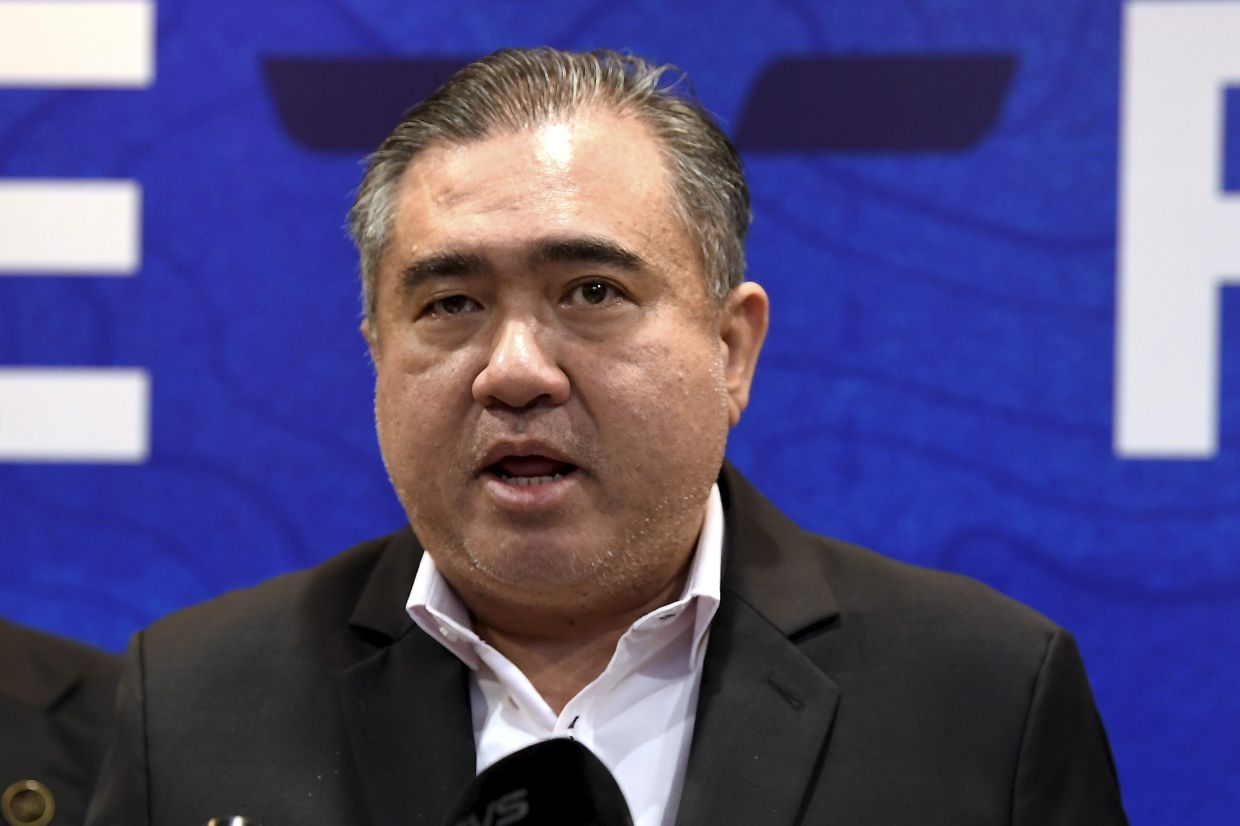
Malaysia Airports Holdings Berhad (MAHB) and Japanese property developer Mitsui Fudosan have broken ground on a RM80 million air cargo logistics complex at Subang Airport, marking a significant step in the country's broader effort to establish itself as a competitive regional aviation hub. The project, unveiled by Transport Minister Anthony Loke Siew Fook at a groundbreaking ceremony, represents a strategic alignment between Malaysia's airport operator and one of Asia's most experienced logistics developers, leveraging the Japanese firm's proven track record in establishing world-class facilities.
The partnership reflects a deliberate approach by MAHB to unlock value from its substantial property holdings across Malaysia's airport network by collaborating with international specialists who bring both technical expertise and operational excellence. Loke explained that Mitsui Fudosan's extensive background—particularly its success developing and managing logistics complexes at Tokyo's Haneda Airport, one of the world's busiest aviation hubs—positions the joint venture to minimise financial and operational risks for Malaysia Airports while accelerating development timelines. This model of leveraging foreign expertise to rapidly scale domestic infrastructure has become increasingly common in Southeast Asia's aviation sector, where competition for regional freight traffic remains intense.
The facility will be constructed by MFMA Industrial Sdn Bhd, a newly established joint venture between Mitsui Fudosan (Asia) Malaysia and Malaysia Airports (Subang), on a 1.78-hectare parcel within Subang Aerotech Park. When completed, the complex will comprise approximately 254,420 square feet of gross floor area, designed with flexible space configurations to accommodate various tenants ranging from maintenance, repair and overhaul (MRO) operators to logistics providers and aerospace suppliers. This multipurpose approach reflects evolving market demands in Malaysia's aviation sector, where operators increasingly seek integrated facilities combining storage, processing, and technical capabilities under single management structures.
The Subang development arrives at a critical juncture for Malaysia's air cargo strategy. Transport Minister Loke outlined a comprehensive government vision to transform Malaysia into a regional freight powerhouse by strategically developing capacity across multiple airports rather than concentrating investment at a single location. Penang currently dominates Malaysia's air cargo landscape, accounting for approximately 75 per cent of national throughput—a dominance attributable to the state's status as Southeast Asia's premier semiconductor manufacturing region. However, this concentration creates both dependency and vulnerability, motivating the government to cultivate alternative cargo hubs that can distribute traffic across the country's airport network.
Kuala Lumpur International Airport (KLIA) is being repositioned as ASEAN's primary regional air cargo hub through collaborative initiatives with Chinese counterparts, part of broader efforts to strengthen Malaysia-China logistics corridors. Meanwhile, the government is pursuing a parallel development at Kota Kinabalu International Airport (KKIA) in Sabah, where Terminal 2 will be repurposed to establish a dedicated air cargo facility. This multi-hub strategy acknowledges that no single airport can efficiently serve Malaysia's entire geographic expanse and diverse economic zones—Peninsular Malaysia's manufacturing base, Sabah's energy and agricultural exports, and Sarawak's resource sectors all require tailored logistics solutions.
The Subang complex occupies a particularly valuable niche within this framework. Located within the Klang Valley—Malaysia's industrial heartland and home to dense concentrations of aerospace manufacturers, aviation suppliers, and logistics operators—the facility provides unparalleled connectivity to established aerospace and aviation clusters. The location's proximity to existing business ecosystems reduces operational friction for tenants and creates network effects that enhance the complex's overall utility. For companies requiring integrated facilities combining warehousing, maintenance capabilities, and logistics coordination, Subang's position offers advantages that purely airport-centric locations may struggle to replicate.
Construction will extend through the third quarter of 2027, with commercial operations anticipated to commence in the fourth quarter of that same year. This timeline aligns with broader regional infrastructure development cycles and provides sufficient lead time for prospective tenants to plan relocations and operational transfers. The project's phasing allows for market testing and demand validation as initial spaces open, potentially enabling configuration adjustments based on early tenant requirements and market feedback.
The groundbreaking ceremony drew senior government and diplomatic officials, reflecting the development's significance as a bilateral undertaking. Embassy of Japan Minister Daisuke Nihei's attendance underscored Japan's strategic interest in expanding logistics infrastructure across Southeast Asia—a priority driven by Japanese manufacturers' deepening supply chain integration throughout the region. MAHB Managing Director Datuk Mohd Izani Ghani and Mitsui Fudosan (Asia) Malaysia Managing Director Masayoshi Saito jointly representing the venture partners, signalled unified commitment to the project's successful execution.
For Malaysia, the Subang development signals broader confidence in the country's logistics sector and its capacity to attract major international investors despite regional competition. Neighbouring countries including Singapore, Thailand, and Indonesia have aggressively pursued air cargo development, making Malaysia's ability to secure investments from established Japanese developers particularly significant. The project demonstrates that despite challenging global economic conditions and shifting supply chain patterns, Malaysia retains strategic appeal for infrastructure investors seeking ASEAN positioning.
The facility's success will likely influence MAHB's approach to future land monetisation across its portfolio, potentially unlocking several billion ringgit in asset value through similar partnership models. Should the Subang complex achieve operational targets and attract major tenants, comparable projects at other MAHB-controlled airports become increasingly viable, creating a template for transforming Malaysia's airport real estate holdings into productive logistics infrastructure.

