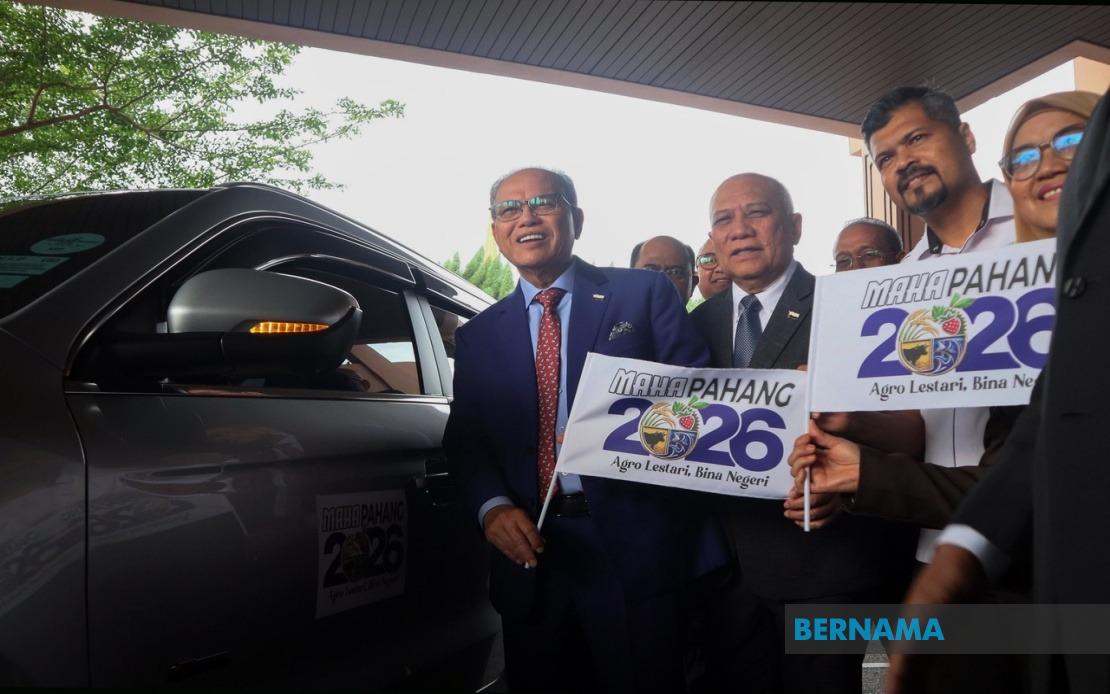
Pahang's premier agricultural festival, MAHA 2026, is poised to become a significant showcase for the state's farming sector, with organisers targeting over 100,000 visitors and RM1.3 million in commercial sales during its four-day run from July 30 to August 2 at Dataran Raub. Menteri Besar Datuk Seri Wan Rosdy Wan Ismail outlined these ambitious goals whilst overseeing the official launch of promotional activities in Bera, signalling the state government's commitment to elevating the event's profile and economic impact.
The event will feature participation from 100 entrepreneurs showcasing diverse agricultural products and services, reflecting the breadth of Pahang's farming community and its downstream industries. This scale of business engagement represents a substantial opportunity for smallholder farmers, agribusinesses, and agricultural suppliers to reach a concentrated audience of buyers, retailers, and consumers within a single venue. For the agricultural sector in Pahang, which remains a significant economic pillar despite rapid urbanisation, such platforms are vital for direct market access and brand building.
To maximise visitor attraction beyond the traditional agricultural enthusiast base, the Pahang state government has implemented an incentive structure that appeals to a broader demographic. A lucky draw mechanism offers visitors the chance to win premium prizes, with a Wagyu cow and a Perodua Bezza serving as headline attractions. These offerings signal an attempt to position MAHA Pahang 2026 not merely as an agricultural trade event but as a family-friendly festival with genuine entertainment value, potentially broadening its appeal across income and age groups.
Wan Rosdy's public endorsement of the initiative reflects state-level political backing for agricultural promotion, a sector often overlooked in discussions of regional economic development. By featuring prominently at the convoy flagoff—involving 20 vehicles from various government departments and agencies—the Menteri Besar underscored the government's role in facilitating rural economic activity. This administrative support infrastructure is essential for events of this scale, as government agencies typically handle licensing, security, traffic management, and promotional co-ordination.
The timing of MAHA Pahang 2026 places it within the broader agricultural calendar and the monsoon season considerations that affect farming activities across the region. By scheduling the event for late July and early August, organisers have selected a window when harvesting activities and mid-year agricultural assessments typically occur, potentially aligning the event's relevance with farmers' current operational concerns and purchasing decisions for the latter half of the year.
Agriculture and Food Security Minister Datuk Seri Mohamad Sabu's involvement as a key stakeholder reflects federal support for Pahang's agricultural development initiatives. This alignment between state and federal agricultural priorities suggests that MAHA Pahang 2026 may serve as a pilot or model for similar regional expos, potentially influencing how agricultural promotion is structured across other Malaysian states. The minister's portfolio encompasses food security considerations, implying that the event may also address sustainability, productivity enhancement, and supply chain efficiency for domestic food production.
The educational component of MAHA Pahang 2026 deserves particular attention, as Wan Rosdy specifically highlighted the opportunity for visitors to gain insights into the agriculture sector, including exposure to new crop varieties. This knowledge-sharing dimension transforms the event beyond a purely transactional marketplace into a learning platform where farmers can access agronomic information, research findings, and cultivation innovations. In the Malaysian context, where agricultural extension services and farmer training programmes remain unevenly distributed, such venues fill important capacity-building gaps.
For Malaysian consumers, particularly those based in Pahang and surrounding states, the event represents an accessible venue to purchase directly from producers, potentially reducing intermediary costs and ensuring fresher, traceable agricultural products. This direct-to-consumer model aligns with growing consumer preferences for supply chain transparency and local sourcing, trends increasingly evident in urban Malaysian markets and among younger, more conscious consumers.
The RM1.3 million sales target implies an average transaction value of approximately RM13 per visitor—a modest figure that reflects realistic consumer behaviour at agricultural fairs where purchases range from fresh produce and seeds to value-added products and agricultural equipment. Achieving this target depends on effective crowd management, vendor diversity, and weather conditions, variables that event planners typically account for through contingency planning and alternative indoor facilities.
From a regional perspective, MAHA Pahang 2026 exemplifies how Malaysian states are leveraging experiential events to sustain interest in primary industries at a time when youth migration to urban centres and declining farm profitability threaten sectoral continuity. By combining commerce, entertainment, education, and community engagement, the event reflects modern festival design principles that recognise people increasingly expect multifaceted value from public gatherings.
The road to successful execution involves substantial coordination between the state government, federal agencies, local councils, vendors, and security and logistics providers. The early flagoff of the promotional convoy suggests organisers have embarked on the preparatory timeline sufficiently early to allow for comprehensive marketing, vendor recruitment, and infrastructure development. Industry observers will be monitoring whether MAHA Pahang 2026 achieves its targets and whether the event establishes itself as an annual fixture capable of generating sustained economic and promotional benefits for Pahang's agricultural community.

