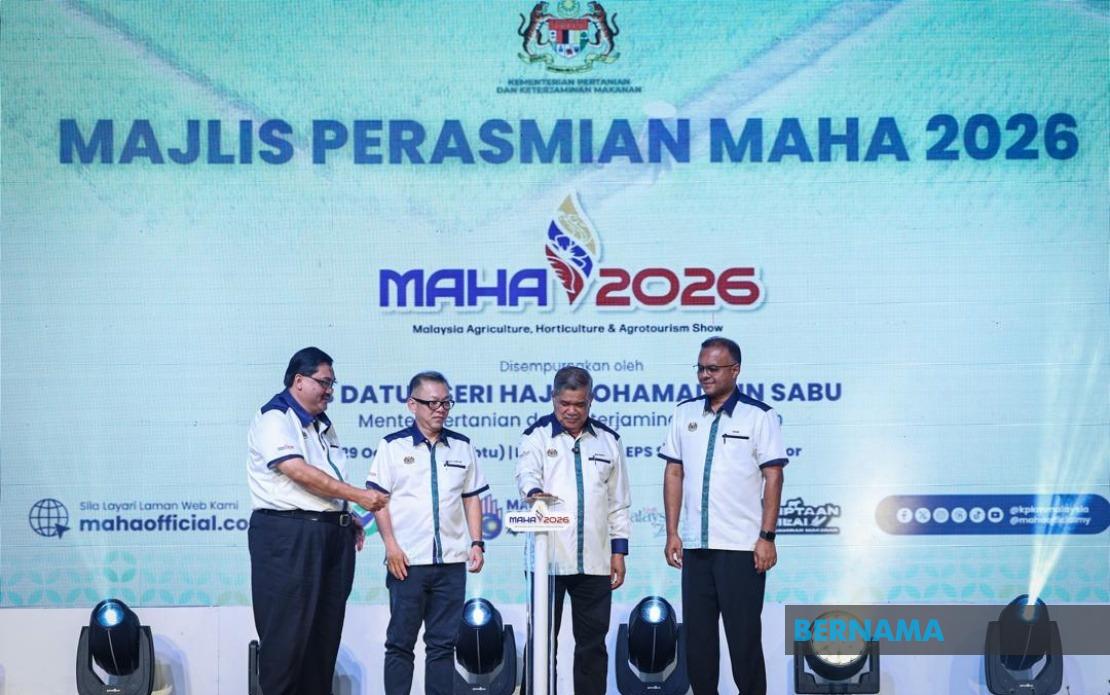
The Malaysia Agriculture, Horticulture and Agrotourism Show (MAHA) 2026, which opened this week at the Malaysia Agro Exposition Park Serdang (MAEPS), represents a pivotal moment for reshaping the nation's approach to farming and food production. Agriculture and Food Security Minister Datuk Seri Mohamad Sabu used the occasion to articulate a vision centred on environmental responsibility and long-term agricultural resilience, signalling that Malaysia is ready to move beyond conventional production methods towards practices that reconcile output with ecological stewardship.
Sustainability has emerged as the defining theme of this year's exhibition, reflecting both domestic imperatives and global pressures facing food-producing nations. The minister underscored that adopting green agricultural practices is essential for Malaysia to fulfil its commitments on carbon reduction and climate adaptation while simultaneously creating competitive advantages for local farmers and exporters. By positioning Malaysian produce as sustainably sourced, producers can command premium prices in markets that increasingly demand environmental credentials alongside quality and safety certifications. This positioning matters considerably in a region where environmental awareness among consumers is growing, and where international buyers scrutinise supply chains with greater rigour than ever before.
The sustainability framework unveiled at MAHA 2026 encompasses multiple dimensions of agricultural and food system operations. These range from energy efficiency in farming operations and aquaculture facilities, to comprehensive waste reduction strategies and food preservation techniques that minimise post-harvest losses. The exhibition also highlights efforts to phase out single-use plastics from agricultural packaging and distribution chains, a particularly relevant concern for a country grappling with plastic pollution. Regenerative agriculture practices, which restore soil health and biodiversity rather than merely maintaining productivity, feature prominently as part of a broader acknowledgement that short-term yield maximisation at the expense of soil degradation represents a false economy.
Parallel to the sustainability agenda runs an emphasis on food self-sufficiency, with Mohamad Sabu explicitly invoking the Green Book Policy introduced in 1974 under the administration of the late Tun Abdul Razak. That foundational policy sought to reduce Malaysia's vulnerability to import dependency and address inflationary pressures on household food costs through expanded domestic production. Half a century later, the resonance of this objective remains acute. Recent global disruptions to supply chains, coupled with inflation in commodity and transport costs, have demonstrated that reliance on food imports carries both economic and strategic risks. The minister's invocation of this historical precedent suggests recognition that food security transcends agricultural economics and touches upon national stability and social cohesion.
To realise these ambitions, the government has mapped out targeted investments across multiple sub-sectors. The fisheries and livestock industries are slated to undergo modernisation, encompassing the upgrading of fishing vessel fleets and the application of contemporary farming techniques on livestock operations. The development of high-value aquaculture—moving away from commodity production towards species and practices commanding better margins—features as a priority. Technology integration in animal feed production and strengthened disease biosecurity protocols are intended to raise productivity whilst reducing vulnerability to epidemiological shocks that have periodically devastated Southeast Asian farms.
Beyond domestic measures, MAHA 2026 functions as a platform for international engagement, with delegations representing 14 countries attending the nine-day event. The presence of these international participants reflects Malaysia's position as a significant player in regional and global agrifood networks, and the exhibition serves to deepen existing relationships whilst catalysing new partnerships. However, Mohamad Sabu was notably forthright in cautioning against treating international cooperation as a ceremonial exercise confined to the signing of agreements. He stressed that memoranda of understanding, whilst valuable as frameworks, must translate into concrete commercial and developmental outcomes.
The minister's emphasis on moving beyond ceremonial MOUs to tangible results speaks to a historical pattern whereby international agricultural cooperation agreements have sometimes yielded limited practical benefits. By insisting on outcomes-focused collaboration, the ministry signals intent to ensure that partnership arrangements generate genuine revenue flows for Malaysian exporters, open doors for local entrepreneurs seeking international expansion, and facilitate technology and knowledge transfer that enhances productivity and sustainability. This pragmatic stance distinguishes the current approach from past models that may have prioritised diplomatic courtesy over economic results.
Agritech start-ups and emerging agricultural entrepreneurs are identified as particular beneficiaries of the international cooperation agenda. By creating platforms and facilitating introductions between Malaysian innovators and overseas investors, both domestic and international capital can be directed towards ventures that apply technology to solve persistent agricultural challenges. This approach recognises that innovation in farming increasingly emerges from technology-driven businesses rather than traditional agricultural extension services, and that younger entrepreneurs bring perspectives and skills that conventional farming organisations may lack. Supporting these enterprises aligns with broader economic diversification objectives whilst injecting vitality into rural areas.
The scale of MAHA 2026 underscores the significance attributed to the exhibition within national agricultural policy. With approximately 2,000 exhibitors participating and projections targeting over four million visitors across the nine-day run through September 6, the event represents one of Asia's largest agricultural showcases. This magnitude enables extensive networking, knowledge-sharing, and commercial transactions whilst generating significant media attention and public awareness regarding agricultural practices and food security themes. For Malaysian consumers, the exhibition offers direct engagement with farmers, producers, and innovators, potentially shifting purchasing patterns towards locally-sourced, sustainably-produced items.
The attendance of Deputy Minister Datuk Chan Foong Hin and Ministry Secretary-General Datuk Seri Isham Ishak alongside the Agriculture Minister underscores the institutional weight accorded to MAHA 2026 within government circles. This high-level presence signals that agricultural transformation figures prominently within cabinet-level policy priorities rather than representing a peripheral concern. For sectors reliant on policy continuity and investment—as agriculture assuredly is—such visible ministerial commitment provides confidence in the durability of strategic direction.
Looking forward, the success of MAHA 2026 will be measured not merely in attendance figures or exhibition revenues, but in whether the event catalyses substantive shifts in farming practices, investment flows, and international collaborations. The emphasis on sustainability positions Malaysia within global agricultural discourse at a moment when environmental considerations increasingly influence trade dynamics and consumer choices. For Southeast Asian readers, Malaysia's pivot towards sustainable agriculture carries implications for regional competition, supply chain configurations, and the broader transition towards food systems that reconcile productivity with environmental stewardship. The outcomes of this exhibition may thereby reverberate across a region in which agricultural transformation remains central to economic development and social stability.

