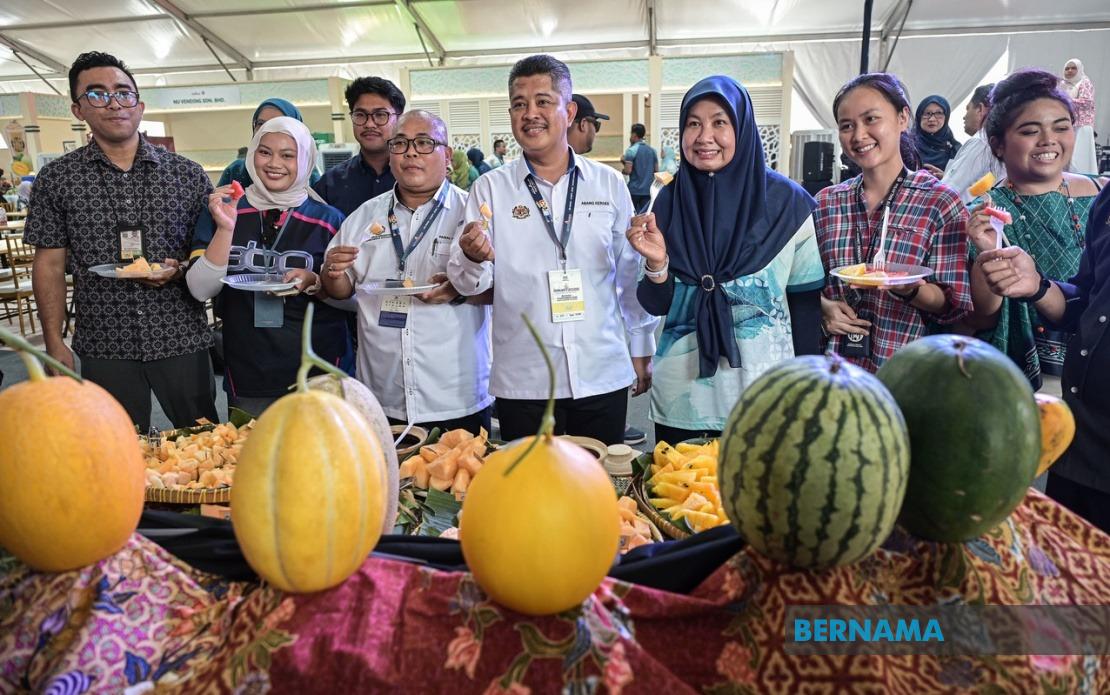
Malaysia's horticultural sector is poised to take a significant step forward with the unveiling of a novel melon variety tomorrow at the opening of MAHA 2026, the country's premier agricultural showcase. The Federal Agricultural Marketing Authority has selected this fruit as the symbolic centrepiece of this year's biennial Malaysia Agriculture, Horticulture and Agrotourism Exhibition, reflecting both the innovation driving the nation's farm sector and evolving consumer preferences that shape market dynamics across Southeast Asia.
The new variety represents the culmination of three years of intensive research and development collaboration between FAMA and a consortium of local entrepreneurs, underscoring how public-private partnerships can accelerate agricultural advancement. This timeframe reflects the rigorous testing and refinement required to bring a commercially viable crop to market, a process that demands investment in soil trials, storage protocols, and supply chain adaptation. The methodology deployed here mirrors global best practices in crop development, suggesting that domestic Malaysian agriculture is increasingly aligned with international standards for horticultural innovation.
FAMA chairman Abang Ahmad Kerdee Abang Masagus emphasised the symbolic importance of establishing a recognisable icon for MAHA 2026, noting that previous editions relied upon a signature fruit to anchor visitor engagement and media attention. The melon's official naming will be announced tomorrow evening by Minister of Agriculture and Food Security Datuk Seri Mohamad Sabu, converting a product launch into a formal government endorsement of agricultural progress. This ceremonial dimension elevates the development beyond commercial product introduction, positioning it within the broader narrative of national food security and industry modernisation.
The variety's specifications have been carefully engineered to align with demonstrable shifts in domestic consumption patterns. At approximately 1.3 kilogrammes, the melon fits the emerging preference among Malaysian households for individual or small-family serving portions that reduce waste and spoilage. The Brix sweetness concentration level of 18 represents a substantial refinement over existing market offerings, while the crunchier flesh texture appeals to consumers accustomed to particular eating experiences. These technical achievements reflect FAMA director-general Faisal Sulaiman's observation that systematic market research over the development period enabled precise targeting of consumer demands rather than speculative product development.
Market positioning at approximately RM15 per unit places this melon within accessible price territory for middle-income Malaysian consumers, a crucial consideration in a country where purchasing power varies considerably across urban and rural demographics. The pricing strategy suggests the product avoids premium positioning that might limit adoption, instead pursuing volume-based market penetration. This approach contrasts with imported specialty melons that command significantly higher retail prices, potentially capturing market share currently flowing toward foreign suppliers and redirecting agricultural revenue to domestic producers.
The netting pattern visible on the melon's skin serves both aesthetic and practical functions, appealing to consumer perception of quality whilst potentially indicating optimal ripeness and shelf-life management. Such details demonstrate how agricultural R&D in contemporary settings encompasses consumer psychology and marketing presentation alongside botanical achievement. For Malaysian farmers transitioning toward higher-value horticulture crops, understanding these presentation elements proves as critical as mastering cultivation techniques.
FAMA's commitment to supplying over 150,000 melon units during the ten-day MAHA 2026 event reflects confidence in both production capacity and visitor demand. The inclusion of nearly 100 local and international melon varieties alongside this new offering transforms the exhibition into a genuine marketplace rather than mere showcase, enabling direct farmer-to-consumer transactions that strengthen agricultural economics throughout the value chain. This model of combining educational exhibition with active commerce has proven successful in other Southeast Asian agricultural markets and generates immediate feedback about consumer preferences whilst generating revenue for participating producers.
The broader MAHA 2026 platform, running at the Malaysia Agricultural Expo Park Serdang through next Sunday, encompasses agrotech exhibitions, state pavilions, and direct farm sales featuring hundreds of entrepreneurs. This comprehensive approach positions the exhibition as essential infrastructure for the national agri-food sector, providing networking opportunities for suppliers, distributors, and retailers whilst showcasing modern agricultural technologies to both farming communities and general consumers. The biennial frequency ensures adequate time between editions for producers to implement innovations whilst maintaining sufficient regularity to sustain industry momentum.
For Malaysian farmers and agribusiness entrepreneurs, this melon development signals that domestic R&D investment can produce commercially competitive crops without reliance upon imported germplasm. The three-year timeline, whilst lengthy, demonstrates commitment to quality verification rather than hasty commercialisation. As Southeast Asian agricultural sectors increasingly prioritise self-sufficiency and value-added production, Malaysia's capacity to develop market-responsive crop varieties positions local producers advantageously against regional competitors.
The initiative carries implications extending beyond horticultural product development into broader questions of agricultural sustainability and farmer prosperity. By creating demonstrable pathways from research investment through commercialisation to retail success, the melon project illustrates how government agencies like FAMA can facilitate rather than merely regulate agricultural markets. This model becomes particularly relevant as the region grapples with climate pressures and shifting consumer preferences that demand continuous crop adaptation.
Visitors to MAHA 2026 will encounter not merely a novelty product but rather evidence of systematic agricultural advancement. The melon's introduction represents measurable progress in responding to consumer demands whilst supporting farmer incomes through improved crop economics. Such practical demonstrations of innovation-driven agriculture resonate more powerfully with farming communities than abstract policy pronouncements, potentially encouraging broader adoption of R&D methodologies across the Malaysian horticultural sector and inspiring similar initiatives in allied crops.

