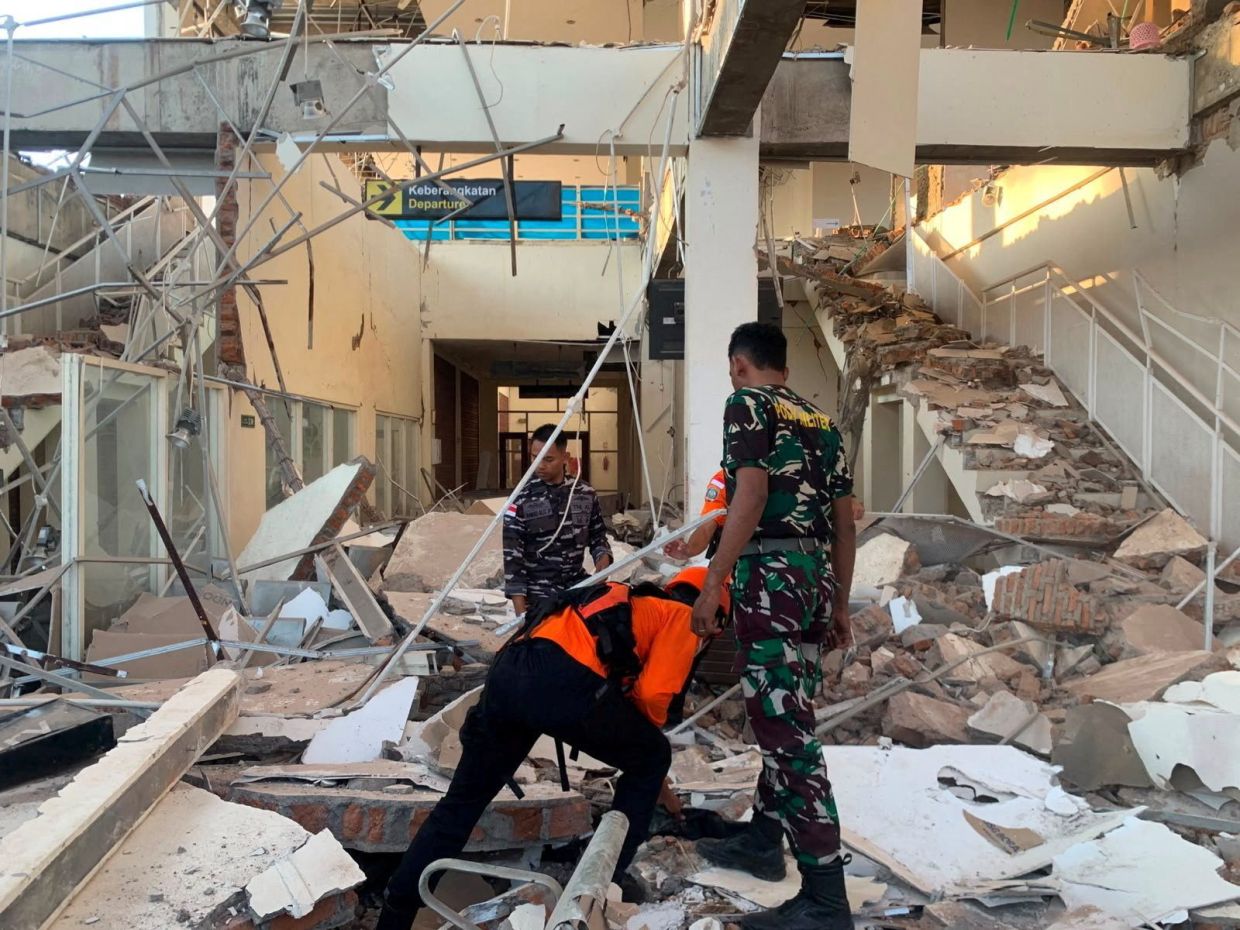
A magnitude 7.7 earthquake rattled Indonesia's Flores region in the early hours of Saturday, August 15, leaving a trail of destruction across the island as buildings crumbled and panic gripped residents already familiar with seismic devastation. The tremor, centred 68 kilometres north-northwest of the city of Ende in East Nusa Tenggara province, struck at 5:58 a.m. local time at a depth of just 10 kilometres, according to the U.S. Geological Survey. The shallow depth and powerful magnitude meant the shaking was felt intensely across much of the island, with preliminary reports confirming at least two deaths and two injuries, though the full toll may yet emerge as damage assessments continue.
The initial quake triggered a cascade of aftershocks that added to the sense of danger, prompting the Indonesia Meteorology, Climatology and Geophysics Agency to issue a tsunami warning affecting East Nusa Tenggara, West Nusa Tenggara, South Sulawesi and Southeast Sulawesi provinces. Coastal residents were urged to evacuate to higher ground and stay clear of beaches and riverbanks as a precaution. However, within hours of the alert, authorities lifted the warning after monitoring stations detected no significant changes in sea levels that would threaten communities along the coast. This quick assessment prevented unnecessary mass panic, though it did little to ease concerns among those whose homes and livelihoods had already been damaged by the violent ground shaking.
The destruction was widespread and visible across the affected areas. Yohanna Embu, a resident of Sikka regency, described scenes of chaos as powerful tremors toppled structures around her. "Many buildings here were damaged," she recounted, noting that she witnessed the collapse of the waiting room at Maumere's port terminal—a facility that serves as a crucial transport hub for the region. Her account reflects the scale of devastation that unfolded as residents scrambled to safety, with many rushing to elevated areas instinctively, their bodies remembering the earthquake hazards that come with living in this volatile part of Indonesia.
The crisis extended to critical infrastructure, particularly healthcare facilities that became overwhelmed during the emergency response. Television footage captured hospitals across the region evacuating patients from potentially unsafe buildings, with staff hastily moving equipment including beds, intravenous stands and oxygen cylinders to outdoor areas. Temporary treatment zones were established to enable continued medical care despite the damaged structures, highlighting the dual challenge faced by healthcare workers who must simultaneously respond to earthquake injuries while managing the risks posed by compromised buildings. This juggling act underscored how a single seismic event can disrupt multiple essential services simultaneously.
One of the most harrowing incidents involved St. Peter Major Seminary in Sikka, the predominantly Catholic island's religious education centre known locally as Ritapiret Seminary. Students and nuns attending morning Mass found themselves in mortal danger when the roof of the assembly hall suddenly collapsed, sending them fleeing in panic. Rev. Guidelbertus Tanga, the seminary's rector, described the horror: "Our students and nuns ran out in panic beneath a collapsing roof." The situation grew more tragic when at least one priest suffered a broken leg after jumping from the second floor of a building in an attempt to escape. The incident illustrates how earthquakes show no mercy to those gathered in worship or education, transforming moments of spiritual gathering into scenes of survival struggle.
Flores and its surrounding waters occupy an extraordinarily dangerous position within Indonesia's broader seismic geography. The vast Indonesian archipelago, comprising more than 17,000 islands, sits atop the Pacific Ring of Fire, a horseshoe-shaped zone of tectonic instability marked by numerous volcanoes and active fault lines. This location guarantees frequent earthquake activity, making seismic events a recurring reality rather than a rare occurrence. For residents of East Nusa Tenggara and neighbouring regions, earthquake preparedness is not a luxury but a necessity woven into the fabric of daily life. The frequency of tremors means that building codes, emergency protocols and community awareness campaigns remain perpetually relevant.
The region's seismic history carries a particularly sobering lesson. In December 1992, a powerful earthquake unleashed a devastating tsunami that claimed approximately 2,500 lives on Flores itself, part of the eastern Indonesian island group. That catastrophe remains a tragic benchmark against which each subsequent earthquake is measured, and a reminder that beneath the ocean's surface near Flores lies the potential for far greater calamity than Saturday's event inflicted. The memory of that disaster shapes how authorities respond to modern tremors and why tsunami warnings, though sometimes lifted, are taken with utmost seriousness in these waters.
Saturday's earthquake represents both a crisis in its own right and a test of Indonesia's disaster response systems that have evolved considerably since the 1992 tragedy. The speed with which authorities issued and subsequently lifted the tsunami warning reflects improved monitoring technology and coordination protocols. However, the continued occurrence of significant earthquakes in the region highlights the ongoing vulnerability of communities built in one of the world's most tectonically active zones. For Southeast Asian observers, particularly those in the Philippines, Papua New Guinea and other Ring of Fire nations, Indonesia's earthquake experiences offer both cautionary tales and lessons in resilience that resonate across borders.
The immediate aftermath will involve damage assessments to establish a full accounting of casualties and structural destruction, followed by rescue and recovery operations. Authorities face the dual challenge of responding to immediate humanitarian needs while preparing for potential additional seismic activity, as the occurrence of a magnitude 7.7 quake significantly increases the statistical likelihood of substantial aftershocks in the following days and weeks. For the people of Flores, particularly those in affected areas like Ende and Sikka, the road ahead involves not only physical reconstruction but also processing the trauma of once again experiencing nature's raw power.

