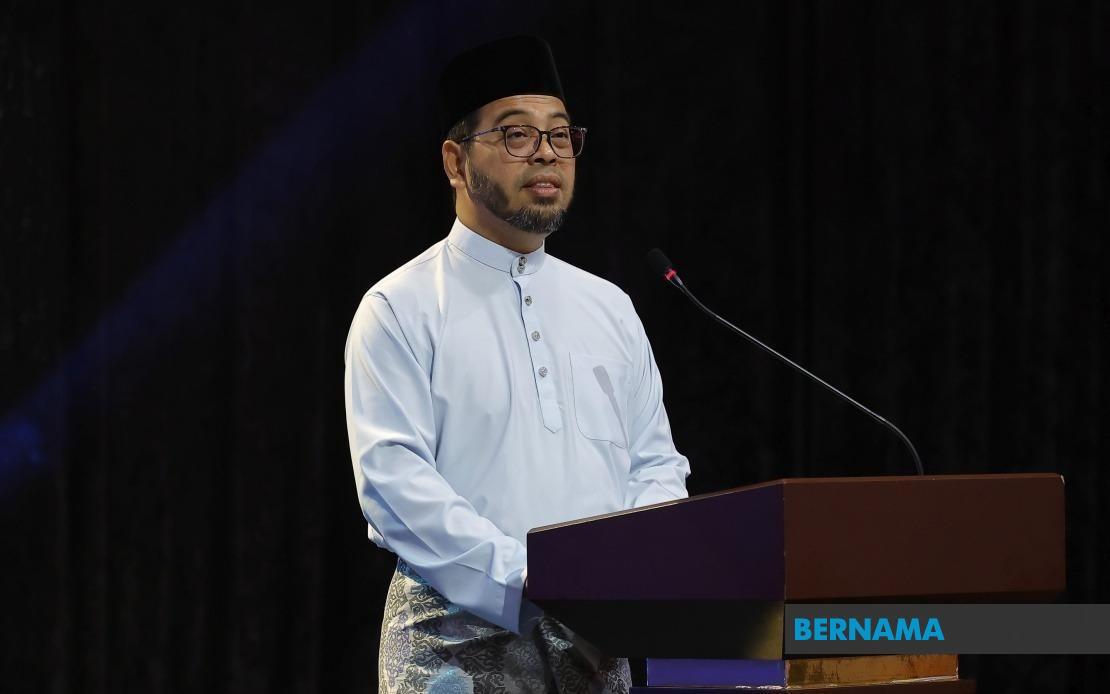
Malaysia's religious education ecosystem received a significant endorsement this week when the Religious Affairs Minister underscored the government's resolve to nurture tahfiz institutions as integral partners within the broader education landscape. Speaking at the 34th convocation ceremony of Darul Quran JAKIM in Kuala Lumpur, Dr Zulkifli Hasan positioned tahfiz education not as a parallel or competing system, but as a complementary pillar that strengthens Malaysia's cultural and religious foundations while advancing national objectives.
The timing of this statement carries particular weight as Darul Quran marked its Diamond Jubilee, reflecting on six decades since the institution's establishment in 1966. This milestone provides an opportunity to assess how tahfiz education has evolved and what role it continues to play in Malaysian society. The government's emphasis on integration rather than separation suggests a recognition that religious scholarship and secular competencies need not exist in opposition, a nuanced position that differs from debates in other Muslim-majority nations where such tensions have proven more contentious.
Dr Zulkifli articulated a vision of tahfiz education that transcends the conventional perception of its primary function. While memorisation of the Quran remains central to these institutions, the minister stressed that the ultimate objective is cultivating individuals equipped with comprehensive knowledge, moral fortitude, and practical skills capable of contributing meaningfully to the nation's development agenda. This reframing acknowledges contemporary pressures on religious education to demonstrate relevance beyond purely devotional outcomes, a challenge facing Islamic institutions globally as economies become increasingly knowledge-intensive and technically demanding.
The scale of Darul Quran's contribution to Malaysia's religious workforce cannot be understated. Over its 60-year operational history, the institution has produced 12,633 hafiz—individuals who have memorised the entire Quran—now distributed across a remarkably diverse range of professional sectors. Beyond the expected roles in Islamic education and religious judiciary, these graduates work in research, administration, dakwah (Islamic outreach), and general professional fields. This distribution pattern suggests that tahfiz education, at least as delivered through premier institutions like Darul Quran, successfully equips graduates with transferable credentials recognised across the employment market.
The 34th convocation itself demonstrated the institutional diversity within the tahfiz education framework. Among the 700 graduates receiving certificates, 37 completed Bachelor's degree programmes in collaboration with Universiti Sains Islam Malaysia, positioning them for advanced academic and professional pursuits. A substantially larger cohort of 454 received diplomas in Quranic studies and qiraat—the science of proper Quranic recitation—while 204 completed tahfiz certification programmes and five obtained basic certificates. This tiered structure reflects how contemporary tahfiz institutions have adapted to offer pathways of varying intensity and specialisation, widening accessibility while maintaining rigorous standards at elite levels.
The government's strategic framing of this Diamond Jubilee as both commemoration and catalyst for transformation carries implications for policy direction. Dr Zulkifli's call to "build the next 60 years with greater excellence" signals that investment in tahfiz institutions will likely continue, potentially expanding their capacity and modernising their curriculum to align with evolving national priorities. For Malaysian policymakers, the question of how to scale such institutions while preserving educational quality remains pressing, particularly given rising demand for Islamic education among Malaysian families across income levels.
The integration of tahfiz education within Malaysia's broader educational governance reflects the country's constitutional and cultural framework, where Islam holds a special position. Unlike secular nations that maintain strict separation between religious and state-sponsored education, Malaysia's approach permits—even encourages—government investment in Islamic institutions. This distinctive arrangement means that tahfiz education quality and reach ultimately depend on sustained political commitment and adequate resource allocation, making ministerial statements of support particularly consequential for practitioners and families considering such pathways.
For Southeast Asian context, Malaysia's model of state-supported tahfiz education offers a comparative case study in how Muslim-majority democracies can balance religious education with broader development objectives. Indonesia and other regional countries facing similar challenges around Islamic education governance and its role in nation-building may find Malaysia's integrated approach instructive, particularly regarding how institutional accountability and professional standards can be maintained across religious education sectors without triggering secularisation concerns.
The economic and social dimensions of tahfiz education deserve closer examination. With 12,633 graduates from Darul Quran alone now active across multiple sectors, these institutions represent significant human capital investments generating tangible returns through skilled professionals contributing to various industries. The presence of tahfiz graduates in administrative and research roles particularly underscores how religious education credentials have gained recognition within mainstream institutional hierarchies, a development that would have seemed unlikely in earlier decades when such roles were more strictly segregated by educational background.
Looking forward, the government's stated commitment to "strengthening" tahfiz education suggests several possible directions. Enhanced curriculum integration with secular subjects, improved faculty training, infrastructure development, and expanded scholarship access for economically disadvantaged students seeking tahfiz pathways represent plausible policy areas. The success of collaborative programmes like the USIM partnership demonstrates appetite for such integration, potentially providing a template for expansion to other universities willing to credential tahfiz-based study tracks.
The broader significance of this government position lies in its implicit acknowledgment that Islamic education institutions constitute legitimate participants in Malaysia's development ecosystem rather than supplementary or peripheral entities. By celebrating Darul Quran's achievements and committing to continued support, the MADANI administration signals that religious knowledge production and religious professionals merit equal standing with their secular counterparts in contributing to national progress—a statement with implications extending well beyond tahfiz circles into how Malaysian society values different knowledge systems and educational pathways.

