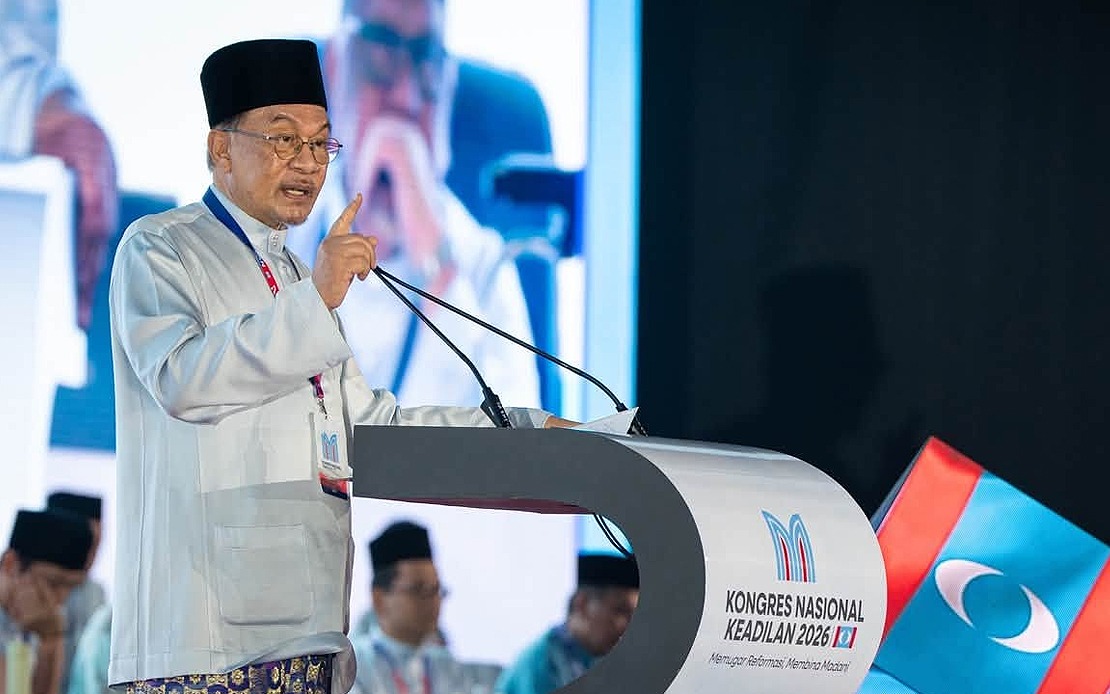
Tengku Datuk Seri Zafrul Tengku Abdul Aziz, the Prime Minister's Senior Political Advisor, has underscored a critical challenge facing the MADANI Government: converting ambitious policy initiatives into measurable improvements that ordinary Malaysians can experience in their daily lives. Speaking at the 2026 PKR National Congress in Melaka, he warned that impressive statistics alone do not constitute meaningful progress unless those gains filter down to benefit citizens across all economic and social strata.
The two-day congress, held at the Melaka International Trade Centre under the theme "Reviving Reform, Building MADANI", has provided a platform for party delegates to debate and assess the government's performance since taking office. Tengku Zafrul's remarks reflect growing recognition within the ruling coalition that political credibility ultimately depends on delivering real-world outcomes rather than simply announcing policy changes. His comments align with PKR President Anwar Ibrahim's keynote address to delegates, which outlined the government's continued commitment to structural reforms across multiple sectors.
While acknowledging that the MADANI Government has rolled out numerous initiatives, Tengku Zafrul stressed that substantially more work remains to ensure equitable distribution of their benefits. He pointed specifically to Malaysia's recent economic growth of six percent, a figure that exceeded most independent forecasts. However, he cautioned that achieving strong macroeconomic performance means little if ordinary households do not experience corresponding improvements in their purchasing power, employment opportunities, or access to services. This gap between headline economic figures and household-level prosperity represents a persistent challenge for developing economies throughout Southeast Asia.
A significant component of Tengku Zafrul's message centred on the government's communication deficiency. He argued that the MADANI administration has accumulated an extensive catalogue of achievements and policy initiatives, yet fails to effectively communicate these to the general public. This messaging gap, he suggested, represents not a failure of the people to understand government work but rather a shortcoming in the administration's capacity to inform and persuade. In Malaysia's increasingly fragmented media landscape, where social media platforms compete with traditional outlets for public attention, government messaging faces substantial structural obstacles that require sophisticated, well-resourced communication strategies.
Among the specific initiatives highlighted during the congress proceedings were the abolition of the Universities and University Colleges Act (AUKU), a longstanding demand from student activists and civil society groups seeking greater institutional autonomy within Malaysian higher education. Additionally, Anwar's speech emphasized ongoing efforts to rehabilitate the Federal Land Development Authority (FELDA), a sprawling agency that has faced persistent criticism regarding governance, financial management, and its capacity to effectively serve smallholder farmers. These examples signal the government's intention to tackle institutional reform beyond superficial policy adjustments, addressing deeply embedded structural problems that have constrained national development.
Tengku Zafrul also referenced several economic initiatives expected to feature prominently in the upcoming national budget. Although specific proposals were not detailed in his remarks, the emphasis on economic measures suggests the government recognises the urgent need to address cost-of-living pressures that have dominated public discourse and shaped voter sentiment in recent years. Malaysian households have experienced significant inflationary pressures affecting housing costs, food prices, and transportation expenses, creating a constituency increasingly concerned about whether government policies can meaningfully improve their economic circumstances.
The advisor's emphasis on PKR's internal party dynamics and organizational capability reveals an understanding that successful policy implementation depends fundamentally on institutional capacity. He stressed that the party's strength ultimately depends on its willingness to listen more attentively to grassroots constituents and to strengthen its organizational machinery. This acknowledgment reflects tension within Malaysia's political system between centralized decision-making and democratic accountability, between top-down policy formulation and bottom-up legitimacy. PKR, as the largest component of the ruling coalition, bears particular responsibility for ensuring that governmental initiatives connect authentically with party members and the broader electorate.
The theme of the congress—"Reviving Reform, Building MADANI"—itself suggests recognition that the government's reform momentum may have faltered somewhat since taking office. The use of "reviving" indicates that initial enthusiasm requires reinvigoration, that the transformation project faces resistance or fatigue, and that sustained commitment demands renewed energy and clarity of purpose. For Malaysian voters and regional observers monitoring the country's political trajectory, this messaging indicates internal acknowledgment that delivering on reform promises remains a work in progress rather than an accomplished fact.
Tengku Zafrul's remarks carry broader implications for Malaysia's Southeast Asian neighbours facing similar governance challenges. Across the region, newly elected or reformed governments have encountered difficulties translating electoral mandates into sustained public satisfaction. The gap between policy announcements and lived experience constitutes perhaps the most significant threat to democratic legitimacy in developing democracies. Malaysia's experience navigating this challenge may offer instructive lessons for other countries attempting to balance ambitious reform agendas with the practical constraints of institutional capacity and resource limitations.
Moving forward, the MADANI Government faces a critical period in which it must demonstrate that reform represents more than rhetorical commitment. Tengku Zafrul's candid acknowledgment of communication shortcomings and the need for better delivery mechanisms suggests that government leadership recognizes these challenges clearly. However, recognition alone proves insufficient; effective action requires sustained commitment to improving both the design of government programmes and the sophistication of efforts to ensure their benefits reach intended beneficiaries across Malaysian society.

