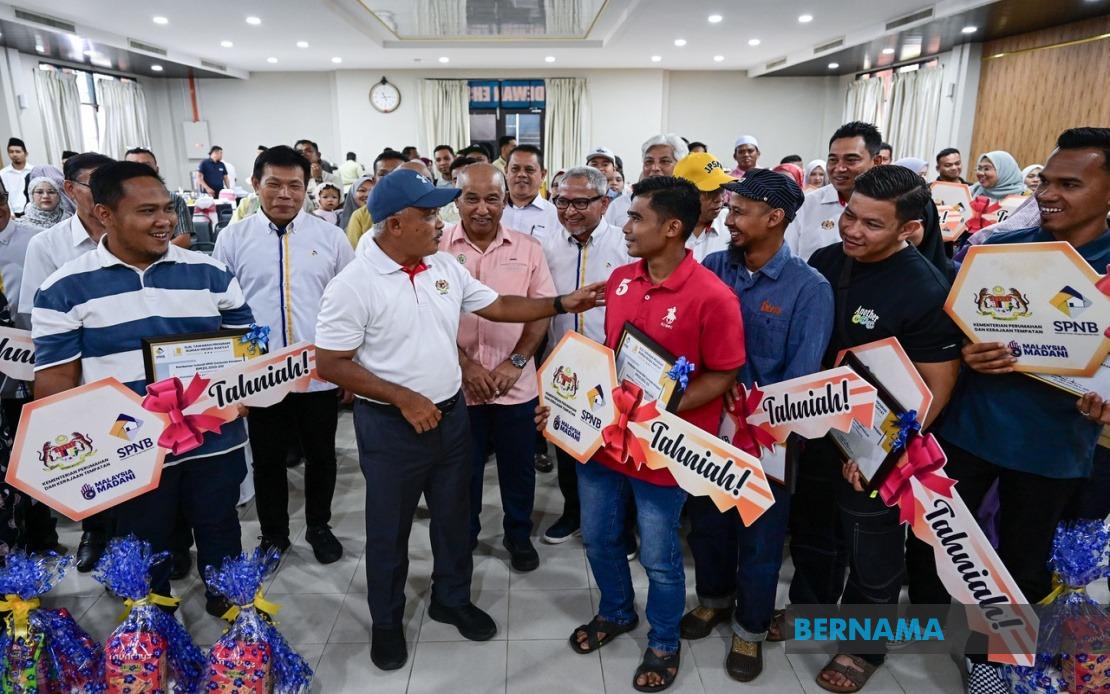
The MADANI Government's commitment to affordable housing took tangible form this week as fifty families in Terengganu received keys to new homes or signed contracts for construction. The beneficiaries, spread across the Kuala Terengganu and Kuala Nerus parliamentary constituencies, received either fully completed dwellings or offer letters signalling the beginning of their homebuilding journey. The ceremony took place at Dewan Ehsan in Felda Wilayah Timur, with Datuk Dr M. Noor Azman Taib, secretary-general of the Housing and Local Government Ministry, presiding over the handover on behalf of the administration.
The Rumah Mesra Rakyat, or RMR programme, represents a focused policy intervention targeting a specific demographic challenge across Malaysia: landowners who lack the financial means to construct adequate housing on their property. Rather than providing just any shelter, the initiative emphasises quality construction, safety standards, and comfort—recognising that homeownership carries profound psychological and economic benefits beyond mere shelter provision. The programme, operated by Syarikat Perumahan Negara Berhad under ministerial oversight, reflects a strategic approach to wealth-building for lower-income groups, transforming underutilised land assets into habitable family homes.
For Terengganu specifically, the programme represents a significant investment in residential development. The state is implementing 680 RMR units backed by RM46.67 million in allocation, positioning housing as a key lever for regional economic and social development. By May of this year, nearly half the total—246 units—had already been completed and formally handed over to eligible families, with a further 154 units actively under construction. These figures demonstrate momentum, though they also illustrate the scale of remaining work required to meet demand across Malaysia's states.
Within the two constituencies receiving units today, implementation has progressed unevenly. Kuala Terengganu has seen 34 units initiated, with 18 now occupied and another 16 in various stages of construction. Kuala Nerus has advanced slightly faster, deploying 32 units with 25 completed and seven still being built. These constituency-level breakdowns hint at localised bottlenecks—whether related to land acquisition, contractor availability, or beneficiary readiness—that programme managers must navigate to accelerate delivery.
The broader national picture underscores both achievement and ambition. Since its inception in 2002, the RMR programme has transformed the lives of over eighty thousand families, a remarkable track record spanning more than two decades. Currently, three thousand nine hundred units are in various phases of implementation nationwide, with two thousand four hundred and seventy-eight already completed and transferred to recipients, whilst a further fourteen hundred and twenty-two remain under construction. These numbers reflect the consistency of the programme as a policy tool, yet they also suggest capacity constraints that the government seeks to address.
Under Budget 2026, the administration has set an ambitious target of constructing six thousand five hundred and forty-five additional RMR units. This represents a scaling-up of effort, acknowledging that demand for affordable housing far outstrips current supply across Malaysian society. The budget allocation signals sustained political will to prioritise this segment of the housing market, even as broader economic pressures demand careful resource management. For Terengganu and other states with substantial housing deficits, this expansion offers hope that more families will access homeownership within a reasonable timeframe.
The philosophy underlying the RMR initiative extends beyond conventional property transactions. Officials have emphasised that homeownership serves as a catalyst for improving quality of life—a statement grounded in evidence showing that stable housing correlates with improved educational outcomes for children, better health indicators, and enhanced financial stability for families. By enabling ownership rather than perpetuating rental dependency, the programme attempts to break cycles of economic vulnerability whilst simultaneously building community cohesion and civic engagement. Families with permanent homes invest more readily in their neighbourhoods and become stakeholders in local development.
For Malaysian readers, particularly those in Terengganu and other states with growing housing pressures, the RMR programme represents one government response to a critical challenge. Housing affordability has emerged as a defining issue for younger generation Malaysians and lower-income households generally. Private developers, responding to market incentives, tend to concentrate production at price points serving middle and upper-income buyers, leaving gaps precisely where the RMR programme intervenes. The combination of government funding, standardised design, and partnership with a dedicated state-owned developer allows the programme to operate at price points and volumes that private enterprise alone cannot achieve.
The initiative also reflects a broader Southeast Asian trend toward direct government intervention in housing provision. Countries including Indonesia, the Philippines, and Thailand have launched comparable programmes, recognising that market mechanisms alone cannot solve housing deficits among lower-income populations. Malaysia's approach distinguishes itself through focus on families with existing land assets, a nuance that simplifies acquisition challenges whilst directly targeting those with some productive capacity but inadequate capital. This targeting precision has likely contributed to the programme's durability and cross-political acceptance.
Looking forward, success will depend on sustained implementation consistency and responsiveness to emerging constraints. Contractor performance, materials cost inflation, and beneficiary satisfaction require continuous monitoring. The MADANI Government's decision to highlight the programme through ministerial engagement and public ceremonies suggests awareness of both its importance and the need to maintain political momentum. For the fifty families in Terengganu receiving homes this week, and the thousands more waiting their turn, the programme offers a pathway toward housing security and the stability such security provides. The programme's longevity since 2002 and expansion under Budget 2026 indicate that affordable housing remains a policy priority transcending electoral cycles, an encouraging signal for Malaysia's continuing housing challenge.

