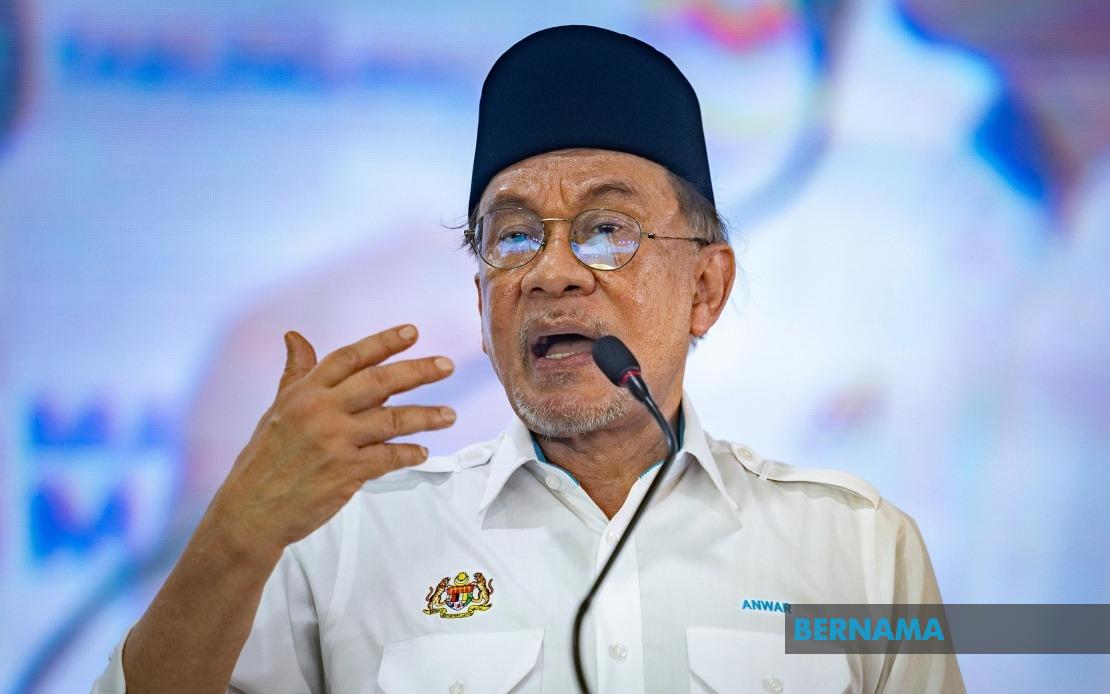
Prime Minister Datuk Seri Anwar Ibrahim has renewed the government's pledge to strengthen religious and pondok schools throughout the country, pledging sustained investment in an education sector long considered vital to Malaysia's Islamic heritage but facing challenges from rapid technological and social change. Speaking at the 2026 Perak Pondok and Religious Schools Gathering in Ipoh on July 19, Anwar outlined his administration's vision for revitalising these institutions while ensuring they remain relevant to contemporary learners.
Pondok schools, which have historically served as repositories of Islamic knowledge and spiritual formation across Malaysia and the broader Muslim world, experienced a period of decline as they struggled to adapt to modernisation and globalisation. Anwar acknowledged this reality candidly, noting that whilst these establishments once formed the backbone of educational provision in their communities, many fell into obsolescence when they proved unable to equip students with expertise in fields beyond classical religious studies. The challenge has been particularly acute for institutions seeking to maintain enrolment and credibility in an era where technological literacy has become as essential as literacy itself.
The Prime Minister expressed particular admiration for the commitment of religious educators, pondok school administrators, and respected Islamic scholars known locally as tok guru who have persisted in safeguarding Islamic traditions and the study of classical religious texts. Rather than framing modernisation as antithetical to religious education, Anwar highlighted the willingness of these leaders to embrace emerging disciplines such as computer technology and artificial intelligence alongside their traditional curriculum. This integrative approach represents a significant policy shift, positioning Malaysia's Islamic educational institutions as capable of nurturing both spiritual depth and technical competence.
To facilitate this transformation, the government has enlisted support from Malaysia Digital Economy Corporation and the Implementation Coordination Unit within the Prime Minister's Department. These agencies have been tasked with collaborating on practical improvements to religious schools, suggesting a coordinated effort to introduce digital infrastructure, teacher training, and curriculum innovation across the sector. The involvement of MDEC particularly underscores an intention to position pondok and religious schools within Malaysia's broader digital economy strategy rather than treating them as isolated cultural institutions.
Anwar's remarks carried an implicit conditionality framed in religious terms, with his assurance contingent upon continued national health and economic stability. He referenced a conversation with Sheikh Wazir Che Awang Al-Makki, a prominent religious scholar from Kelantan, in pledging that the government would pursue enhancement and uplift of these schools throughout the country. The invocation of "insya-Allah"—God willing—alongside economic forecasts reflected the balancing act inherent in the government's position: religious commitment interwoven with fiscal responsibility.
The gathering itself demonstrated high-level political prioritisation of the religious education sector. Alongside Anwar, attendees included Perak Menteri Besar Datuk Seri Saarani Mohamad, Minister in the Prime Minister's Department (Religious Affairs) Dr Zulkifli Hasan, and Chief Secretary to the Government Tan Sri Shamsul Azri Abu Bakar. This configuration of attendees—spanning federal and state levels, religious and administrative portfolios—suggests coordination across government structures in executing the policy agenda.
The initiative carries particular resonance in Perak, a state with significant pondok school presence and a population where Islamic education carries substantial cultural weight. By hosting the 2026 gathering in Ipoh, the government signalled its commitment to regional representation and acknowledgment of local educational ecosystems. Perak's Menteri Besar participation reinforces state-level buy-in for national religious education policy, a necessary precondition for effective implementation given that education administration in Malaysia involves shared federal-state responsibility.
For Malaysian observers and policymakers, the MADANI government's stance on religious schools reflects broader questions about national identity and educational philosophy. At a time when some developed economies are retreating from vocational and technical education integration, Malaysia is attempting to position Islamic schools as modernising institutions. This approach potentially addresses longstanding concerns about educational inequality between urban and rural areas, where pondok schools often serve disadvantaged communities with limited access to well-resourced secular institutions.
The emphasis on artificial intelligence and computer technology acquisition within religious schools also aligns with Malaysia's aspirations to become a digital economy leader. By ensuring that students in pondok schools gain exposure to these competencies, the government aims to prevent a widening educational divide that might otherwise marginalise graduates of religious institutions from high-value technology sectors. This represents enlightened self-interest in addition to religious commitment: a population equipped with both spiritual grounding and technical skills offers advantages for social cohesion and economic productivity.
However, the successful execution of this vision will require sustained financial commitment beyond rhetorical reassurance. Upgrading physical infrastructure, training teachers in emerging technologies, and developing appropriate curricula that authentically integrate classical and modern knowledge systems constitute substantial undertakings. The government's reliance on MDEC and the ICU suggests an attempt to distribute responsibility, but the sustainability of these efforts will depend on whether annual budget allocations reflect stated priorities and whether religious educators feel adequately supported in navigating technological transformation.
The pledge also implicitly acknowledges that Malaysia's religious schools sector cannot remain insulated from global trends. Rather than attempting to preserve pondok education in amber, the government is betting that thoughtful integration of modern knowledge with Islamic scholarship will strengthen rather than dilute these institutions' appeal and relevance. Whether this middle path proves sustainable—maintaining spiritual authenticity whilst embracing technological modernity—will become evident as the initiatives unfold in coming years.

