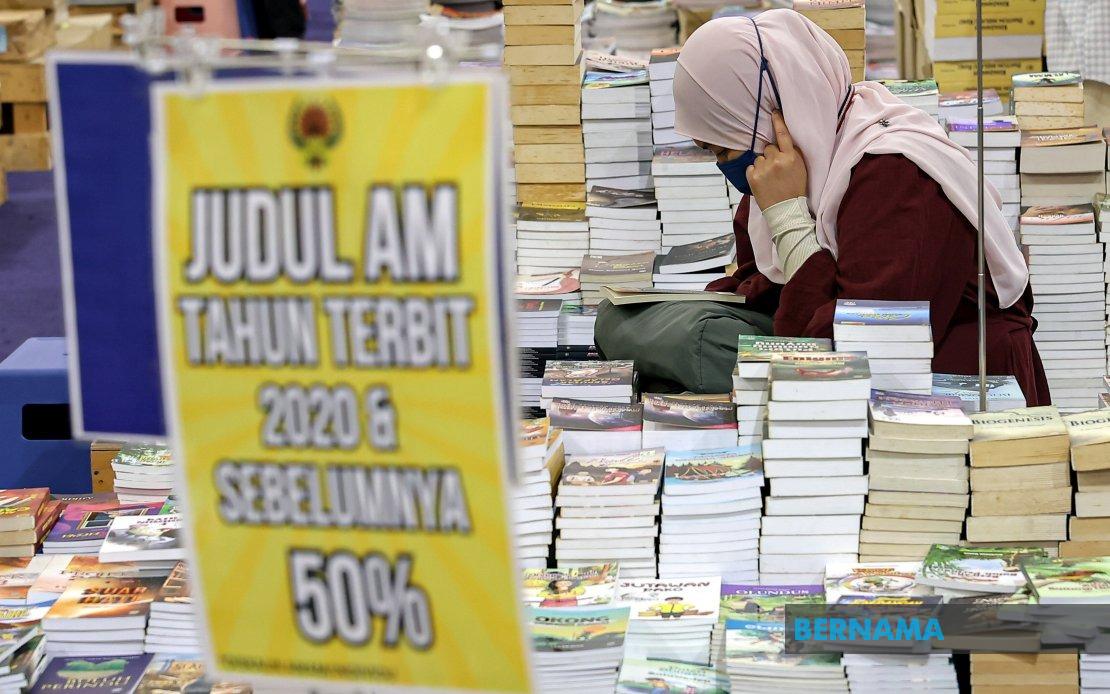
The Malaysian government's MADANI Book Voucher Programme is expanding its reach in 2026, bringing reading support to more than 2.2 million students nationwide through a RM221.6 million investment. Deputy Education Minister Wong Kah Woh announced that redemption of the RM100 e-vouchers will commence tomorrow and continue until October 31, with the entire transaction process managed through the BookCapital digital platform, which has enlisted 1,238 registered booksellers across the country. This represents a significant push to democratise access to printed materials among Malaysia's student population, from secondary education through tertiary institutions.
The beneficiary pool encompasses an extensive demographic spread, including students from Remove Class through Form Six in conventional schools, alongside learners in vocational colleges, matriculation programmes, and the Malaysian Institute of Teacher Education. The inclusion of IPGM is particularly notable, as it ensures that prospective educators gain exposure to curated reading materials early in their professional training, potentially shaping their future pedagogical approaches. This broad-based approach signals the government's commitment to treating reading and intellectual development as foundational pillars across all educational pathways, not merely academic streams.
A distinguishing feature of the 2026 iteration involves the introduction of the MADANI Special Title Focus category, which emphasises literary works alongside non-fiction spanning history, philosophy, economics, and geopolitics. The curriculum-aligned orientation towards future-focused disciplines represents a deliberate pedagogical choice, reflecting concerns about Malaysia's competitive positioning in emerging sectors. By mandating that each recipient purchase at least one title from this curated selection, the programme steers student reading habits towards domains deemed strategically important for national development.
The emphasis on science and technology titles, particularly those addressing artificial intelligence, information technology, and STEM subjects, underscores policymakers' recognition that technological literacy has become inseparable from educational adequacy. In an era where AI integration is reshaping labour markets globally, early exposure to foundational concepts through accessible reading materials offers Malaysian students a means of building conceptual frameworks before formal technical instruction. The inclusion of digitalisation as a focus area also signals acknowledgment that tomorrow's workforce requires comfort with continuously evolving technological environments.
Prior data on programme effectiveness provides compelling justification for continued investment and expansion. An impact study conducted by the Darul Ehsan Institute revealed that 97.5 per cent of surveyed recipients agreed the vouchers substantially assisted their academic pursuits, with particular benefits accruing to students from economically disadvantaged households. The 92.2 per cent reporting improved examination preparedness suggests the programme transcends symbolic gestures, translating into measurable educational outcomes. These metrics become especially relevant in Malaysia's context, where educational disparities between urban and rural populations remain a persistent policy challenge.
The infrastructure supporting the MADANI scheme deserves attention as an achievement in itself. The BookCapital platform's digital-first architecture eliminates traditional bottlenecks associated with physical distribution networks, enabling students in remote peninsular locations, Sabah, and Sarawak to access identical inventory simultaneously. This geographic equity dimension addresses a longstanding Malaysian education concern: that students in peripheral regions inevitably faced narrower reading choices due to logistical constraints. By centralising distribution through a single digital marketplace, the programme guarantees parity of access regardless of postal codes.
The redemption performance data from previous cycles offers insights into programme sustainability and participant engagement. Achieving a 100 per cent redemption rate in 2024 demonstrates that students and educators recognised genuine value in the voucher allocation, contrasting sharply with subsidy programmes plagued by uptake shortfalls. The absence of reported leakages and fraud indicates that the digital transaction model, while potentially creating barriers for less tech-savvy users, has successfully prevented diversion of resources to unintended recipients. These outcomes validate the government's shift away from physical voucher distribution, a historically problematic modality prone to administrative losses.
The transparency dimension emphasised by Wong reflects broader shifts in Malaysian governance toward digitally-mediated accountability. By routing all transactions through a single monitored platform, the scheme creates an auditable trail documenting which books were purchased, by whom, and at what cost. This contrasts with cash-equivalent subsidies, which resist verification. For future programme iteration and resource allocation decisions, this data generates insights into student reading preferences, emerging interest patterns, and potential gaps in the bookseller ecosystem.
For Malaysia's publishing and bookselling industries, the MADANI programme functions as a significant demand anchor. The 1,238 registered retailers benefit from a guaranteed purchasing cohort of 2.2 million voucher holders, providing justification for inventory investment and geographic expansion. Publishers, particularly those producing Malaysian-authored works on designated focus areas, gain access to a pre-identified customer base. This institutional support mechanism potentially encourages greater domestic publishing investment in STEM and philosophy titles, domains traditionally undersupplied in Malaysia's consumer market.
The programme's implications extend beyond individual educational attainment to questions of cultural and intellectual development at the national level. By incentivising engagement with history, philosophy, and geopolitics, the voucher scheme subtly shapes the intellectual commons, encouraging cohorts of young Malaysians to develop informed perspectives on regional dynamics and historical processes. This soft power dimension—building critical thinking through structured reading exposure—operates beneath the immediate policy rationale of examination preparation and career readiness.
Prospects for programme continuation appear robust, given documented success metrics and political buy-in across parliamentary questioning patterns. The cross-party engagement visible in supplementary questions from both Pakatan Harapan and Perikatan Nasional representatives suggests the scheme has achieved sufficient political consensus to survive electoral transitions. Future iterations will likely incorporate lessons from redemption data, potentially expanding the Special Title Focus categories or adjusting allocation amounts based on inflation and sector-specific labour market trajectories.
The MADANI Book Voucher Programme ultimately represents an investment in Malaysia's human capital pipeline through an accessible, equitable, and digitally efficient delivery mechanism. By reaching 2.2 million students with curated reading support emphasising future-focused disciplines, the scheme addresses immediate educational needs while positioning younger Malaysians for engagement with 21st-century economic and intellectual challenges. Success hinges on sustained programme funding and continued refinement based on learner feedback and labour market signals.

