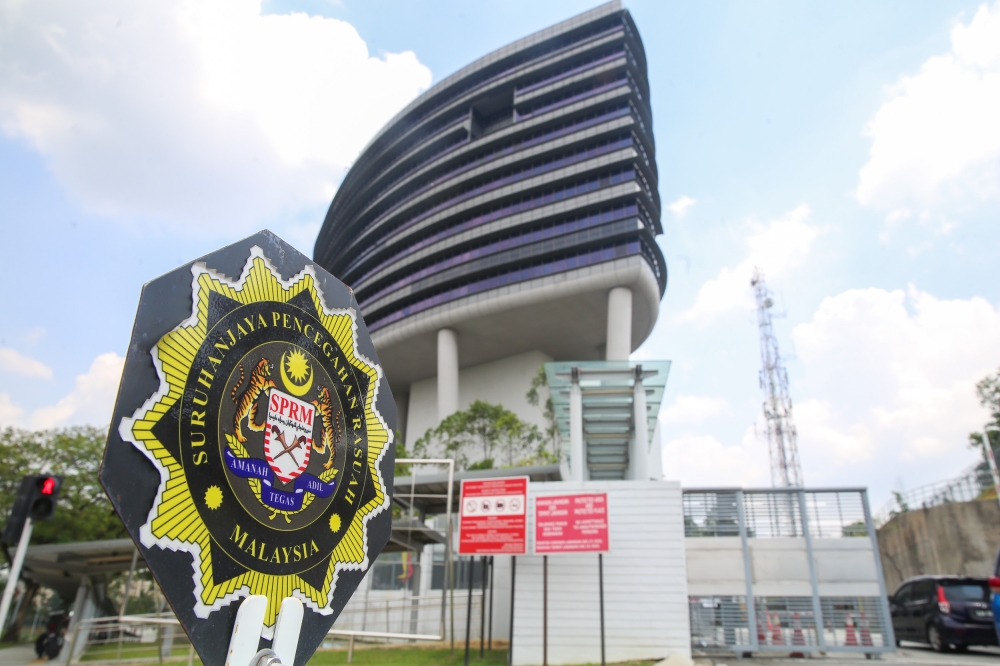
The Malaysian Anti-Corruption Commission has intensified its push for improved whistleblower protections across government ministries, recognizing that robust safeguards for those exposing misconduct are critical to Malaysia's credibility in combating corruption. In communications to ministry secretaries-general, the MACC has emphasised the importance of creating institutional frameworks that enable staff to report wrongdoing without fear of retaliation, a move that signals the agency's understanding that sustainable anti-corruption efforts depend on cultivating a culture of accountability from within the public service.
This directive carries particular significance as Malaysia pursues improvements in international corruption benchmarks, notably the Corruption Perceptions Index compiled annually by Transparency International. The nation's ranking on this influential measure shapes investor confidence, affects foreign policy relationships, and influences Malaysia's standing among regional peers. By strengthening whistleblower protections now, the MACC is positioning the country to demonstrate substantive institutional reform rather than merely cosmetic compliance with anti-corruption standards.
Whistleblower mechanisms have proven globally to be among the most effective tools for uncovering systemic corruption that might otherwise remain hidden. When public servants feel protected from dismissal, demotion, or harassment after reporting irregularities, they become willing participants in policing their own organisations. Conversely, environments where whistleblowers face ostracism or career sabotage quickly create climates of silence that embolden corrupt actors. The MACC's intervention suggests the agency recognises that Malaysia's anti-corruption infrastructure, while strengthened in recent years, still contains gaps in protecting those with the courage to speak up.
The timing of this initiative reflects broader regional and international pressures on Malaysia to demonstrate institutional maturity in governance. Neighbouring countries and international observers scrutinise how effectively Malaysia handles corruption allegations, and the treatment of whistleblowers serves as a visible indicator of genuine commitment to reform. Countries that have successfully improved their CPI rankings have invariably implemented comprehensive whistleblower protection schemes, often legislated rather than merely administrative, to ensure continuity across political transitions.
Ministry secretaries-general occupy critical positions in Malaysia's bureaucratic hierarchy, overseeing operations across defence, education, health, finance, and other major portfolios. Their buy-in is therefore essential for translating MACC recommendations into institutional practice. When these senior officials champion whistleblower protections within their organisations, the message cascades downward through hierarchies, signalling to mid-level managers and frontline staff that reporting misconduct is not merely permitted but valued. Without their support, even well-intentioned policies remain paper commitments rather than operational realities.
The current focus on whistleblower safeguards also addresses a specific vulnerability in Malaysia's anti-corruption framework. While the country has strengthened investigation capabilities and prosecutorial resources in recent years, enforcement remains incomplete without reliable intelligence from inside institutions where corruption actually occurs. Whistleblowers provide the ground-level observations that enable investigators to identify patterns of embezzlement, bribery, or nepotism that might otherwise escape external oversight. Protecting them therefore strengthens investigative capacity while simultaneously deterring corrupt officials who know their misconduct is likely to be exposed.
International benchmarks like the CPI evaluate countries not only on corruption levels but also on the institutional mechanisms they maintain to combat it. Transparency International's methodology specifically considers the strength of investigative and enforcement bodies, but also the degree to which ordinary citizens and public servants can safely report wrongdoing. Malaysia's previous CPI rankings have reflected concerns about institutional independence and the adequacy of whistleblower protections. By visibly addressing these gaps, the country signals responsiveness to international assessment criteria while strengthening its actual anti-corruption architecture.
The MACC's initiative must contend with practical challenges that have historically complicated whistleblower programmes in Southeast Asian contexts. In close-knit bureaucratic communities where colleagues and supervisors interact regularly, individuals who report misconduct often face subtle forms of retaliation that are difficult to document or prosecute. Creating genuinely confidential reporting channels, protecting whistleblower identities, and ensuring that career advancement is not compromised by reporting require sustained institutional attention and cultural change. Simply establishing a hotline or formal procedure proves insufficient without complementary protections woven throughout human resource practices, performance evaluations, and promotional pathways.
For Malaysia specifically, strengthening whistleblower protections carries particular implications for state-owned enterprises and linked investment companies, sectors where corruption has historically been concentrated. Government-linked companies often operate with less external oversight than pure government agencies, creating environments where misconduct can flourish undetected. Extending whistleblower safeguards to these entities would expand the reach of anti-corruption efforts beyond the traditional civil service. The MACC's outreach to ministry secretaries-general suggests recognition that protection frameworks must extend to all entities under government purview, not merely departmental bureaucracies.
The emphasis on CPI improvement also reflects Malaysia's competitive positioning within ASEAN and the broader Asia-Pacific region. Several neighbouring countries have made significant strides in recent years, and Malaysia risks appearing stagnant if it does not demonstrate tangible institutional progress. Whistleblower protections represent precisely the kind of institutional innovation that international observers recognise as evidence of systematic reform. By prioritising this agenda, Malaysia signals commitment to moving beyond reactive responses to corruption scandals toward proactive systems designed to prevent misconduct before it occurs or enables rapid identification when it does.
Implementing the MACC's recommendations will require clear legislative backing to withstand political cycles and bureaucratic inertia. Temporary administrative guidelines can be rescinded or ignored with changes in leadership, but statutory protections create durable obligations enforceable through courts. Malaysia may therefore benefit from considering whether current whistleblower legislation, particularly the Whistleblower Protection Act 2010, requires strengthening or whether complementary sector-specific protections are warranted. International experience suggests that countries achieving significant CPI improvements combine general whistleblower legislation with specific mandates directed at particular agencies or sectors where corruption risks are highest.
Ultimately, the MACC's initiative represents a recognition that Malaysia's anti-corruption efforts have matured beyond simply investigating high-profile cases toward building systematic institutional capacity. Whistleblower protections are foundational to that evolution. They transform ordinary public servants from passive observers of misconduct into active participants in maintaining institutional integrity. As Malaysia pursues higher CPI rankings, the measures adopted to protect those who expose wrongdoing may ultimately prove more consequential than any increase in enforcement budgets or investigation personnel.

