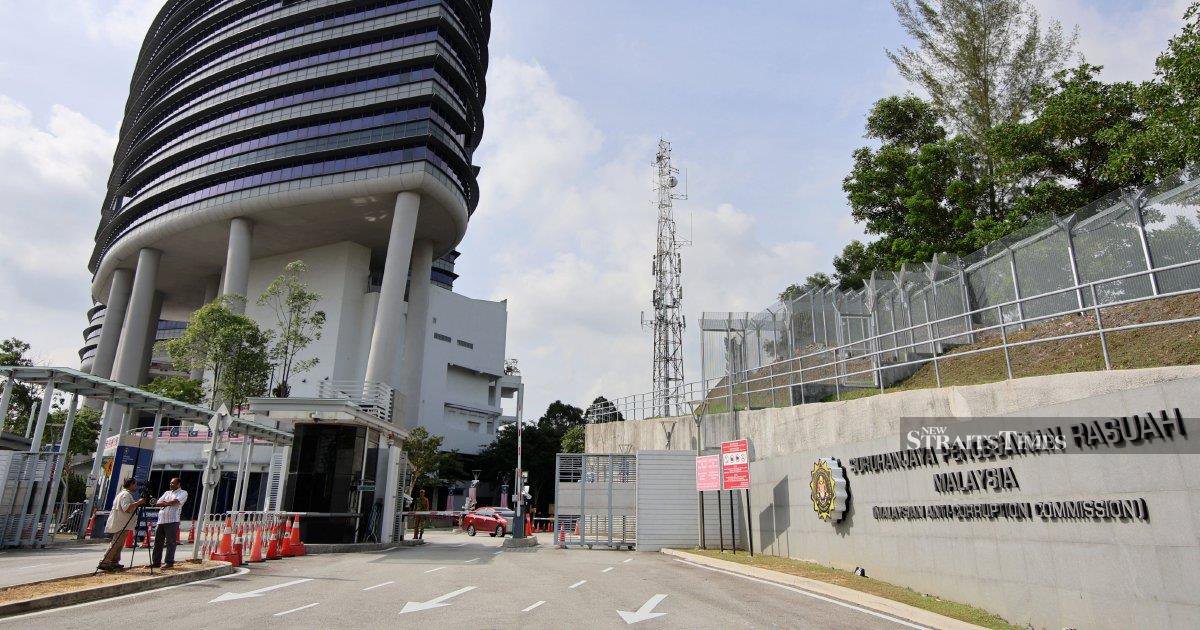
The Malaysian Anti-Corruption Commission has pressed high-ranking government officials to embed comprehensive whistleblower protection mechanisms within their organisations, positioning such measures as essential to Malaysia's anti-corruption architecture and its international reputation. In calling on permanent secretaries and directors-general across government ministries and departments to treat whistleblower safeguards as a governance priority, the MACC has linked this initiative directly to Malaysia's ambition to achieve measurable gains in the Corruption Perceptions Index by 2030.
The push for stronger protections reflects growing recognition within Malaysia's anti-corruption ecosystem that individuals willing to expose wrongdoing face real and perceived risks that deter disclosure. Without credible assurances of safety and confidentiality, potential informants—whether civil servants, contractors, or beneficiaries of government services—often choose silence over accountability. This information asymmetry undermines the MACC's capacity to detect and prosecute corruption, effectively allowing systemic misconduct to persist undetected within government structures.
Malaysia's performance on the Corruption Perceptions Index has remained a concern for policymakers and international observers alike. The index, published annually by Transparency International, ranks countries on a scale of zero to 100 based on perceived levels of public sector corruption. Nations that demonstrate robust institutional protections for those reporting wrongdoing tend to score higher, as such mechanisms signal a genuine commitment to accountability rather than mere rhetorical commitment. By targeting 2030 as a deadline for improvement, the MACC is acknowledging that meaningful gains require time to embed cultural change and institutional reform.
Whistleblower protection serves multiple functions within an effective anti-corruption regime. First, it creates a direct reporting channel for information that might otherwise never reach investigators or the public. Second, it demonstrates to civil society and international observers that Malaysia views transparency and accountability as genuine priorities. Third, it builds internal incentives for ethical conduct among officials who know that misconduct carries realistic consequences. When employees observe that wrongdoing leads to investigation and sanction rather than retaliation against those who report it, behavioural norms shift toward compliance.
The MACC's directive to senior government figures carries particular weight because these individuals control departmental budgets, hiring practices, and corporate culture within their organisations. When secretaries-general and directors-general signal that whistleblower protection is non-negotiable, subordinates understand that facilitating safe reporting is an institutional expectation. Conversely, when leadership treats such protections as optional or peripheral, employees correctly interpret this as tacit permission to maintain existing patterns of silence and complicity.
Malaysia's experience with corruption investigations has highlighted the vulnerability of those who step forward. Cases in which whistleblowers faced career consequences, social ostracism, or threats have entered the public consciousness and created a chilling effect on disclosure. The MACC's renewed emphasis on protection acknowledges this reality and attempts to dismantle the credibility gap between stated anti-corruption commitments and actual institutional practice. If individuals believe that reporting will invite retaliation rather than protection, no amount of anti-corruption rhetoric will elicit their cooperation.
The link to the Corruption Perceptions Index reflects Malaysia's status as a trading nation where international perceptions of governance directly affect business confidence, foreign investment flows, and the cost of capital. Companies considering major investments in manufacturing, financial services, or infrastructure look closely at corruption rankings when assessing country risk. A reputation for effective anti-corruption enforcement—demonstrated through mechanisms like whistleblower protection—reduces perceived risk premiums and can translate into competitive advantages in attracting investment relative to regional peers.
Implementing credible whistleblower protections requires more than policy pronouncements. It demands procedural clarity about how reports will be handled, investigation timelines, confidentiality standards, and remedies for those who suffer retaliation. It also requires training for managers and human resources personnel so that retaliation does not occur through informal channels disguised as performance management or organisational restructuring. The MACC's call to senior officials reflects understanding that without systemic embedding of these practices, protection remains theoretical.
Regionally, Malaysia's efforts on whistleblower protection position it within a broader Southeast Asian conversation about governance standards. Neighbouring countries have implemented various models of protection, and comparative performance on corruption indices increasingly influences investment decisions and diplomatic standing. As ASEAN nations compete for capital and talent, those perceived as having stronger institutions tend to gain advantage. The MACC's push thus serves both domestic anti-corruption goals and Malaysia's positioning within a competitive regional context.
The 2030 timeline also reflects Malaysia's alignment with international development frameworks and sustainable development goals emphasising good governance and institutional accountability. This timeline is neither arbitrary nor distant—it represents a decade-long commitment requiring sustained attention and resource allocation. Meeting such targets requires that anti-corruption priorities remain stable across political transitions and budgetary cycles, a genuine test of institutional commitment.
For frontline civil servants and citizens interacting with government, stronger whistleblower protections create practical confidence that they can report observed misconduct without career or personal consequences. This matters particularly in contexts where corruption operates through informal networks and where individuals may fear that reporting will invite professional or social retaliation. By systematically removing such barriers, Malaysia can tap information sources currently closed to investigators and create genuine deterrence through realistic prospects of detection and accountability.

