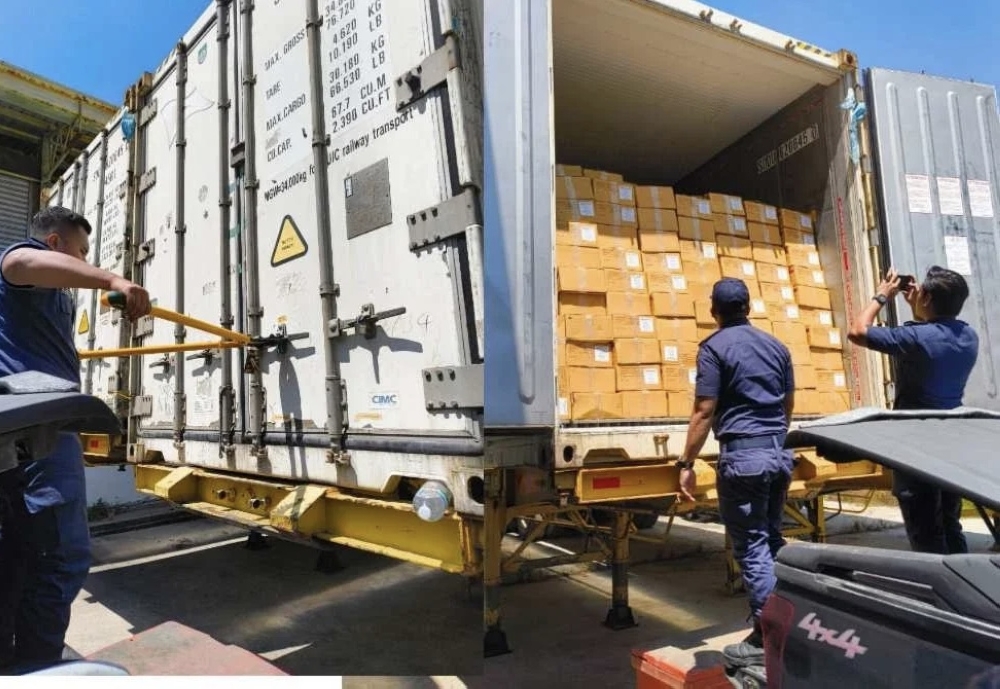
The Malaysian Anti-Corruption Commission has successfully dismantled a criminal syndicate operating in Sabah that is believed to have been systematically importing frozen chicken from China through illegal channels, circumventing proper customs and health protocols. Three individuals have been arrested in connection with the illicit operation, marking another significant enforcement action in the country's battle against organised smuggling networks that threaten both food security and fair competition in the domestic market.
The bust, conducted under the codename Operation Chick, demonstrates the MACC's widening focus beyond traditional corruption investigations to encompass supply chain fraud and trafficking offences that undermine legitimate businesses and consumer welfare. Such operations represent a critical intersection between corruption, organised crime, and economic integrity, as they typically involve bribery of officials at ports and borders to facilitate the movement of contraband goods.
Illegal chicken importation has emerged as a persistent challenge for Malaysian authorities, particularly in East Malaysia where porous borders and less intensive monitoring can enable smugglers to operate with relative impunity. The frozen chicken sector is particularly vulnerable because the products are easily concealed within legitimate shipments or stored in undeclared cold storage facilities, making detection difficult without sustained intelligence work and coordinated enforcement action.
The operation uncovers a sophisticated method of circumventing Malaysia's import restrictions and food safety standards. Smuggled frozen chicken typically enters the supply chain at significant cost advantages over legally imported products, undercutting local producers and licensed importers who comply with regulatory requirements. This creates artificial market distortions that harm legitimate businesses, suppress prices below sustainable levels, and ultimately reduce investment in the local poultry industry.
Sabah's geographic position as Malaysia's gateway to the Philippines and Indonesia makes it particularly strategic for smuggling operations. The state's extensive coastline, numerous ports of entry, and smaller-scale monitoring infrastructure compared to peninsular ports create conditions where organised criminals can operate networks with lower detection risk. Previous operations in the region have revealed connections between local corruption facilitators and international smuggling syndicates based in neighbouring countries.
The involvement of three arrested individuals suggests a distributed operational model where different members assume distinct roles—procurement, transportation, customs clearance, and distribution. Such compartmentalised structures are typical of mature criminal enterprises, as they limit exposure when one segment is compromised. Investigation will likely reveal how participants coordinated across borders and which officials may have been compromised to enable the operation.
Beyond the immediate criminal dimensions, the case highlights fundamental vulnerabilities in Malaysia's food import control framework. The volume and persistence of such smuggling suggests that enforcement resources, while increasingly active, may require further enhancement to match the sophistication and scale of organised networks. Equally important is ensuring that food safety inspections at entry points are sufficiently rigorous to prevent contaminated products from reaching consumers.
The timing of the operation carries relevance for Malaysian food security discussions. Legitimate poultry imports serve as an important supplementary source for domestic supply, particularly during periods when local production is constrained by disease or feed costs. However, uncontrolled smuggling distorts these dynamics, creating incentives for producers to engage in undercutting rather than quality improvement, and ultimately weakening the sector's resilience.
From a broader governance perspective, the MACC's involvement signals recognition that import smuggling often cannot be effectively combated through customs or health authorities alone. Corruption facilitates smuggling, and dismantling the networks requires investigation of how officials have been compromised. This integrated approach—combining anti-corruption investigation with supply chain oversight—represents a more comprehensive strategy than treating smuggling as purely a customs violation.
The case also underscores the challenge of enforcement asymmetry in the region. While Malaysia strengthens internal controls, the profitability of smuggling operations means that suppliers on the exporting end, typically in China, face minimal consequences if their products are intercepted. Regional cooperation through ASEAN mechanisms could enhance deterrence by ensuring that source countries impose comparable penalties on exporters facilitating illegal trade.
Investigators will now examine financial flows associated with the operation, which may reveal connections to other illicit networks or corrupt officials facilitating entry. Such financial intelligence often proves more valuable than the contraband itself, as it can lead to identification of broader criminal enterprises operating across multiple commodities and jurisdictions in the region.
Looking forward, the MACC's success in Operation Chick will likely inform strategic priorities for similar operations targeting other smuggled food commodities in Malaysian ports. Poultry, seafood, and dairy products are particularly attractive to smugglers due to high volumes, relatively short shelf lives that create artificial supply pressures, and significant price differentials between legal and illegal sources.

