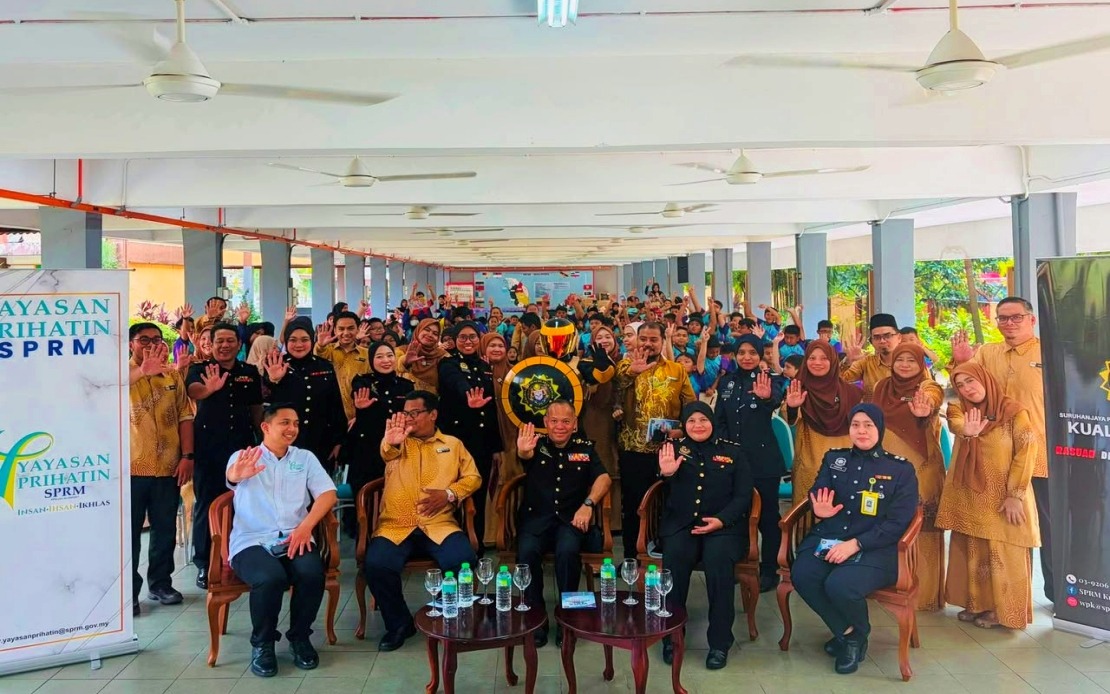
The Malaysian Anti-Corruption Commission's Kuala Lumpur office is intensifying its battle against graft by targeting a demographic often overlooked in such efforts: schoolchildren. Through the Wira Antirasuah (WAR) programme launched at Sekolah Kebangsaan Jalan Pasar 1 on August 14, the agency is laying groundwork for a generation primed to resist corruption before it takes root in their professional lives.
Director Mohamad Zakkuan Talib articulated a philosophy that underpins the initiative: corruption prevention is fundamentally about character development, not just law enforcement. By introducing anti-corruption messaging during formative years, the MACC seeks to cement ethical principles as second nature rather than imposing compliance through regulatory mechanisms alone. This represents a strategic pivot from the traditional reactive enforcement approach to proactive social conditioning.
The programme's conceptual foundation rests on a seemingly simple but profoundly transformative idea: heroism is not reserved for the extraordinary. According to Mohamad Zakkuan, courage to do what is right constitutes true heroism. This reframing matters significantly in the Malaysian context, where integrity sometimes competes with competing loyalties and pressures. By democratising the notion of heroism, the MACC suggests that every citizen, regardless of position or power, possesses agency in the fight against misconduct.
Crucially, the initiative grounds integrity in the mundane. Rather than focusing solely on high-profile corruption cases that dominate headlines, the programme emphasises quotidian ethical challenges: resisting the temptation to cheat, respecting ownership of property, maintaining honesty in assignments, honouring commitments, and preserving trust. This granular approach acknowledges that corruption thrives not merely in backroom dealings but in the accumulation of small moral compromises that eventually normalise unethical behaviour.
The pedagogical component of WAR combined multiple engagement strategies to maximise retention among young audiences. Interactive activities formed the backbone of the programme, recognising that passive lectures rarely shift attitudes. The Kuala Lumpur MACC Community Education Branch (PenMas) delivered briefings tailored for children, while Kapten MACC, the commission's mascot, provided a tangible, approachable focal point for the anti-corruption message. Using mascots and interactive formats has proven effective globally in embedding civic values among primary school populations.
A particularly noteworthy element of the initiative was the establishment of the SKJP1 Anti-Corruption Corner, a dedicated school resource space designed to serve both staff and pupils. This institutionalisation of integrity education signals commitment beyond a one-off event. By creating a permanent information hub, the MACC leveraged school infrastructure to ensure sustained messaging and easy access to educational materials. Such embedded approaches tend to generate longer-term behavioural impact than episodic awareness campaigns.
The programme's scope extended beyond abstract values to tangible welfare measures, reflecting recognition that integrity cannot be credibly promoted in environments of material deprivation. Yayasan Prihatin SPRM donated a smart television to the school, enhancing teaching capabilities, while school aid was extended to 29 pupils from asnaf families. This fusion of values education with direct material support demonstrates understanding that socioeconomic vulnerability can drive unethical behaviour, and that holistic approaches addressing both character and circumstance prove more effective.
Symbolic gestures carried their own weight within the programme. Pupils from the school's special education cohort planted hibiscus in conjunction with both the Keep Malaysia Clean campaign and National Month celebrations. This layering of initiatives—linking anti-corruption efforts to environmental consciousness and national identity—creates multiple reinforcing messages. It signals that integrity transcends a single domain; it represents a comprehensive ethical worldview encompassing civic responsibility, environmental stewardship, and patriotic commitment.
For Malaysia and the broader Southeast Asian region, the MACC's investment in grassroots integrity education carries significant implications. Corruption remains a persistent challenge across the region, and conventional enforcement mechanisms alone have proven insufficient. By targeting the next generation, the MACC adopts a long-term strategy that recognises institutional culture changes gradually, through successive cohorts of citizens whose formative values diverge from their predecessors. If such programmes scale effectively across Malaysian schools, they could gradually shift the baseline ethical expectations within society.
The programme also reflects an implicit acknowledgment of the MACC's own evolution. Rather than projecting an image solely of investigator and prosecutor, the commission now positions itself as educator and civic mentor. This rebranding serves multiple functions: it humanises the institution, reduces the perception of corruption enforcement as purely punitive, and builds goodwill among younger demographics who may otherwise view anti-corruption agencies with ambivalence or fear.
Challenges remain in translating classroom values into sustained behavioural change as pupils mature and encounter real-world temptations and pressures. The ultimate test of initiatives like WAR lies not in immediate post-programme assessments but in longitudinal tracking of cohorts as they progress through secondary education and beyond. Nonetheless, the programme represents sophisticated acknowledgment that combating corruption demands investment across multiple fronts—not merely stronger laws or more aggressive prosecution, but cultural transformation beginning with the young.

