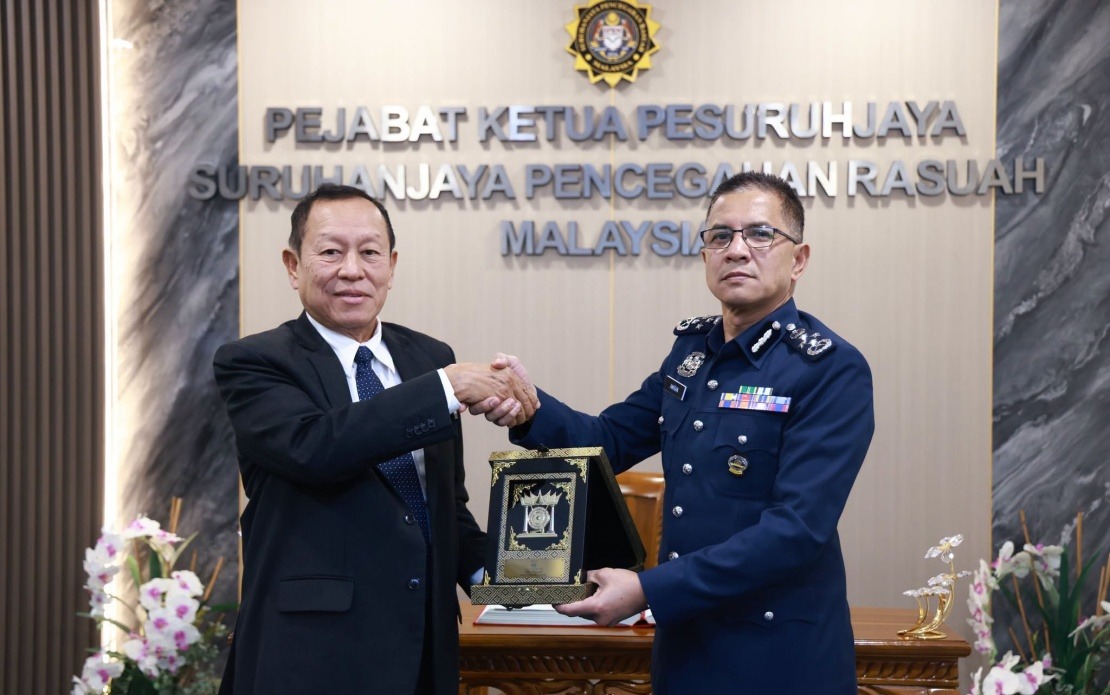
The Malaysian Anti-Corruption Commission and the Royal Malaysian Customs Department have announced plans to establish a dedicated task force aimed at strengthening oversight of enforcement activities and tax collection operations across the country's key maritime facilities. The proposal emerged during discussions between MACC chief commissioner Datuk Seri Abd Halim Aman and JKDM director-general Datuk Amran Ahmad at the anti-corruption agency's Putrajaya headquarters on July 15.
The strategic initiative reflects growing recognition that customs enforcement and anti-corruption efforts must operate in closer alignment to address sophisticated schemes targeting government revenue. During the hour-long meeting, both leaders identified shared operational challenges within their respective mandates, particularly regarding the complexities of customs inspection procedures and administrative impediments that can slow effective border security. The discussion also highlighted how bureaucratic obstacles sometimes hinder swift action against suspected violations, creating gaps that sophisticated smuggling operations have learned to exploit.
A primary concern discussed was the management of containers at ports nationwide, where leakages have reportedly cost the government significant revenue. Container diversion and manipulation represent a persistent vulnerability in Malaysia's supply chain security, particularly given the country's position as a major transshipment hub in Southeast Asia. By pooling intelligence and coordinating enforcement activities, the two agencies hope to tighten controls over goods movements and reduce opportunities for systematic theft or underreporting of cargo values.
Customs officials presented detailed accounts of increasingly complex evasion tactics employed by organised syndicates operating within and beyond Malaysian territory. These criminal networks have developed sophisticated methods to circumvent tax obligations, ranging from straightforward smuggling operations to elaborate schemes involving falsified documentation submitted across multiple regulatory approval channels. The presentation underscored how these activities have evolved beyond simple contraband movements to encompass systematic fraud involving misrepresentation of goods classifications, origins, and declared values.
One particularly concerning modus operandi involves deliberate false declarations of currency entering Malaysia, where individuals intentionally understate the actual cash amounts being brought into the country relative to what they formally declare to authorities. This practice undermines financial oversight mechanisms and creates opportunities for money laundering while simultaneously depriving the government of information necessary for detecting illicit capital flows. The prevalence of such schemes has prompted customs authorities to recommend enhanced coordination with anti-corruption specialists who possess investigative expertise in financial crime detection.
JKDM director-general Amran expressed enthusiasm for the MACC's commitment to supporting integrity initiatives within the customs service. He acknowledged that cultivating a culture of compliance and ethical conduct among frontline personnel represents a crucial component of institutional reform. Through collaborative anti-corruption training sessions and awareness programmes, the MACC can help customs officers understand their roles as guardians against institutional decay while strengthening their capacity to recognise and report suspicious activities without fear of retaliation.
The involvement of MACC Investigation Division senior director Datuk Mohd Hafaz Nazar and JKDM Integrity branch head Azian Umar in the discussions indicates that both organisations are treating this initiative seriously at operational management levels. These officials oversee the practical implementation of enforcement strategies and can facilitate the development of protocols enabling rapid information-sharing between agencies. Such structural arrangements are essential for converting strategic agreements into tangible operational improvements that impact actual border security outcomes.
For Malaysia's business community and trading partners, the establishment of this task force carries significant implications. Enhanced port enforcement should theoretically reduce customs clearance times for compliant importers and exporters while simultaneously increasing friction for those engaged in illegal activities. However, the implementation phase will determine whether the initiative genuinely streamlines processes for legitimate trade or creates additional administrative burdens. Regional competitors have invested heavily in customs modernisation and digital systems; Malaysia's ability to demonstrate improved efficiency while strengthening compliance could strengthen the country's attractiveness as a preferred trading hub.
The Southeast Asian context adds another dimension to this collaboration. Neighbouring countries including Singapore, Thailand, and Indonesia have implemented sophisticated port security systems integrating customs, anti-corruption, and maritime law enforcement functions. Malaysia's move toward greater institutional coordination reflects an acknowledgment that fragmented approaches no longer suffice against increasingly mobile and adaptive criminal networks that operate across borders. By establishing domestic coordination mechanisms, Malaysian authorities position themselves to participate more effectively in regional intelligence-sharing arrangements and joint enforcement operations.
The task force concept also addresses a structural challenge that has long complicated Malaysian enforcement efforts: the separation between corruption investigation and customs administration. Customs violations often involve corrupt officials facilitating smuggling in exchange for payments, yet institutional silos can prevent investigators from pursuing cases that span both administrative and criminal domains. A dedicated joint task force can establish clear protocols for handling cases that exhibit corruption elements, ensuring that culpable officials face appropriate consequences rather than remaining shielded by departmental protectionism.
Government revenue protection remains central to Malaysia's fiscal sustainability, particularly as the country navigates economic pressures and maintains essential public service delivery. Customs duties, excise taxes, and other port-collected revenues contribute meaningfully to the federal budget; systematic evasion schemes directly diminish resources available for healthcare, education, and infrastructure development. By visibly strengthening enforcement coordination, the government signals commitment to maximising legitimate revenue collection and holds itself accountable to citizens regarding appropriate resource stewardship.
The success of this task force will ultimately depend on sustained commitment from both institutions and the availability of adequate investigative resources. Past initiatives addressing inter-agency coordination have sometimes faltered when political priorities shifted or when competing institutional interests reasserted themselves. Observers will monitor whether the proposed task force receives consistent operational support, appropriate staffing, and the autonomy necessary to pursue cases impartially regardless of political or commercial pressures. The credibility of Malaysia's anti-corruption and customs enforcement frameworks depends on demonstrating that institutional reforms translate into measurable improvements in accountability and service delivery.

