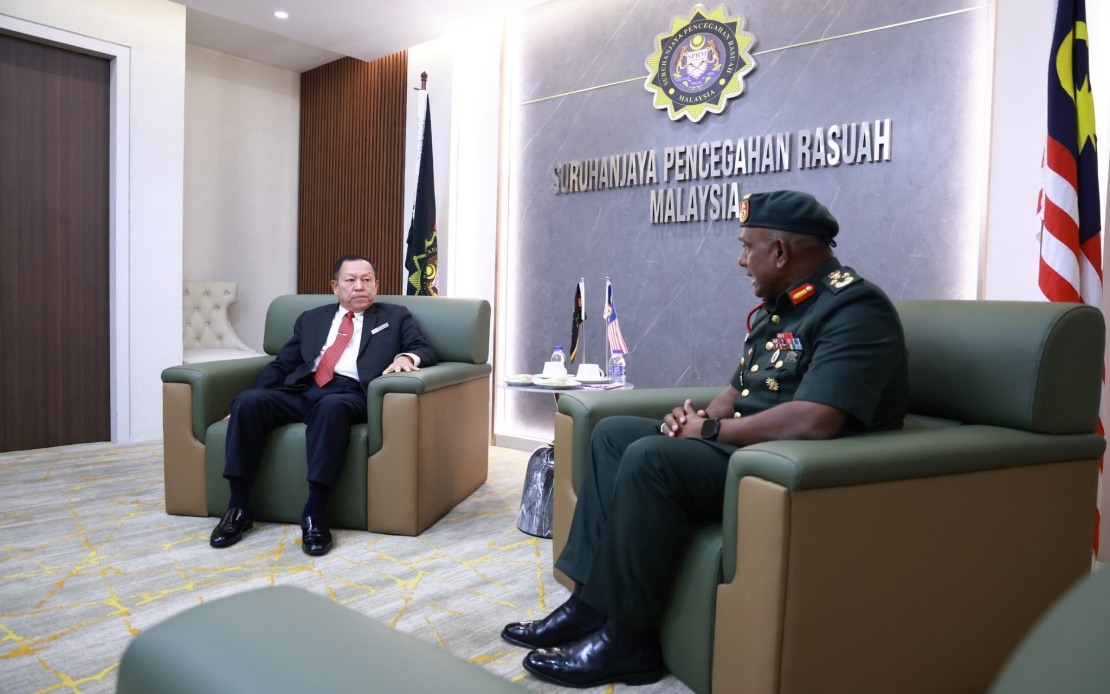
The Malaysian Anti-Corruption Commission and the country's military establishment have reinforced their institutional partnership in the ongoing battle against financial misconduct and governance failures, signalling a coordinated approach to protecting state resources and institutional integrity. The alignment comes as both agencies seek to leverage complementary investigative capabilities and access to operational intelligence that traditionally remains compartmentalised within their respective hierarchies.
During a recent engagement at MACC headquarters in Putrajaya, the commission's leadership emphasised the strategic value of its relationship with the Malaysian Armed Forces, positioning the arrangement as essential to the effectiveness of anti-corruption initiatives at the national level. The reaffirmation reflects growing recognition that corruption within military structures—whether through procurement irregularities, misallocation of defence budgets, or unauthorised asset transfers—requires sustained institutional attention and coordinated investigative frameworks that extend beyond traditional MACC investigative channels.
The Malaysian Defence Intelligence Organisation, led by Lt Gen Datuk Fazal Abdul Rahman, has become a focal point for this cooperation following his formal appointment in May. The MDIO's involvement signals that intelligence-gathering capabilities traditionally reserved for national security matters are now being calibrated to address the economic dimensions of institutional corruption. This represents a subtle but significant shift in how military establishments conceptualise their role in broader governance architecture, moving beyond operational security toward financial and administrative accountability.
Intelligence sharing between civilian anti-corruption bodies and military intelligence units presents both institutional opportunities and structural challenges. Access to classified military communications, procurement networks, and personnel records can illuminate corruption patterns that conventional audit trails might obscure. However, such arrangements require carefully calibrated protocols to prevent mission creep or the subordination of anti-corruption investigations to broader intelligence priorities that may diverge from civilian law enforcement objectives. The two agencies have committed to establishing information-exchange mechanisms that respect institutional boundaries while maximising investigative effectiveness.
The governance enhancement initiatives referenced in the partnership agreement suggest a preventive rather than purely reactive approach to institutional corruption. Rather than focusing exclusively on investigation and prosecution, both agencies are apparently exploring systematic improvements to financial controls, procurement procedures, and accountability mechanisms within military structures. This preventive dimension is particularly relevant given the scale and complexity of defence budgets, which in Malaysia run into billions of ringgit annually and involve intricate supplier networks and international arms procurement contracts.
For Malaysian readers, the institutional alignment carries implications for broader governance standards across the public sector. When military and civilian agencies demonstrate visible coordination on integrity matters, the message reverberates through subordinate institutions, signalling that corruption carries institutional consequences and that traditional sectoral walls do not shield misconduct. This can have deterrent effects among mid-level officials who might otherwise believe their actions fall beneath investigative radar or that institutional rivalries will prevent coordinated action.
The formal nature of this partnership also reflects Malaysia's international commitments on anti-corruption and governance standards. As a signatory to the United Nations Convention Against Corruption and participant in regional initiatives like ASEAN's anti-corruption frameworks, Malaysia has undertaken to demonstrate integrated institutional responses to financial misconduct. The MACC-Armed Forces cooperation provides tangible evidence of this commitment, though actual effectiveness will depend on implementation rigour rather than merely rhetorical commitment.
Lt Gen Fazal's emphasis on maintaining discipline and professional operational standards within military ranks suggests awareness that institutional credibility depends on demonstrable accountability mechanisms. Military establishments across Southeast Asia have historically faced criticism regarding financial transparency and personnel accountability. By positioning governance enhancement and disciplinary standards as priorities alongside intelligence cooperation, the Armed Forces command appears to be addressing reputation concerns that could undermine institutional legitimacy and public confidence.
The involvement of specialised units—including the MACC Intelligence Division and the Military Security and Counter Intelligence Directorate—indicates that the partnership operates at technical rather than purely political levels. This suggests sustainability beyond electoral cycles or leadership transitions, as institutional protocols embedded within investigative divisions tend to persist regardless of administrative changes at executive levels. Such structural embedding increases the likelihood that intelligence sharing and information exchange will become routine features of institutional practice rather than episodic initiatives.
The broader Southeast Asian context provides instructive comparisons regarding military-civilian agency coordination on corruption. Neighbouring countries have experimented with similar arrangements with mixed results, ranging from effective institutional synergies to situations where one agency's investigative priorities have compromised another's operational independence. Malaysia's approach, emphasising information exchange rather than investigative control, appears designed to avoid these pitfalls while maintaining institutional autonomy.
For enforcement effectiveness, the partnership must ultimately translate into concrete outcomes—prosecutions completed, procurement systems reformed, and accountability mechanisms demonstrably applied to military personnel at all ranks. The institutional commitment is evident, but implementation will require sustained political backing, adequate investigative resources, and protection from political pressure that might selectively shield certain officials from accountability based on factional considerations.
Moving forward, the success of this MACC-Armed Forces cooperation will depend on whether intelligence sharing produces substantive investigative leads that result in prosecutions, whether governance enhancement initiatives measurably reduce opportunities for corruption, and whether both agencies maintain genuine independence in pursuing institutional integrity rather than allowing anti-corruption mechanisms to become instruments of factional advantage. The partnership framework is in place; institutional discipline will determine whether it delivers genuine anti-corruption outcomes.

