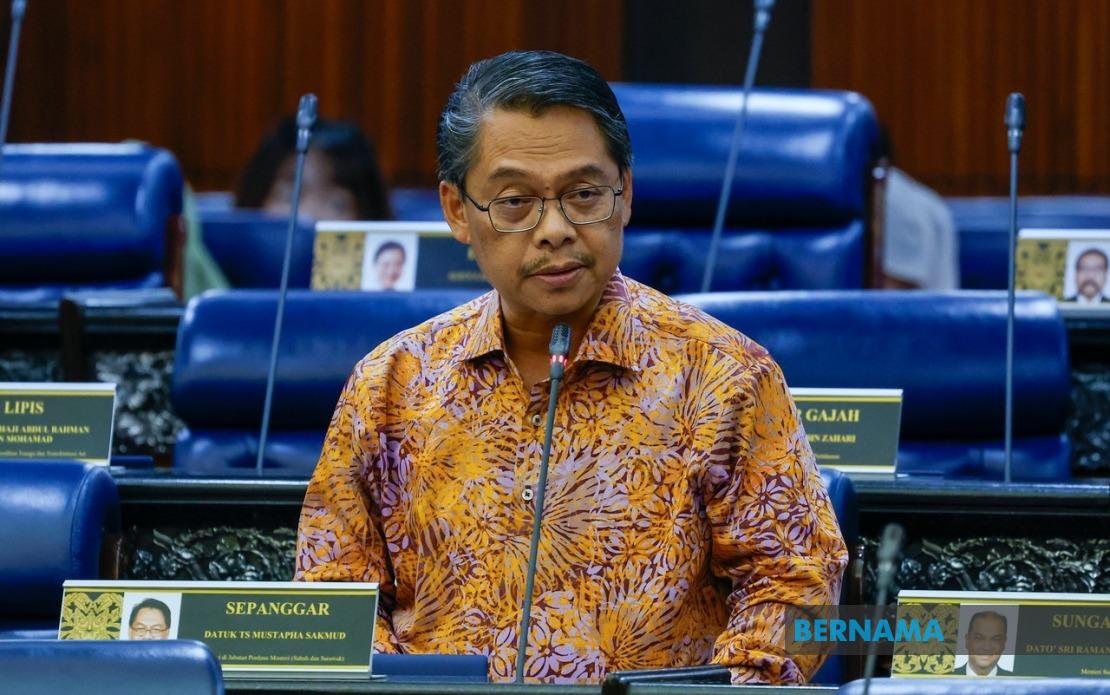
Negotiations over the Malaysia Agreement 1963 have advanced to the point where roughly half of all outstanding matters have now been substantially addressed, according to the Minister in the Prime Minister's Department handling Sabah and Sarawak Affairs. Datuk Mustapha Sakmud disclosed during parliamentary questioning that 13 of the 29 issues under formal discussion have achieved complete resolution following the most recent Technical Committee meeting. An additional five matters have secured what officials describe as interim or partial agreement, representing steady if incremental progress on a framework that has long ranked among the most sensitive constitutional arrangements in the region.
The 13 fully resolved matters represent a significant achievement for federal and state officials who have been navigating competing interests and historical grievances. However, the remaining 11 outstanding issues continue to occupy administrators across both Sabah and Sarawak state governments and federal ministries. The Sabah and Sarawak Affairs Division, serving as the formal secretariat to these negotiations, is maintaining close coordination with all stakeholders to move toward resolution on these pending items. The pace of these negotiations reflects both the technical complexity of constitutional matters and the political sensitivity surrounding questions of state autonomy and federal authority.
Among the five interim matters now partially resolved, four specifically relate to bureaucratic expansion and administrative control. These include enlargement of state public service appointments under Article 112 of the Federal Constitution, a matter that touches directly on employment opportunities and state capacity to appoint officials loyal to local interests. The other interim resolutions address health services, educational systems, and the broader initiative to promote Borneonisation within federal public service structures across both states. Borneonisation—the practice of ensuring that civil service positions in Sabah and Sarawak are filled preferentially by local candidates—strikes at the heart of whether these states can genuinely control their administrative apparatus or whether federal authority supersedes state preferences.
The parliamentary representation question has emerged as perhaps the most intractable issue remaining on the agenda. During the parliamentary session, independent legislator Isnaraissah Munirah Majilis from Warisan raised demands that Sabah and Sarawak secure parliamentary seats representing 35 per cent of the total composition of the Dewan Rakyat. This demand reflects long-standing arguments from East Malaysian states that they remain under-represented relative to their population and land area. The current allocation, by comparison, falls considerably short of this target, and advocates contend that achieving 35 per cent representation would more fairly reflect East Malaysia's constitutional position as co-founder of the federation.
Minister Mustapha explained that no headway can be made on this matter without several technical and constitutional barriers being overcome. Electoral redistricting by the Election Commission can proceed only after an eight-year boundary cycle has expired, creating timing constraints that lie outside federal control. More fundamentally, any alteration to the composition of the Dewan Rakyat as specified in Article 46 of the Federal Constitution demands a two-thirds majority vote in parliament, a threshold that has historically proved difficult to achieve on contentious constitutional amendments. The Election Commission's authority, flowing from the 13th Schedule and Article 113, means this is not a matter that can be resolved through ministerial negotiation alone.
For Malaysian readers, the implications of this parliamentary seat stalemate extend beyond abstract constitutional debate. A larger East Malaysian representation would substantially reshape the regional balance of power within parliament and potentially alter coalition mathematics in ways that could elevate Sabah and Sarawak's influence over national policy. It would also represent symbolic recognition of these states' historical role in founding the federation. Conversely, amending the constitution to achieve this goal would require either unprecedented consensus across governing coalitions or a political majority strong enough to command two-thirds support—circumstances that have not yet materialised. The political barriers to progress thus appear as formidable as the technical and constitutional ones.
The broader MA63 framework encompasses longstanding tensions stretching back to the agreement that formally created Malaysia in 1963 when Sabah and Sarawak joined the peninsula to form the federation. These two states were promised specific autonomies and protections in exchange for joining what was then a predominantly peninsular state structure. Disputes over whether the federal government has adequately honoured those original commitments have simmered for decades, occasionally erupting into public controversy. The current round of formal negotiations represents an attempt to address accumulated grievances through structured dialogue rather than allowing tensions to fester or escalate.
The fact that more than half the matters under discussion have now been resolved or advanced to interim status suggests the negotiating machinery is functioning, even if at modest speed. However, the gap between interim resolutions and complete finality remains significant. Interim status implies that stakeholders have agreed on broad principles but perhaps not on implementation details, funding mechanisms, or precise timelines. Moving these five interim matters toward full resolution will require further technical work and, potentially, political decisions at higher levels. The remaining 11 wholly outstanding matters may involve the most difficult issues—those where fundamental interests collide and compromise has proven elusive.
Sabah and Sarawak's relationship with the federal centre has long been complicated by geography, demography, and history. These states occupy most of Borneo island alongside Indonesian territory and remain separated from peninsular Malaysia by the South China Sea. Their populations are smaller than those of major peninsular states, yet they possess vast natural resources and strategic geographic importance. The MA63 negotiations thus occur within a broader context where East Malaysian leaders argue that their states have been marginalised despite their constitutional status as co-founders, while federal authorities contend they have made substantial accommodations and investments.
Moving forward, the outstanding matters will test whether the negotiating framework can sustain momentum and resolve increasingly difficult questions. The parliamentary seats issue appears unlikely to be resolved through the current technical committee process alone, suggesting political leaders may eventually need to engage directly if compromise is to be achieved. The eleven remaining outstanding matters may similarly require escalation or political intervention to overcome deadlock. The question facing Malaysian policymakers is whether the current structure of negotiations can produce results on these harder cases or whether different approaches must be developed.

