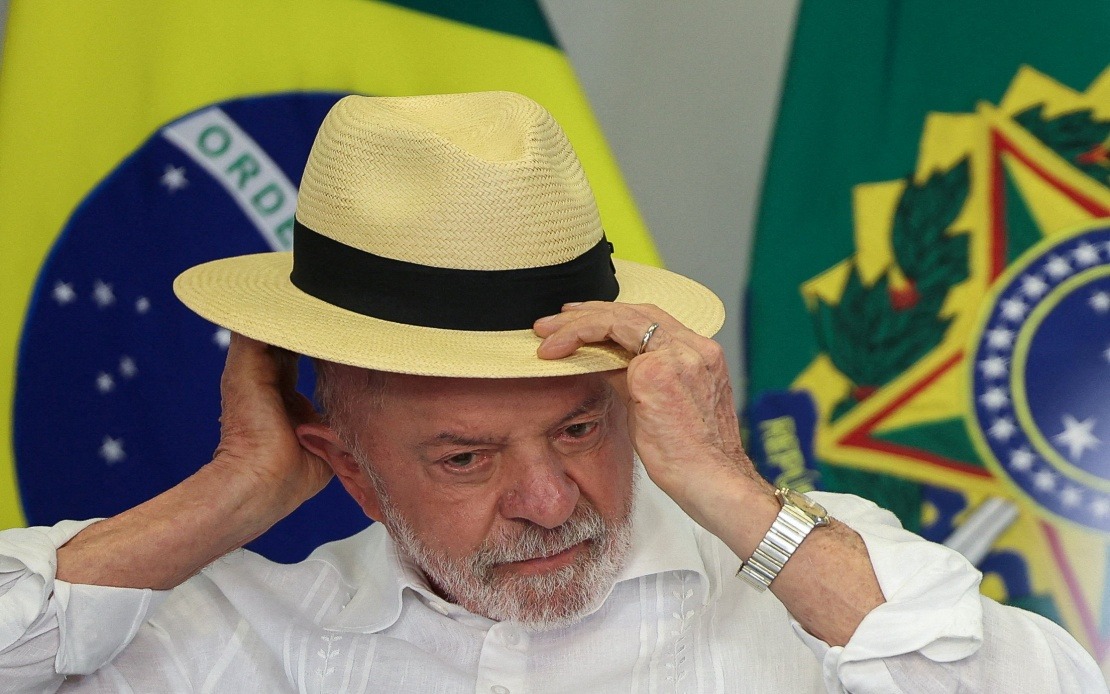
Brazil's presidential election campaign is entering its critical closing phase with President Luiz Inacio Lula da Silva clinging to a narrow advantage over his principal rival, Senator Flavio Bolsonaro, according to a fresh Quaest poll released through the Globo media organisation. In the simulated runoff scenario—the format most Brazilian voters expect to determine the October election—Lula edges ahead with 43 per cent support compared to Bolsonaro's 40 per cent. Yet this apparent three-point margin masks a more complicated reality: the survey's two-point margin of error means the candidates occupy essentially the same polling position, rendering the race extraordinarily competitive with less than two months remaining before voters head to the polls.
The Quaest survey, which interviewed 2,004 respondents between August 10 and 13, reveals a contest that has tightened visibly over just days. A comparable poll conducted five days earlier on August 5 showed Lula commanding 44 per cent against Bolsonaro's 39 per cent—a five-point spread that has contracted to functional parity. This trajectory suggests momentum may be shifting toward the former president's challenger, intensifying pressure on Lula's campaign machinery to reinvigorate his political base during the final campaign sprint. Should the trend continue, the race could genuinely pivot, though both candidates retain realistic pathways to victory depending on turnout patterns and campaign effectiveness in the coming weeks.
Brazil's electoral system requires an absolute majority for outright victory in the first round; absent such an outcome, the top two finishers face off in a runoff. The latest first-round projections reinforce this mathematical certainty, with Lula securing 38 per cent and Bolsonaro 31 per cent. This ten-point primary separation masks fragmentation among right-wing alternatives to Bolsonaro, with candidates Renan Santos and Ronaldo Caiado each polling at four per cent and Romeu Zema at two per cent. That fragmentation works mathematically in Lula's favour for a first round but provides Bolsonaro's coalition strategic flexibility to consolidate these voters before any runoff confrontation.
Flavio Bolsonaro's emergence as the frontrunner of Brazil's right-wing political coalition represents a significant realignment within the country's fractious conservative movement. As the eldest son of former President Jair Bolsonaro, he stepped into the void created when his father was disqualified from contesting the election. The elder Bolsonaro faced disqualification after Brazil's superior electoral court determined he had abused his presidential powers and was subsequently convicted in connection with a scheme to reverse his 2022 election loss to Lula. This constitutional barrier has forced Brazil's right to consolidate around Flavio despite his relative political inexperience compared to his father's twelve years in the presidency.
Lula's campaign strategy has deliberately pivoted toward nationalist themes centred on protecting Brazil's sovereignty and strategic resources from foreign interference. Launching his re-election effort on August 2 at the Workers' Party convention in São Paulo, the president articulated a vision of Brazil defending its interests against external pressures, pointedly referencing the Trump administration's various initiatives. During his campaign kickoff, Lula emphasised his determination to prevent foreign powers from accessing the nation's rare earth elements and other critical minerals without respecting Brazilian sovereignty. His language carried unmistakable significance given historical anxieties about foreign control of Brazil's natural wealth and echoed nationalist sentiments that resonate powerfully across the Brazilian electorate regardless of ideological orientation.
The sovereignty framework Lula has constructed also functions as an implicit critique of his predecessor's orientation toward external powers, particularly the United States. Lula's explicit warnings to President Donald Trump—delivered in June when he urged the American leader not to interfere in Brazilian electoral processes—foreshadowed this campaign positioning. The current president stated plainly that Brazilian elections constituted an exclusively Brazilian matter, just as American electoral processes fell within American purview. These statements recognise that Trump has maintained close relations with the Bolsonaro family throughout their political careers, generating legitimate Brazilian concern about external interference in a sovereign democratic process.
The geopolitical dimension of Brazil's election carries implications extending beyond South America. As the largest economy and most populous nation in Latin America, Brazil's foreign policy orientation—whether more aligned with Washington or pursuing autonomous great-power positioning—affects regional dynamics and global alignments. Lula's nationalist messaging on mineral sovereignty reflects genuine anxieties about Chinese, American, and European designs on Brazil's resources. His explicit mention of France alongside China and the United States in his warnings demonstrates how competition among multiple great powers for strategic access to Brazilian raw materials shapes the political conversation.
The statistical tightness evident in these polling figures should concern Lula's campaign organisation despite his continued nominal lead. While the incumbent typically enjoys incumbent advantages, the compression of his support over a five-day period suggests his coalition may face mobilisation challenges or that opposition voters are consolidating more effectively than anticipated. The first-round numbers, where he maintains a substantial gap, provide reassurance; however, a runoff scenario matching him against Bolsonaro—still the most probable outcome under Brazilian electoral rules—would require Lula to energise voters who may currently feel demobilised or insufficiently motivated to participate.
For Malaysian and Southeast Asian observers, Brazil's election carries broader lessons regarding the resilience of democratic institutions under pressure. That Jair Bolsonaro was successfully prevented from running through constitutional mechanisms, despite his substantial political base, demonstrates that electoral safeguards can function even against determined efforts to circumvent them. Additionally, Lula's nationalist positioning around resource sovereignty reflects broader developing-world anxieties about neocolonial patterns in global trade and investment—themes resonating throughout Southeast Asia and the broader Global South.
The campaign's final eight weeks will test whether Lula can stabilise his support and maintain his narrow advantage or whether Bolsonaro's momentum continues building toward potential victory. Historical precedent offers limited guidance given Brazil's volatile recent electoral history and the unprecedented circumstances of this particular contest. Regional observers should monitor both the polling trajectory and campaign communication strategies, as they will signal broader patterns about right-wing versus progressive political competition in Latin America's most significant democracy and potentially influence regional geopolitical orientation.

