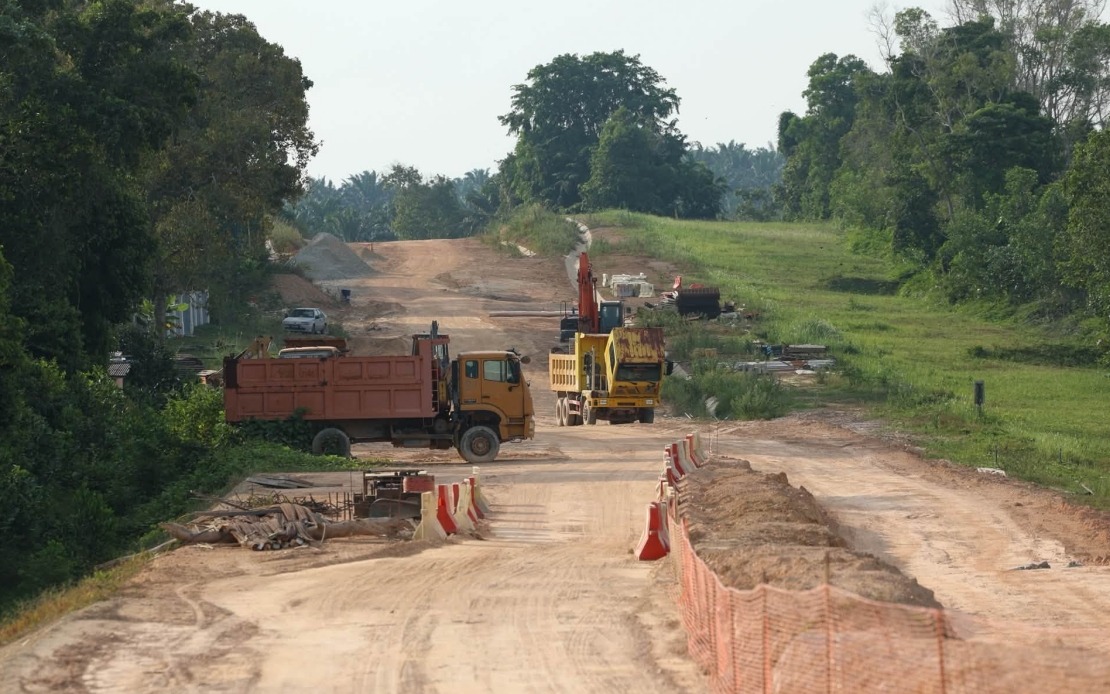
The RM81.92 million road project connecting Lukut to Kampung Sirusa through Kampung Paya and Kampung Bagan Pinang in Port Dickson is progressing faster than anticipated, having achieved 60.57 per cent physical completion as of mid-July. The accelerated pace represents a meaningful gain of 43 days over the originally scheduled delivery date of August 10, 2027, signalling efficient project management and steady progress on this significant infrastructure investment for Negeri Sembilan's coastline.
The Works Ministry confirmed that the ten-kilometre road development encompasses comprehensive civil works aligned with Public Works Department R2 specifications, including earthworks, drainage and sewerage systems, structural elements, and utility installations. This holistic infrastructure approach reflects modern standards for regional connectivity, ensuring that the new thoroughfare will integrate seamlessly with existing utility networks rather than functioning as a standalone asset.
Deputy Works Minister Datuk Seri Dr Ahmad Maslan visited the Port Dickson construction site to assess progress firsthand and verify that works are being executed according to contract requirements and engineering standards. Such ministerial oversight at the midway point demonstrates the federal government's commitment to monitoring delivery on major rural infrastructure commitments, a practice that can help identify and resolve bottlenecks before they compromise timelines.
Beyond its immediate transportation function, the project carries strategic significance for Port Dickson's spatial development. The improved road network will enhance accessibility to public amenities including educational institutions and healthcare facilities, while reducing travel times between settlements. For residents currently dependent on longer circuitous routes, the new direct connection promises tangible quality-of-life improvements through shorter commutes and safer passage.
The Works Ministry projects substantial economic multiplier effects from the infrastructure completion. Enhanced connectivity is expected to catalyse local commerce and tourism activity, create employment during and after construction, and position the surrounding areas as more attractive destinations for private investment and commercial development. Port Dickson, traditionally reliant on primary industries and beach tourism, stands to benefit from improved internal connectivity that facilitates inter-settlement commerce and visitor mobility.
The funding source reflects the federal government's prioritisation of rural and regional development. The project received approval through the Ministry of Rural and Regional Development's allocation under the broader Federal Government development programme, with the State Public Works Department serving as implementing agency. This institutional arrangement aligns implementation responsibility with technically-capable state bodies whilst maintaining federal oversight of expenditure and performance.
Completing the project ahead of schedule carries implications for budgetary management and resource allocation across the Ministry's portfolio. Early delivery may release capital and contractor resources that can be redirected toward other pending infrastructure initiatives in Negeri Sembilan or neighbouring states, potentially accelerating development timelines across multiple projects.
For Malaysian readers, this project exemplifies how strategic infrastructure investment in secondary urban centres can address long-standing connectivity gaps. Port Dickson, positioned between Kuala Lumpur and Melaka along the western coast, has historically been somewhat isolated from its immediate hinterland despite its economic potential. The Lukut-Kampung Sirusa connection directly addresses this constraint, positioning the district as a more integrated component of the broader Selangor-Negeri Sembilan economic corridor.
The project's emphasis on comprehensive supporting infrastructure—not merely road surfaces but drainage, sewerage, and utility coordination—reflects lessons learned from earlier regional development initiatives. Standalone road construction without attendant infrastructure often generates unexpected maintenance costs and limits utility expansion. The R2 specification approach ensures that future densification and service expansion can occur without requiring road reconstruction.
For investors and entrepreneurs operating across Port Dickson, the improved accessibility translates to reduced logistics costs and enhanced market reach. Tourism operators, agricultural traders, and manufacturers will benefit from faster connections to supply chains and customer bases. The ministry's acknowledgement of these economic catalysts suggests that future project evaluation may increasingly quantify indirect economic returns alongside direct construction metrics.
The 43-day acceleration, whilst modest in percentage terms, reflects consistent performance rather than occasional bursts of activity. Maintaining this pace through the remaining 39.43 per cent of works—spanning the typically demanding final phases involving finishing works, testing, and commissioning—will require sustained focus on resource allocation and contractor coordination. Weather patterns and seasonal constraints will become increasingly relevant as the project approaches its completion window in late 2027.
Regional observers should monitor this project as a case study in infrastructure delivery outcomes. Negeri Sembilan's commitment to advancing its road network, combined with federal support and state implementation capacity, may serve as a model for comparable initiatives across other secondary towns in Peninsular Malaysia facing similar connectivity constraints. Early delivery on this flagship project could strengthen the state's track record for attracting future infrastructure investment.
The completion of the Lukut-Kampung Sirusa road will constitute a visible marker of government infrastructure ambition in the Port Dickson district. Beyond the immediate functional benefits of improved travel times and safer routes, the project represents a public investment in community quality of life and economic enablement, reinforcing the principle that targeted infrastructure spending in underserved regions remains central to Malaysia's development strategy.

