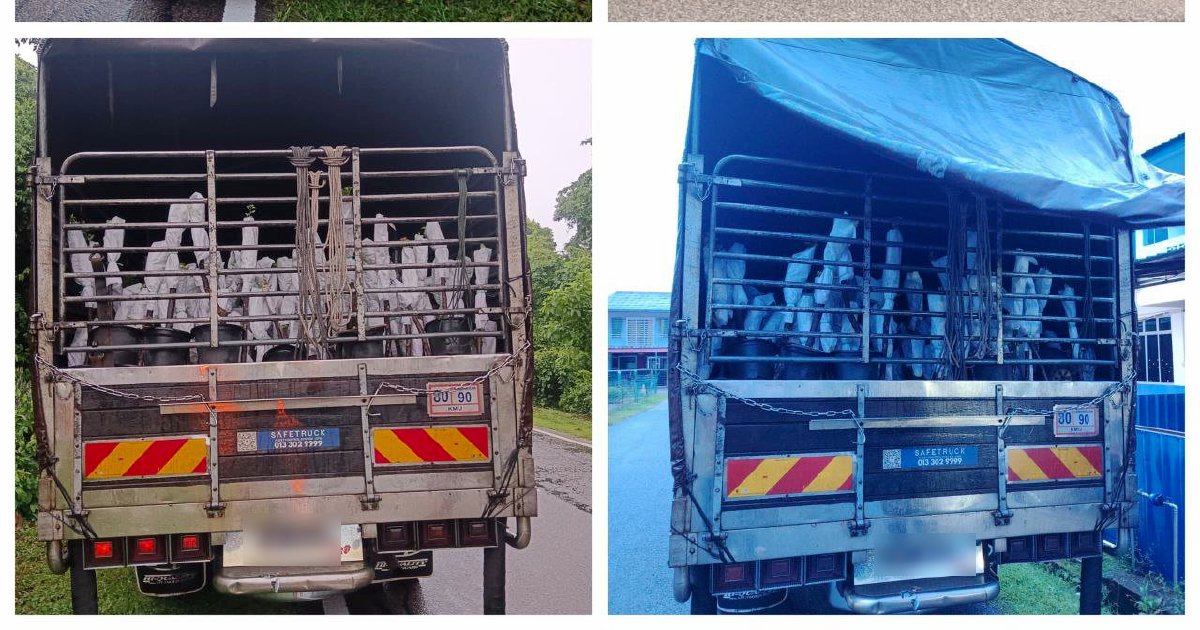
Border enforcement authorities at Rantau Panjang arrested a lorry driver and his attendant yesterday after discovering they were transporting plant saplings illegally smuggled from Thailand, with the contraband valued at approximately RM85,000. The operation represents a notable success in Malaysia's ongoing efforts to curb the illegal trade in horticultural materials crossing the northern frontier.
The detention occurred during routine border checks at Rantau Panjang, a major crossing point between Malaysia and Thailand in Kelantan state. Officers examining the vehicle discovered the undeclared plant saplings concealed within the lorry, raising immediate red flags about the shipment's legitimacy. The discovery prompted further investigation into the smuggling network behind the operation.
Plant smuggling has emerged as a persistent challenge for Malaysian customs and border agencies. The illegal trade in saplings, particularly rare or high-value species, represents both an economic concern and an environmental issue. Smuggling operations bypass phytosanitary controls designed to prevent the introduction of pests and diseases that could devastate Malaysia's agricultural sector. These regulatory measures exist to protect the country's significant horticultural and forestry industries.
The RM85,000 valuation placed on the seized saplings reflects the substantial profit margins available in this trade. Plant smuggling networks exploit price differentials between Thailand and Malaysia, where demand for particular species or varieties may command premium prices in domestic markets. Gardening and landscaping businesses, nurseries, and private collectors sometimes source plants through informal channels that circumvent legal importation procedures and phytosanitary certification requirements.
Rantau Panjang serves as one of Malaysia's busiest land borders, handling significant commercial traffic alongside passenger vehicles. The volume of daily crossings creates both operational challenges and opportunities for enforcement agencies. Officers must balance the need to maintain trade flow with rigorous inspections designed to intercept contraband. Yesterday's successful interception demonstrates the effectiveness of targeted enforcement protocols at major crossing points.
Thailand's role as a source country for smuggled plants reflects its position as a major regional agricultural producer. The country's nursery and horticultural sectors supply both legitimate and illicit markets throughout Southeast Asia. Cross-border trade in plants, while often legal and beneficial, provides convenient cover for smuggling operations. The proximity of Thai suppliers to Malaysian markets and the relative ease of transporting living plants make the northern border a susceptibility point for this particular contraband category.
The two detained men face investigation under relevant legislation governing smuggling and customs violations. Malaysian law treats the importation of undeclared plant material as a serious offense, with penalties potentially including substantial fines and imprisonment depending on the circumstances and any prior convictions. Authorities will seek to determine whether the men were low-level operatives in a larger smuggling organization or independent actors.
This seizure underscores Malaysia's commitment to border security and regulatory compliance in the horticultural sector. The Department of Agriculture and related agencies work continuously to strengthen inspection protocols and share intelligence about smuggling trends with neighboring countries. Regional cooperation remains essential given the cross-border nature of these operations and the shared interest in maintaining phytosanitary standards throughout Southeast Asia.
The incident also highlights broader vulnerabilities in global plant trade systems. Rising demand for ornamental plants, rare species, and specialized varieties has fueled illicit networks that operate parallel to legitimate supply chains. The lack of comprehensive global tracking mechanisms for plant materials means that significant volumes of contraband cross borders annually. Malaysia, as a major hub for regional commerce and a destination for gardening and landscaping supplies, remains an attractive market for smugglers.
Environmental conservation considerations add another dimension to the smuggling concern. Some plant species subject to international trade restrictions may be moving illegally to circumvent protections intended to preserve endangered populations in their native habitats. While the specific plants involved in yesterday's seizure have not been publicly detailed, the substantial valuation suggests they may include species with particular commercial appeal or scarcity value.
The broader context of plant smuggling reflects how agricultural products remain vulnerable to cross-border exploitation despite modern surveillance technology. Enforcement agencies continuously adapt their tactics, employing dog units trained to detect hidden compartments and developing intelligence networks to identify suspicious shipment patterns. Yet the economic incentives driving smuggling operations remain powerful, ensuring that vigilance must be maintained indefinitely.
Authorities indicated that investigations would continue to determine whether additional individuals were involved in the smuggling network and whether other shipments had successfully crossed the border previously. Such inquiries typically extend beyond the immediate apprehensions to map out wider criminal operations. Cooperation between Malaysian, Thai, and regional enforcement agencies will likely prove crucial to disrupting the supply networks fueling this trade and protecting Malaysia's agricultural and ecological interests.

