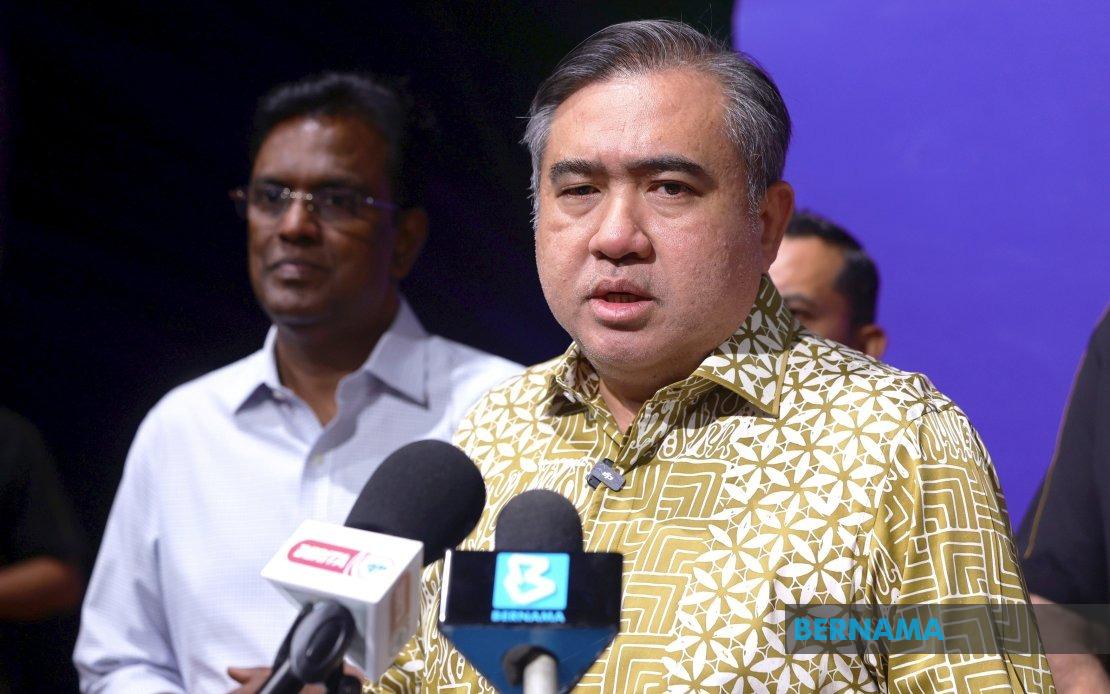
Anthony Loke, the incumbent assemblyman for Chennah and secretary-general of the Democratic Action Party, has signalled his confidence in facing opposition in the upcoming 16th Negeri Sembilan state election. Speaking in Seremban after officiating a MyLesen B2 programme, Loke stated that he welcomes electoral competition as a natural component of Malaysia's democratic system, affirming the right of any qualified individual to stand as a candidate.
The statement comes following reports that businessman Albert Tei had not dismissed the possibility of contesting the Chennah seat after receiving an overture from a political party. Rather than adopt a defensive posture, Loke framed the prospective challenge within the broader context of democratic participation, emphasising that such contests represent the normal operation of a functioning electoral system. His measured response reflects a confidence born from his three consecutive electoral victories in the constituency.
Loke's remarks underscore a broader principle he sought to reinforce: in a democratic nation, citizens possess the fundamental right to participate in electoral processes. He indicated that he views potential challengers not as threats to be feared but as legitimate participants exercising constitutional entitlements. This philosophical stance positions him as embracing the competitive nature of representative democracy rather than treating electoral challenges as anomalies requiring defensive commentary.
However, the DAP leader injected a note of procedural realism into the discussion. He cautioned that any prospective candidate, including businessman Tei, would need to satisfy specific eligibility criteria established by electoral authorities. Among these requirements is the critical obligation to update one's registered residential address to correspond with the constituency in which one intends to contest. This administrative prerequisite, while seemingly technical, represents a substantive barrier that filters out casual candidacies and ensures candidates maintain genuine connections to their constituencies.
Loke's strategic priority, as articulated to reporters, diverges markedly from preoccupation with potential opponents. Instead, he emphasised his commitment to fulfilling the responsibilities vested in him by voters who have returned him to office across three election cycles. This focus on constituent service rather than political combat reflects a time-tested approach among incumbent legislators seeking re-election: demonstrate performance and local engagement rather than engage in premature antagonism toward challengers.
The Chennah representative highlighted that the electoral mandate he received from constituents in previous contests remains the guiding force for his political activity. By foregrounding his obligations to voters rather than fixating on competition, Loke projects an image of a dedicated public servant whose loyalty lies with his constituency rather than with narrow partisan ambitions. This framing resonates particularly in Malaysian politics, where the efficacy of local representation often determines electoral outcomes.
The Election Commission has established a definitive timeline for the Negeri Sembilan state election that will determine not only the fate of candidates such as Loke and the prospective Tei challenge, but also the configuration of state government. Nomination day has been scheduled for July 18, with early voting on July 28 and general polling on August 1. This compressed timeline means that candidates and parties have limited weeks to finalise their strategies and organisational preparations.
For the DAP, Loke's handling of the Chennah situation carries implications beyond the individual contest. As party secretary-general, his performance in the Negeri Sembilan election will influence perceptions of DAP's organisational strength and electoral competitiveness in state contests. The party has experienced significant political transitions in recent years, and strong performances in state elections such as Negeri Sembilan contribute to rebuilding and consolidating the party's position in Malaysian politics.
The Chennah seat itself occupies strategic importance within the broader Negeri Sembilan electoral landscape. As an urban or semi-urban constituency, it reflects demographic and political patterns relevant to understanding the wider state electorate. The possibility of a contest between Loke and a business-backed independent candidate, if materialised, would reflect broader tensions between established political structures and alternative figures attempting to enter electoral politics.
Loke's equanimous response to the prospect of facing a challenger also reflects lessons learned from decades of Malaysian electoral politics. Overt dismissiveness toward opponents can backfire, while gracious acknowledgment of democratic principles projects confidence and statesmanship. This rhetorical approach serves multiple audiences: it reassures supporters that the incumbent faces no genuine threat, while signalling to potential challengers that competition will be vigorous but conducted within democratic norms.
The coming weeks will determine whether Albert Tei formally registers as a candidate and whether other challengers emerge for Chennah. Regardless, Loke has already established the framing within which the contest will be conducted: not as an existential struggle between competing visions but as a routine democratic exercise in which voters will choose their representative. This positioning, combined with his emphasis on constituent service, provides the incumbent with a structured approach heading into the campaign period.

