Malaysia's fisheries sector has received a significant infrastructure boost as the Malaysian Fisheries Development Authority (LKIM) continues rolling out a RM2 million investment programme to enhance fish landing facilities nationwide. The initiative, spanning repairs, upgrades, and new construction work, represents a concerted effort to modernise the country's fishing infrastructure while creating tangible benefits for coastal fishing communities whose economic survival depends heavily on efficient port operations.
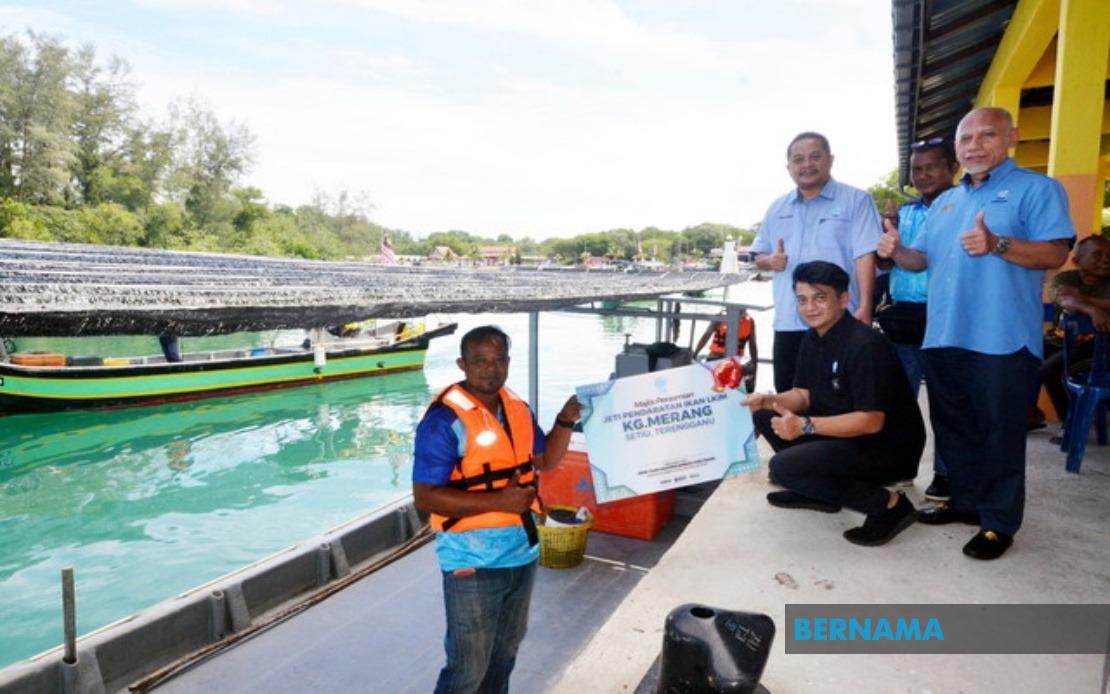
LKIM chairman Muhammad Faiz Fadzil outlined the agency's current progress during the official handover ceremony of the Kampung Merang Fish Landing Jetty in Bandar Permaisuri on June 30. This newly completed facility, constructed at a cost of RM500,000, signals the beginning of operations designed to serve 124 fishermen managing 68 boats in the Setiu district. The concrete structure replaces an ageing wooden jetty that villagers had originally built themselves—a makeshift arrangement that had deteriorated to unsafe conditions unsuitable for regular fish landing operations. The upgrade underscores how poor infrastructure can inadvertently compromise both safety and economic efficiency in traditional fishing communities.
For the current year, LKIM has completed the Merang project while pushing forward two additional schemes in Perak and Labuan that remain in preliminary documentation and tender procurement phases. This measured pace reflects the resource constraints currently facing the development authority, prompting Muhammad Faiz to signal concerns about inadequate funding allocation. He explicitly called upon the government to consider substantially increased budgetary provision in the next fiscal cycle, arguing that the existing funds prove insufficient to address the scale of infrastructure needs across Malaysia's dispersed fishing communities.
The broader portfolio managed by LKIM spans an impressive 372 fish landing jetties nationwide, supplemented by 48 fisheries complexes and ports. This extensive infrastructure network demonstrates the government's sustained commitment to maintaining functional facilities for commercial fishing operations. However, the discrepancy between the scale of existing infrastructure and the limited annual investment signals a potential maintenance and modernisation bottleneck that could undermine these assets' long-term viability if funding trajectories remain stagnant.
The Kampung Merang facility carries particular significance for local fishermen, as improved landing infrastructure directly influences their capacity to efficiently process and market their daily catches. Previous records indicate that Setiu district generates approximately 243 metric tonnes of fish landings annually, a figure that Muhammad Faiz expressed confidence would increase substantially once fishermen fully capitalise on the new jetty's superior facilities and operational standards. This anticipated growth trajectory reflects the economic multiplier effects of basic infrastructure improvements in communities where catch marketing represents the critical interface between production and income realisation.
Beyond the immediate logistical benefits, upgraded landing facilities streamline the commercial transaction process whereby fishermen connect with middlemen, buyers, and market distributors. The Kampung Merang jetty removes inefficiencies inherent in the previous arrangement, potentially enabling fishermen to negotiate better prices and reduce post-catch deterioration losses through faster market turnaround. These seemingly technical improvements translate into meaningful income enhancement for fishing household economies that operate on relatively thin profit margins vulnerable to supply chain disruptions and quality degradation.
Muhammad Faiz articulated the fundamental development principle underpinning the jetty investment strategy: fishermen's survival depends on harvest quality and sales reliability, dimensions directly influenced by landing infrastructure quality. When fishermen must utilise unsafe, unsuitable facilities, they forfeit opportunities to optimise catch value through rapid, professional handling and marketing. The concrete structure at Kampung Merang eliminates such constraints, creating operational conditions that maximise return on fishing effort and investment in vessels and equipment.
For Malaysian readers, particularly those in coastal states, the LKIM initiative carries broader implications for regional economic development and rural livelihoods. Fishing communities remain economically marginalised in many areas, with limited access to technology, financing, and market information that could enhance competitiveness. Infrastructure investment represents one tractable policy lever through which government can directly improve conditions without requiring behavioural change from fishermen themselves. The jetty programme thus functions as a foundational development intervention addressing supply-side constraints.
The funding constraint articulated by LKIM leadership warrants attention from policymakers and budget committees. A RM2 million annual allocation across a nation managing 372 landing jetties and serving tens of thousands of fishermen suggests chronically inadequate investment, particularly when considered against infrastructure maintenance requirements and the imperative for modernisation to compete with regional neighbours' fishing sectors. Malaysia's considerable maritime resources and fishing population deserve resource allocation proportionate to their economic and livelihood significance.
Looking forward, successful execution of the Perak and Labuan projects will demonstrate LKIM's capacity to execute the broader programme despite budget constraints. However, meaningful expansion to address infrastructure deficits across all Malaysian fishing regions will require the enhanced government budgetary support that Muhammad Faiz explicitly requested. As Southeast Asia's fishing sectors intensify competition for catches and market access, maintaining competitive infrastructure advantages becomes strategically important for preserving Malaysia's regional fishing prominence.

