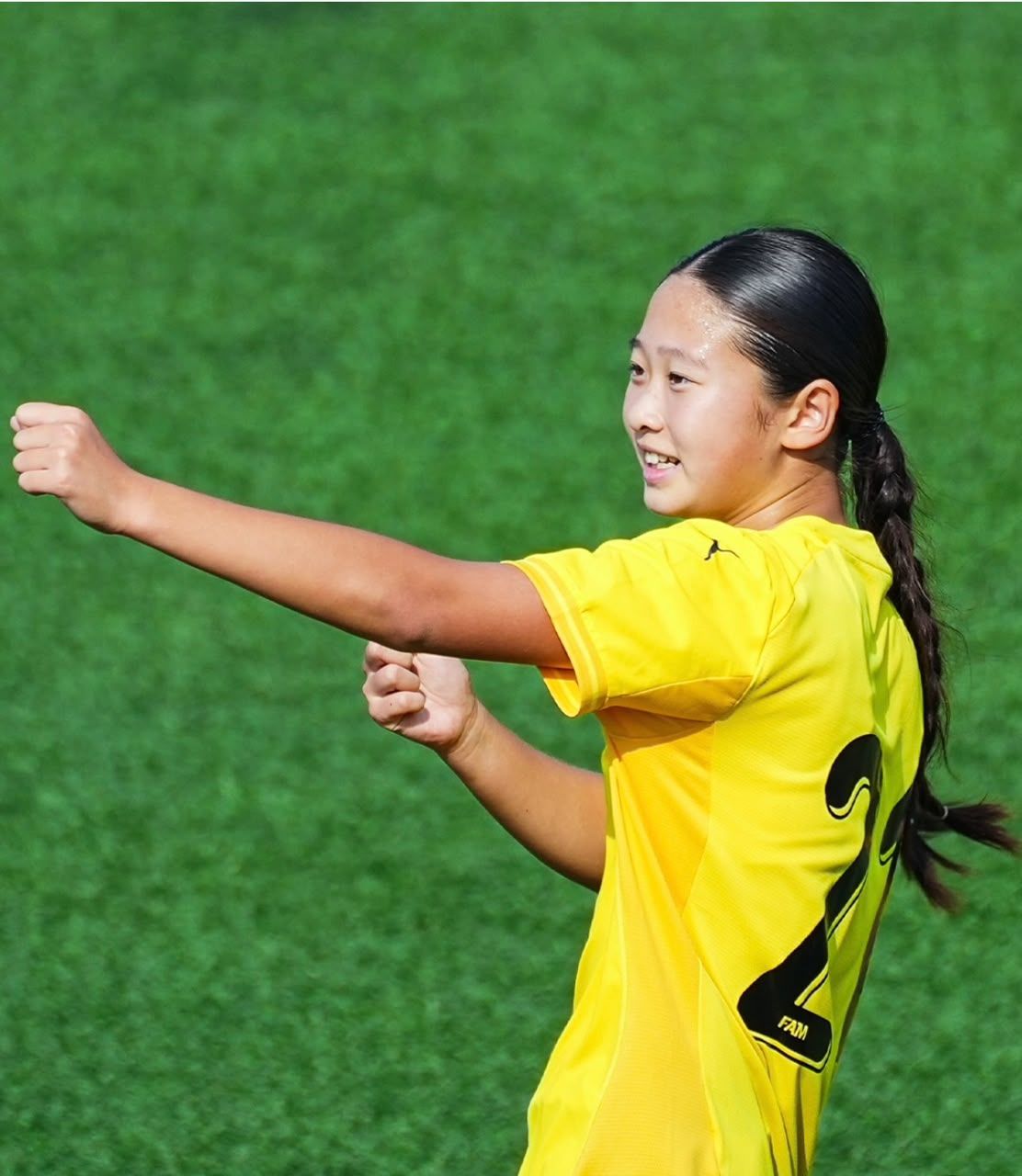
The Malayan Tigress Under-17 squad delivered a commanding performance in Kudus, Indonesia on Tuesday, overwhelming Saudi Arabia 9-0 in their Group A encounter at the 2026 Srikandi Merdeka Cup. At the heart of Malaysia's dominant display was 14-year-old Lim You, whose clinical finishing with her left foot produced seven of the nine goals, announcing herself as a prospect of considerable promise in women's youth football.
Lim You's left-footed arsenal, meticulously cultivated by her father since childhood, proved devastatingly effective against the Saudi defence. The teenager found the net in the eighth, 22nd, 27th, and 57th minutes, before adding a penalty conversion in the 75th minute and two further strikes in the 83rd and 85th minutes. Her father's unconventional coaching philosophy—identifying left-footedness as a rare speciality worth developing intensively—appears vindicated by this display. In an era where technical asymmetry often goes underutilised, the elder Lim's commitment to nurturing his daughter's weaker foot demonstrates how tactical thinking at grassroots level can create genuine competitive advantage.
Speaking during a virtual press conference organised by the Football Association of Malaysia, Lim You offered insight into her development pathway and the philosophical approach underpinning her success. She explained that her father had recognised the rarity of skilled left-footed players and deliberately invested training hours in that dimension of her game. Rather than relying on the natural foot preferred by most athletes, the family unit embraced an alternative development strategy that has now yielded tangible international results. Her acknowledgment that "not a lot of people are left-footed" reflects a broader pattern in youth football, where conformity to the dominant right-footed paradigm often prevents exploration of genuinely distinctive technical strengths.
Despite the personal accolades, Lim You demonstrated mature perspective in distributing credit to her teammates. She emphasised that her teammates' service created the conditions for her finishing success, suggesting an understanding of collective responsibility uncommon in adolescent athletes who have just experienced such individual acclaim. This temperament—combining ambition with humility—may prove as valuable to her long-term development as her technical gifts. The willingness to frame achievement within team context often separates young players who sustain improvement from those whose early promise plateaus.
The teenager's integration into Malaysia's national setup involved navigating unexpected challenges beyond the tactical realm. Lim You revealed that language barriers initially complicated her adaptation, acknowledging her initial lack of fluency in Malay. Her parents were born and raised in Johor, establishing Malaysian lineage, yet Lim You was born in Taiwan before her family relocated to Washington state, creating a complicated cultural geography. Despite these circumstances, she expressed gratitude for the smooth adjustment with her teammates and genuine enthusiasm for her inaugural national squad experience. Her rapid acclimatisation suggests both exceptional interpersonal skills and the welcoming environment established within the women's youth programme.
Lim You's transnational background reflects broader patterns in Malaysian sports recruitment. Born abroad but maintaining family roots in Johor and Kuala Lumpur, she represents the diaspora population whose connections to Malaysia remain emotionally resonant despite long-term residence overseas. The 165-centimetre forward visits Malaysia every two to four years, sustaining family relationships with relatives scattered across the country. This experience mirrors that of other Malaysian-descended athletes competing internationally, for whom representing the national colours carries symbolic weight beyond conventional patriotism—it represents a personal homecoming of sorts.
Malaysia's comprehensive victory came after a more difficult opening phase. The squad had drawn goallessly with Hong Kong before suffering a 0-3 defeat against hosts Garuda Pertiwi, suggesting initial tactical adjustments were necessary. The demolition of Saudi Arabia, combined with the earlier draws, positioned Malaysia as Group A runners-up with four points, level on points with Hong Kong but advancing to the semi-finals through superior goal difference. This trajectory—faltering start, overwhelming resurgence—indicates coaching staff successfully identified and rectified early deficiencies in their tactical approach and player selection.
The semi-final draw remains open, with Malaysia awaiting the winner of Group B. Thailand, Jordan, and Singapore are competing for that position, with final group matches scheduled for today. Each of these nations presents distinct technical and physical challenges. Thailand's established pedigree in Southeast Asian women's football, combined with Jordan's aggressive approach, and Singapore's tactical discipline, will test whether Malaysia's form against Saudi Arabia represents genuine improvement or merely a mismatch of quality.
Lim You's performance has inevitably generated attention and expectation. She acknowledged feeling some pressure following her seven-goal achievement, a natural response to sudden prominence in youth sports. However, her deep affection for the game itself appears sufficiently robust to insulate against external noise. Her stated readiness to compete regardless of opponent standard suggests psychological maturity that augurs well for handling the elevated expectations accompanying national team selection. The pressure experienced at fourteen often determines whether young athletes sustain development or succumb to self-doubt.
The broader significance of Malaysia's advancing position extends beyond immediate tournament progression. The emergence of technically gifted players like Lim You, combined with the visible quality throughout the squad, suggests investment in youth development pathways is yielding measurable returns. The region's competitive women's football environment—where Thailand, Vietnam, and Japan have established clear dominance—demands sustained production of technically sophisticated players. Individual performances like Lim You's seven-goal exhibition, while encouraging, must translate into systemic improvement across age groups and playing depths.
Lim You's journey from Washington-based adolescent to national team protagonist encapsulates Malaysian football's evolving geography. As the diaspora's sporting contributions become increasingly visible, questions arise about long-term retention and development of overseas-based talent. Whether Lim You's current involvement represents a catalyst for sustained engagement with Malaysia's football infrastructure or remains an isolated episode depends partly on how the national programme structures pathways for internationally-based young players.

