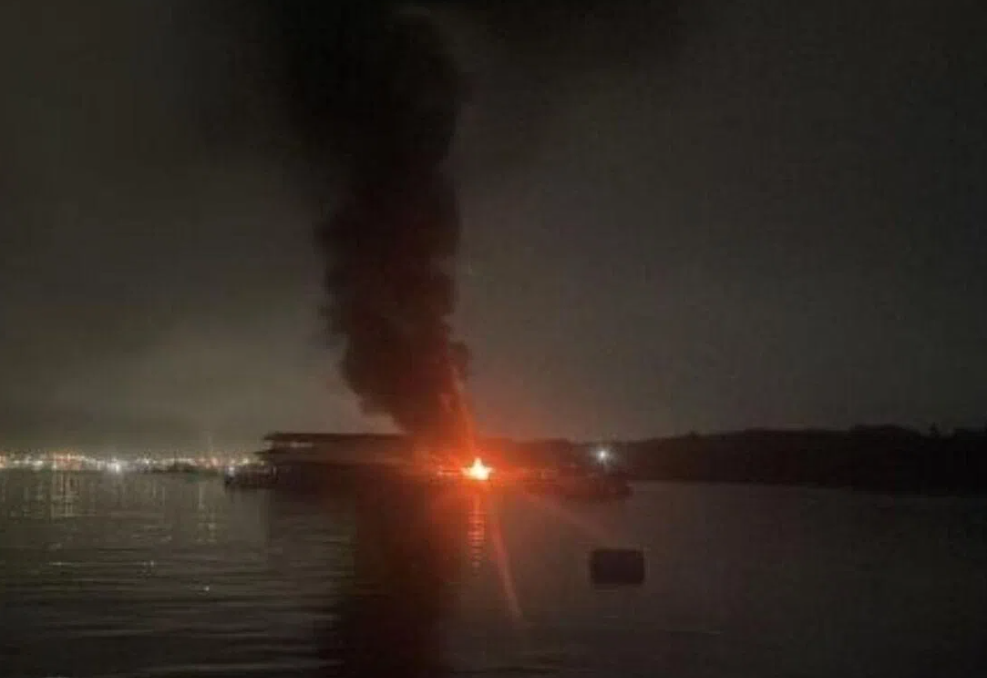
Singapore's aquaculture sector suffered a substantial setback on June 24 when a lightning strike triggered a major fire affecting at least two floating fish farms anchored near Pulau Ubin. The Singapore Civil Defence Force received the emergency call shortly after 8.10pm that evening and mobilised resources to combat the blaze, which proved challenging given the offshore location and scale of the incident. Firefighting efforts persisted for several hours before the flames were finally extinguished, though investigations into the precise sequence of events remain ongoing.
Meteorological evidence points to a lightning strike as the ignition source, with the electrical discharge believed to have struck the solar panel installations mounted on one of the farms. The fire then propagated to at least two adjacent fish farm operations in rapid succession, amplifying the emergency and complicating containment efforts. This causal link between renewable energy infrastructure and fire risk presents a sobering reminder of the occupational hazards facing Singapore's floating aquaculture operations, which increasingly rely on solar technology to offset operational costs and meet sustainability targets.
The affected farms operate from the vicinity of Lorong Halus jetty in the Pasir Ris area, positioned strategically near the small islands of Pulau Ubin and Pulau Ketam. This location, while offering certain operational advantages for marine farming, places the installations in an environment with considerable exposure to atmospheric electrical activity during monsoon and thunderstorm seasons. The offshore positioning, designed to optimise water quality and reduce land constraints, simultaneously increases vulnerability to weather-related hazards and complicates emergency response logistics.
One farm operator estimated personal losses at approximately S$120,000, a figure that underscores the capital intensity and financial fragility of small to medium-scale aquaculture enterprises in Singapore's competitive maritime economy. The damage inventory extended beyond direct infrastructure destruction: the incident destroyed fish feed stocks, backup generators, solar panels, a fishing vessel, and multiple fish traps essential to daily operations. The loss of fishing nets compounded the disaster, with the operator reporting that roughly half of the farm's fish inventory escaped into surrounding waters, representing an immediate and cascading loss of productive assets and saleable inventory.
A particularly frustrating dimension of this disaster, from the operator's perspective, centres on insurance limitations. The affected farmer indicated an inability to pursue insurance claims for the fire damage, a constraint that reflects either coverage gaps within his existing policy or exclusions that apply to specific risk categories such as lightning strikes. This insurance gap underscores a broader vulnerability affecting Southeast Asia's aquaculture sector: many small operators lack comprehensive coverage for weather-related events, leaving them personally exposed to substantial financial shocks.
The operator's reflections on past incidents added crucial context to the emergency response challenges. He noted that solar panels on the farm had previously sustained lightning damage, but rapid intervention by on-site workers had prevented those earlier incidents from escalating into fires. The critical difference on June 24 was the absence of personnel at the farm when the strike occurred. This observation highlights an operational reality for floating farms: the transition from manned to autonomous or minimally staffed operations, while economically attractive, introduces new failure modes and emergency escalation pathways that traditional protocols were not designed to accommodate.
The response to the fire mobilised resources across multiple Singapore agencies and private entities. Maritime vessels operated by the Maritime and Port Authority of Singapore and the Airport Emergency Service joined the Civil Defence Force in firefighting operations. Significantly, workers from neighbouring fish farms voluntarily engaged in containment efforts, demonstrating the cooperative traditions and mutual vulnerability awareness within Singapore's tight-knit aquaculture community. This spontaneous coordination of resources likely prevented the fire from spreading further and causing even more extensive damage across the cluster of farms.
The incident carries implications beyond immediate operational losses for the affected farmers. It raises systemic questions about infrastructure resilience, emergency preparedness, and risk management protocols within Singapore's floating aquaculture sector. The country's aquaculture industry contributes meaningfully to food security and local protein production, and concentrated incidents affecting multiple farms simultaneously pose risks to supply chain stability. Malaysian aquaculture operators operating in similar maritime environments face comparable hazards, making Singapore's experience relevant across the region.
The reliance on solar energy, while environmentally beneficial and economically rational for reducing diesel generator dependence, introduces new technical vulnerabilities that farming communities and regulatory bodies are still learning to manage effectively. Lightning protection systems, grounding specifications, and emergency power protocols designed for land-based agricultural infrastructure often require substantial modification for floating operations. The absence of industry-wide standards and best practices for solar installation on floating farms suggests that additional incidents may occur elsewhere in the region before systematic improvements crystallise into regulatory frameworks or industry guidelines.
The Singapore Civil Defence Force confirmed no injuries resulted from the incident, a positive outcome attributable partly to the lack of workers on site at the moment of ignition, though this same absence exacerbated equipment damage and financial losses. Investigations remain active, and observers await formal findings that might illuminate whether the incident reveals broader systemic vulnerabilities or represents an isolated occurrence reflecting specific local conditions or technical deficiencies.

