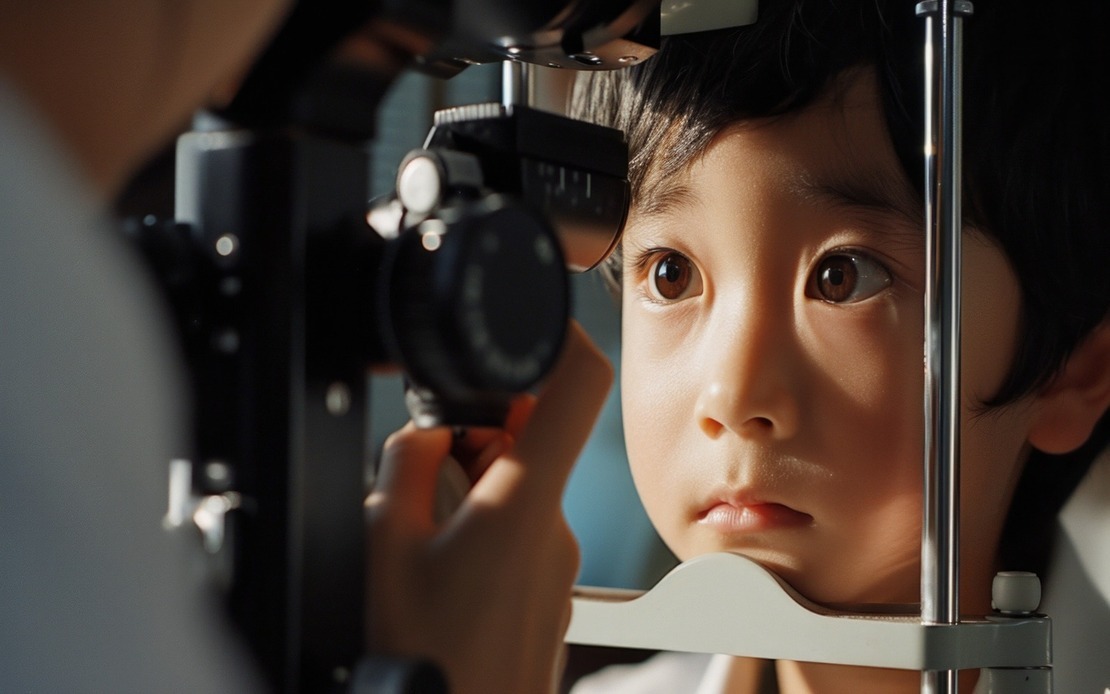
Early detection of eye problems can make the difference between correctable conditions and permanent vision loss, according to leading Malaysian eye specialists who are calling for greater awareness of screening programmes across all age groups. Dr Fazilawati A Qamarruddin, a consultant ophthalmologist and paediatric eye specialist at Sunway Medical Centre, emphasises that many common eye conditions go undetected precisely because families and schools do not recognise the warning signs until they affect academic performance or social development.
Strabismus, commonly known as squinting, affects between two and four per cent of children globally—a figure that translates into thousands of Malaysian youngsters. The condition occurs when the eyes become misaligned, with one eye pointing in a fundamentally different direction from the other. The consequences extend far beyond cosmetic concerns: misaligned eyes disrupt depth perception, impair learning ability, and can undermine a child's confidence during crucial developmental years. Parents often attribute eye-turning to growth phases or temporary habits, missing the window during which intervention is most effective and least invasive.
The underlying causes of strabismus vary considerably. Most commonly, the condition stems from uncorrected refractive errors—myopia, hyperopia, or astigmatism—where one eye strains harder than the other, causing gradual misalignment. However, more serious causes must be ruled out through proper medical examination. Neurological deficits, trauma to the eye region, and intracranial tumours can all present as sudden or persistent squinting. In adults, squinting that develops rapidly or accompanied by double vision warrants immediate medical evaluation to exclude serious conditions affecting the brain or eye socket structures.
If left untreated, strabismus frequently leads to amblyopia, or lazy eye syndrome. In this condition, the brain gradually learns to suppress visual signals from the weaker eye, favouring the stronger one instead. Over time, the neglected eye loses functional vision capacity—a process that becomes increasingly difficult to reverse as the child grows older. The critical window for preventing this outcome extends through early childhood, making screening before age three and again before primary school entry essential checkpoints in every child's medical journey. Simple observations by parents—head tilting, frequent squinting, sitting abnormally close to screens, or complaints of headaches—should prompt professional evaluation rather than watchful waiting.
Refractive errors themselves represent Malaysia's most prevalent eye problem among children, yet they rank among the most easily managed conditions when detected early. Prescription glasses provide safe, effective correction that allows normal vision development and removes barriers to learning. The tragedy lies not in the existence of these conditions but in their discovery only after they have already damaged a child's educational trajectory and social integration. Dr Fazilawati stresses that parents should not defer examination until schools identify problems; proactive screening ensures children enter formal education with optimal visual capacity.
Cataracts present a distinct but equally significant concern, particularly among older Malaysians. While primarily associated with ageing and most common in individuals over sixty, cataract formation accelerates in people with diabetes, active smokers, and those with cumulative sun exposure. The condition causes progressive clouding of the eye's natural lens, resulting in blurred or hazy vision, increased sensitivity to glare, diminished colour perception, and particular difficulty navigating in low light. Night driving becomes increasingly hazardous as cataracts advance, potentially restricting the independence and mobility that seniors value highly.
Fortunately, modern surgical techniques have transformed cataract treatment from a dreaded intervention into a routine outpatient procedure with excellent safety profiles. Phacoemulsification technology uses precisely controlled ultrasound vibrations to fragment the cloudy lens through a remarkably small incision—often no larger than three millimetres. This minimally invasive approach differs dramatically from older surgical methods requiring large incisions and extended hospitalisation. Recovery timelines have compressed accordingly: most patients resume light activities within a week, with complete visual restoration typically achieved within two weeks. Many procedures now proceed as same-day surgery, eliminating overnight hospital stays and reducing infection risk.
The mounting prevalence of screen-related eye strain among younger populations adds urgency to existing concerns. Prolonged close-range focus on digital devices—smartphones, tablets, computers—may contribute to myopia progression in children and teenagers whose visual systems remain developmentally plastic. Extended screen exposure reduces blink frequency and concentrates viewing at distances that strain accommodation mechanisms. The recommended 20-20-20 rule provides practical mitigation: every twenty minutes of continuous screen work should be interrupted by looking at an object approximately twenty feet distant for at least twenty seconds. This rhythm allows the eye's focusing muscles to relax and tear film to regenerate, reducing cumulative strain.
Comprehensive eye screening recommendations extend across the lifespan with specific checkpoints for different populations. Children require baseline examinations by age three, reinforced by additional screening before primary school entry. Adults with no known eye conditions should begin regular examinations at age forty, establishing baselines for monitoring presbyopia and age-related changes. Individuals with diabetes face particular urgency: annual or more frequent eye examinations become medically essential because diabetic retinopathy—blood vessel damage within the retina—can progress rapidly and silently toward irreversible vision loss. Fortunately, early-stage diabetic retinopathy responds well to intervention, making timely detection genuinely sight-preserving.
The broader health implications of missed eye screening extend into educational achievement, employment prospects, and quality of life in older age. A child whose vision problems go undetected may fall behind academically, accumulating learning gaps that persist for years despite eventual correction. Seniors whose cataracts progress unchecked may withdraw from social participation, increase fall risk at home, and lose the independence that defines healthy ageing. The relatively modest investment required for routine screening—a few hours of time and modest examination fees—pales against the costs of managing preventable blindness, remedial education, or age-related disability. Early detection represents one of medicine's clearest instances where prevention truly surpasses treatment in both human and economic terms.

