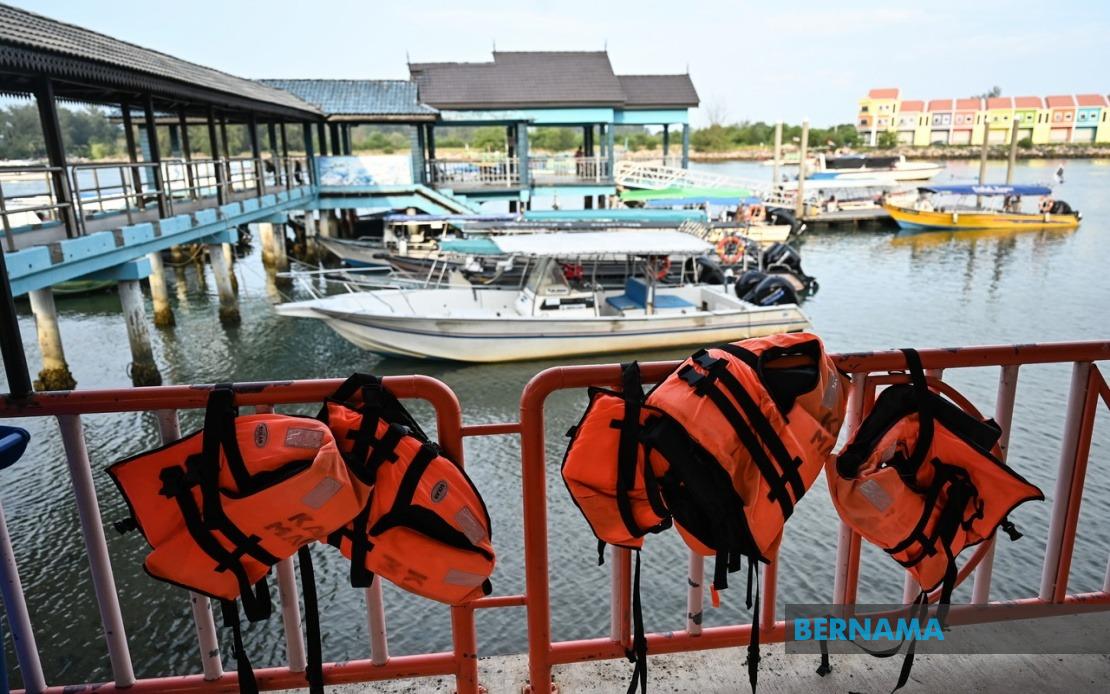
A fatal boat capsize off the coast of Terengganu has prompted urgent safety reminders from state officials, who are calling for stricter compliance with life jacket protocols during all maritime activities. The incident, which occurred approximately nine nautical miles from Dataran Kuala Nerus, resulted in one death and three injuries among a group engaged in squid jigging operations. The fatality has reignited debate over maritime safety standards in the state and across Malaysia's fishing tourism sector, which attracts thousands of participants annually seeking the experience of traditional night-time fishing expeditions.
Datuk Razali Idris, the Terengganu state committee chairman overseeing tourism, culture, environment and climate change matters, has emerged as a prominent voice demanding greater accountability from vessel operators and heightened vigilance from participants themselves. In his assessment, life jacket usage represents the most fundamental and non-negotiable safety measure available to maritime workers and passengers. Importantly, Razali has emphasized that protection should extend throughout the entire duration of any sea excursion, specifically rejecting the common practice of removing or loosening life jackets during rest periods or when passengers are sleeping aboard vessels.
The official's position reflects growing recognition that many maritime accidents occur during seemingly routine moments when passengers have lowered their guard. Razali argued that every commercial vessel transporting people must maintain comprehensive safety equipment inventories, including properly maintained life jackets for all occupants, fire suppression apparatus, and additional safety apparatus suited to the specific waters and conditions involved. His insistence that skippers bear primary responsibility for passenger welfare extends beyond equipment provision to encompass active safety management and decision-making authority regarding trip viability under prevailing conditions.
Beyond equipment mandates, Terengganu authorities are advocating for pre-departure safety orientation sessions comparable to those standard on commercial tourist ferry operations. Razali contended that boat skippers possess irreplaceable knowledge regarding local sea conditions, seasonal weather patterns, and route-specific hazards that should be communicated systematically to passengers before departure. These briefings should cover expected voyage duration, current meteorological forecasts, proper life jacket fastening techniques, and emergency protocols. The suggested framework acknowledges that experienced mariners already implement such practices voluntarily, yet formalizing them through consistent protocols could extend this standard across all operators.
The specific incident under investigation involved a vessel operating with appropriate documentation and an experienced skipper, yet water penetrated the engine compartment under rough sea conditions, leading to vessel submersion. Notably, all passengers were equipped with life jackets at the time of the capsize, and this fact has become central to Razali's subsequent advocacy. The officer stressed that the availability of personal flotation devices directly enabled successful rescue of multiple occupants, underscoring life jacket usage as the critical factor distinguishing survivable from fatal outcomes in maritime emergencies. The tragedy thus provided sobering validation of safety principles rather than evidence that existing standards require fundamental restructuring.
Regarding operational guidelines, Terengganu authorities have determined that current standard operating procedures governing squid jigging activities remain adequate and require no comprehensive revision. Instead, the emphasis has shifted decisively toward enforcement and compliance rather than regulatory expansion. Razali noted that squid jigging traditions have sustained operations for extended periods under existing frameworks, suggesting that the institutional knowledge embedded in current procedures reflects genuine maritime experience rather than outdated or insufficient guidance. The priority must therefore focus on ensuring that all stakeholders—operators, crew members, and participants—actively implement protocols rather than introducing new regulatory layers.
Crucially, the state government has acknowledged jurisdictional limitations regarding maritime operations and vessel licensing, which fall under the authority of the Malaysia Marine Department rather than state-level agencies. Terengganu officials can therefore issue advisory guidance and public safety campaigns, but authoritative operational decisions regarding vessel suitability, captain certification, and weather-related activity prohibitions remain within federal maritime authorities' purview. This distinction has important implications for enforcement capacity, as state-level exhortations must be complemented by federal-level regulatory rigor and monitoring to achieve meaningful compliance across the sector.
The incident involved Ahmad Nasaruddin Mohmad Jalil, a 37-year-old crew member who died, alongside three injured squid jigging participants: Faris Ibrahim aged 33, Ahmad Danial Iman aged 24, and Fatin Fariesya Rohaizan aged 26. Two injured individuals received outpatient treatment at Hospital Sultanah Nur Zahirah in Kuala Terengganu, while the third continued under ongoing medical supervision. Eight additional passengers were successfully rescued from the water, and police confirmed that the capsize occurred at approximately 9 pm. The survival of the majority of occupants reinforces the life-saving potential of proper safety equipment and procedures when implemented effectively.
For the broader Southeast Asian maritime tourism sector, particularly in Malaysia where squid jigging represents a significant recreational and commercial activity, the tragedy underscores persistent vulnerabilities in safety culture despite the availability of proven preventive measures. The Terengganu incident exemplifies situations where equipment exists but human behavioral factors determine outcomes. Passengers must overcome complacency about wearing safety gear during comfortable conditions, skippers must exercise authority to postpone trips despite commercial pressures, and regulatory agencies must balance industry accessibility with non-negotiable safety minimums. Malaysia's marine authorities face the continuing challenge of maintaining these standards across numerous operators of varying sophistication.
Participants in squid jigging activities are being encouraged to respect skipper decisions when sea conditions warrant trip postponement, with assurances that established operators typically refund participants rather than proceeding under marginal conditions. This guidance acknowledges that economic pressures sometimes incentivize operators to proceed with activities that experienced judgment would counsel against. By normalizing trip cancellations and emphasizing operator willingness to accommodate such decisions, authorities hope to reduce incidents where marginal conditions and passenger pressure converge to produce tragedy.
Moving forward, compliance with Malaysia Marine Department directives regarding adverse weather prohibitions remains essential, as federal authorities possess both regulatory authority and real-time meteorological data necessary to issue informed operational restrictions. State-level messaging amplifying these national directives could enhance compliance, particularly among recreational participants less accustomed to maritime risk assessment than professional fishermen. The integration of state tourism promotion with federal maritime safety authority through coordinated communication represents a potential avenue for strengthening safety culture across Terengganu's maritime tourism operations without imposing burdensome new regulatory frameworks.

