The Sarawak town of Serian is grappling with deteriorating air quality as an Air Pollutant Index reading of 178 has pushed the region into the unhealthy category, yet residents are largely maintaining their normal activities despite the health warnings. The situation reflects a familiar pattern across Southeast Asia during transboundary pollution episodes, where economic necessity often outweighs health precautions among vulnerable populations.
According to the Air Pollutant Index Management System, Serian's readings as of mid-afternoon on August 13 placed it squarely within the unhealthy range, a threshold that typically prompts official recommendations for the public to limit outdoor exposure. Despite these warnings, the commercial heart of the town continued to pulse with activity, albeit with visible modifications to how residents and traders approached their work.
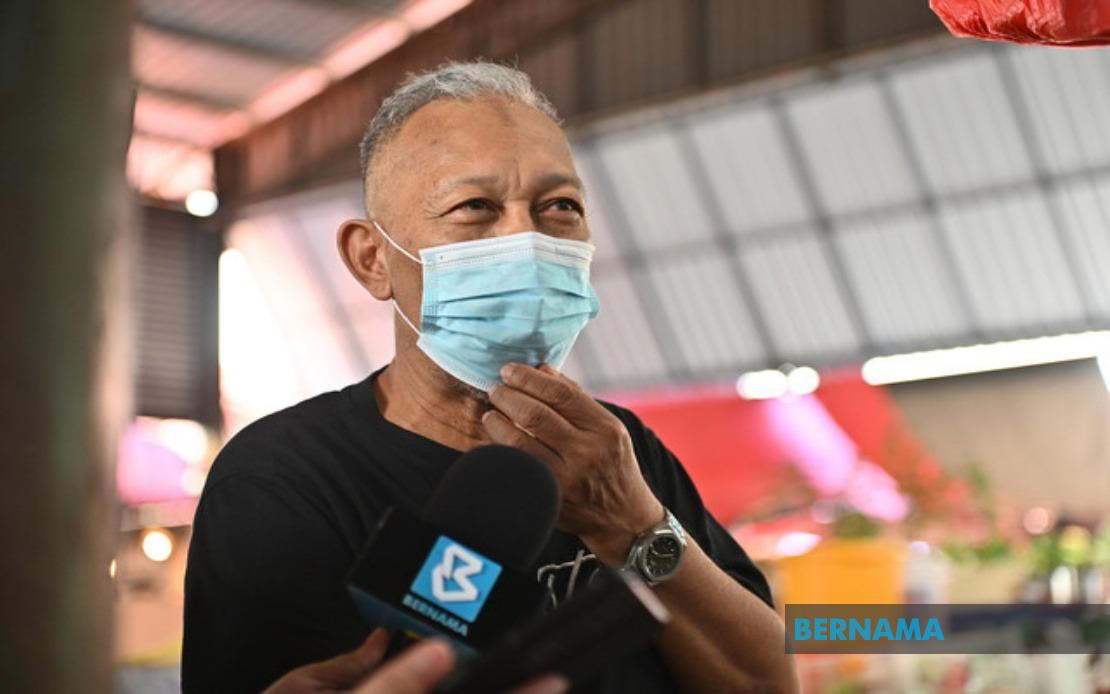
At Serian Tamu Market, the visual markers of adaptation were evident. Several traders had donned protective face masks while attending to customers, a precautionary measure that has become routine during seasonal haze events across the region. The market remained operational, suggesting that for many, the economic imperative to earn a living supersedes the health risks posed by sustained exposure to poor air quality.
Asmail Kipli, a 62-year-old vegetable vendor from Gedong, articulated the difficult calculus facing small business operators in the town. Despite experiencing a substantial 30 per cent decline in both customer traffic and daily income over preceding days, he continued to staff his stall, primarily because rental obligations on his trading space remained fixed regardless of sales performance. His pragmatic assessment revealed that while the current haze situation had not yet reached a threshold severe enough to force closure, the accumulating financial pressure from reduced patronage posed its own form of threat to his livelihood.
The broader sentiment among traders pointed to growing caution within the community, even as outward routines persisted. Residents appeared increasingly reluctant to venture outdoors except for essential errands, suggesting that behavioral shifts were occurring despite the absence of formal restrictions on movement or commerce. This voluntary pullback in activity, while less dramatic than official lockdowns, nevertheless represents a measurable impact on economic activity and social interaction.
Fruit seller Marina Latong took a more proactive stance, already adjusting her business operations in anticipation of further deterioration. She had voluntarily shortened her trading hours to 3 pm, a decision driven by her assessment of current atmospheric conditions. More significantly, she indicated a readiness to suspend operations entirely should the haze persist, explicitly framing the decision as a temporary measure pending meteorological improvement. This forward-thinking approach, while potentially sacrificing immediate income, acknowledges the cumulative health toll of prolonged exposure.
Beyond the commercial sector, daily life in Serian's surrounding villages continued much as expected, with residents conducting routine errands including grocery shopping and procurement of other necessities. The absence of dramatic disruption masked underlying shifts in behavior, as people made deliberate choices about when and how long to remain outdoors.
The most substantial intervention came through the education system. One hundred and seven schools across Serian were closed from August 13 through Friday, a decision reflecting official concern about exposing children to sustained poor air quality. School closures represent the most visible and coordinated response to the haze episode, removing a significant portion of the population from exposure while simultaneously creating secondary disruptions for working parents required to manage childcare arrangements.
The Serian situation illustrates the complex dynamics of transboundary air pollution in Southeast Asia, where the costs of poor air quality distribute unevenly across society. Low-income traders cannot afford to close their businesses for health reasons, while school administrators can invoke child protection justifications for institutional closures. Residents navigate competing pressures between health preservation and economic survival, often resolving the tension by continuing with outdoor work while restricting non-essential exposure.
For Malaysian policymakers and regional observers, Serian's response reflects broader patterns seen across Sarawak and Peninsular Malaysia during haze seasons. The reliance on voluntary behavioral modification and individual risk assessment, rather than mandatory restrictions, permits economic activity to continue but shifts responsibility for health protection onto individuals with the least capacity to absorb the costs of air pollution. The 30 per cent income losses reported by traders represent real hardship, yet without income support mechanisms, closure becomes economically untenable regardless of air quality thresholds.
The medium-term implications for Serian residents remain tied to weather patterns beyond local control. Until meteorological conditions shift to clear the haze, residents will continue threading the needle between economic necessity and health caution, with outcomes determined largely by individual circumstances and risk tolerance. The school closures provide some reprieve for younger populations, but working adults and commercial operators will bear the ongoing exposure burden.

