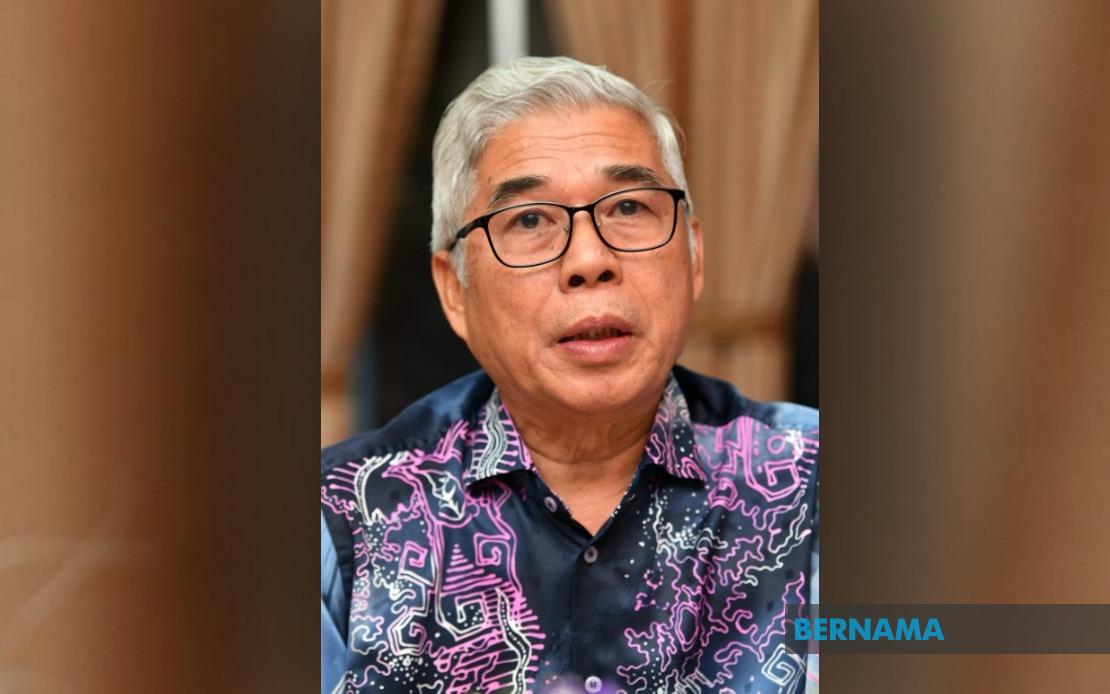
A prominent government backbencher has cautioned against accelerating Malaysia's next general election, arguing that the MADANI administration must exhaust its full parliamentary mandate to demonstrate concrete results from its policy agenda. Hassan Abdul Karim, the Pasir Gudang Member of Parliament, made the appeal amid speculation about potential early dissolution following the ruling coalition's mixed performance in recent state-level contests. Speaking in Johor Bahru, Hassan urged Prime Minister Datuk Seri Anwar Ibrahim to resist pressure to hold the 16th General Election prematurely, framing extended time in office as essential for policy maturation and public benefit.
The timing of Hassan's intervention reflects underlying tensions within the Pakatan Harapan coalition following disappointing outcomes in Sabah, Johor, and Negeri Sembilan polls. Rather than viewing these results as catalyst for immediate political repositioning, Hassan counselled restraint and strategic recalibration. His message to PKR specifically stressed the importance of absorbing lessons from electoral losses without capitulating to despondency or reactive decision-making. By framing the situation as manageable rather than catastrophic, Hassan sought to anchor his party's focus on the medium-term horizon rather than immediate electoral calculations.
Hassan's argument hinges on an economic development thesis: that the government requires the full window until late 2027 or early 2028 to allow its macroeconomic initiatives to mature and deliver tangible improvements that voters can experience directly. This perspective acknowledges that policy implementation, particularly in complex areas such as foreign direct investment attraction and economic restructuring, operates on extended timeframes beyond electoral cycles. The implication is that premature elections would forfeit the opportunity to vindicate the government's approach before presenting its record to voters. For Malaysian observers, this reflects a broader international pattern where governments attempt to time elections to coincide with economic upswings or policy completion milestones.
The Pasir Gudang MP identified a specific 12-to-18-month window as critical for consolidating economic gains and rebuilding public confidence. During this period, he suggested, the government should prioritize strengthening fundamentals such as foreign direct investment inflows, economic growth trajectories, and measurable improvements in living standards. This prescription implicitly critiques the notion that electoral calendars should be driven primarily by coalition dynamics or tactical positioning. Instead, Hassan positioned economic delivery and institutional credibility as the proper foundation for electoral success, suggesting that rushing to polls before accomplishing these objectives would squander political capital and undermine government legitimacy.
The broader context for Hassan's remarks involves persistent questions about the MADANI Government's trajectory and sustainability. Since taking office following the 2022 general election, the Anwar Ibrahim administration has navigated significant challenges including internal coalition management, economic headwinds, and public expectations for tangible improvement in living costs and public services. The recent state elections have become focal points for assessing government performance and coalition health. Hassan's intervention can be read as an attempt to reframe these setbacks not as harbingers of imminent collapse but as temporary corrections within a longer political arc extending to the mandated end of the current parliamentary term.
For PKR specifically, Hassan's Facebook message carried motivational undertones, encouraging party members to view recent losses as surmountable obstacles rather than terminal setbacks. His characterization of PKR as a "reform party" of "fighters" invoked the party's foundational identity and history of political struggle, attempting to revive institutional morale at a moment of apparent vulnerability. This rhetorical move sought to bind members to the longer-term project and discourage either defection or internal fracturing. The emotional register of his appeal suggested recognition that electoral disappointments threaten party cohesion and member commitment, requiring explicit reassurance and renewed strategic vision.
Hassan's position carries implications for governance and institutional stability beyond coalition mechanics. By advocating completion of the full mandate, he effectively endorsed parliamentary continuity and the sanctity of electoral cycles as institutionalized processes rather than instruments of tactical manipulation. This stance resonates with principles of democratic predictability and institutional reliability that matter particularly for developing economies like Malaysia, where policy uncertainty can dampen investment and economic planning. Foreign investors and international observers often view electoral stability as a governance quality indicator; demonstrating commitment to the prescribed five-year cycle could theoretically strengthen Malaysia's positioning for attracting capital and sustained growth.
The question of timing parliamentary dissolution has bedevilled Malaysian politics historically, with various governments employing electoral timing as strategic advantage. Hassan's argument essentially recalibrates this calculus, suggesting that in present circumstances, political advantage accrues to those who demonstrate patience and allow institutions to function according to established norms. This counter-intuitive position—that electoral restraint rather than opportunistic action offers superior political prospects—deserves serious consideration within governing circles, particularly given the complex coalition dynamics that have characterized Malaysian politics since the 2018 transition.
Regional dimensions also merit consideration. Malaysia's economic performance and political stability carry significance for broader Southeast Asian dynamics. The ASEAN region has experienced periods of electoral unpredictability and political volatility that have complicated regional cooperation and economic integration efforts. Malaysian institutional stability, even if imperfect, contributes to regional predictability. Hassan's call for completing the full governmental term aligns implicitly with regional interests in sustained, coherent policy frameworks that facilitate cross-border investment, trade arrangements, and security cooperation.
The practical mechanics of Hassan's proposal would require discipline from the PKR leadership and coalition partners. Resisting temptation to exploit temporary political advantage in order to serve longer-term institutional credibility tests political leadership in distinctive ways. It presupposes that economic improvements will indeed materialize over the prescribed 12-to-18-month timeframe and that these improvements will translate into renewed electoral support by 2027 or 2028. Should economic conditions deteriorate or stagnate, the logic supporting Hassan's patience-based argument would weaken considerably, potentially creating pressure to revisit electoral timing despite current commitments to complete the full term.

