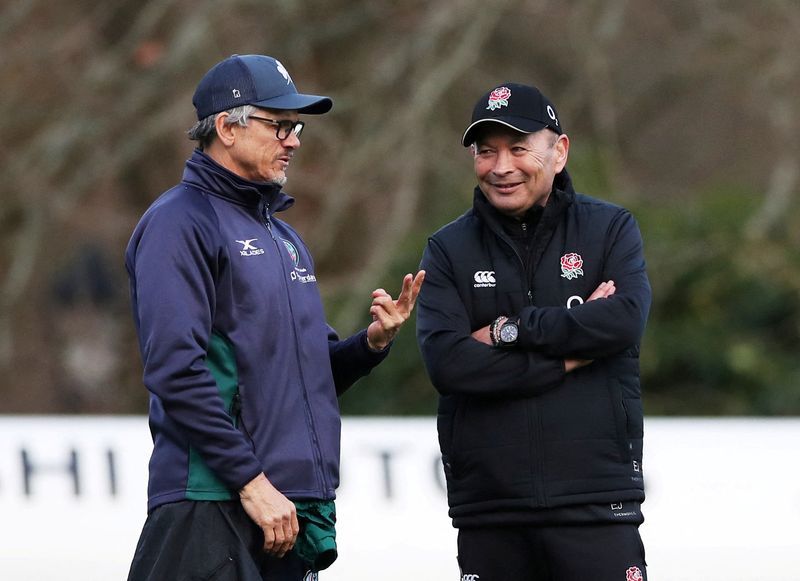
Les Kiss has marked his arrival as Australia's rugby coach with a significant shift in recruitment philosophy, declaring his willingness to cast the net beyond home shores in pursuit of the playing talent needed to revitalise the struggling Wallabies. Speaking at his inaugural press conference in Sydney, the 61-year-old former Queensland Reds boss indicated that pragmatism would trump convention as he takes the reins of a team languishing at eighth in world rankings and desperately seeking to reverse a downward trajectory ahead of the World Cup campaign.
The Australian coaching establishment has long maintained informal restrictions on selecting overseas-based players, a policy designed to encourage talent to remain competing in the domestic professional competition. Kiss's predecessor Joe Schmidt adhered closely to this framework during his two-year tenure, using his discretionary allowances for foreign-based selections only sparingly despite having the authority to do so. Kiss's public break from this cautious posture signals not merely a change in personnel but a fundamental recalibration of priorities within the coaching hierarchy, where winning matches takes precedence over enforcing domestic market protectionism.
In naming his first squad for an upcoming two-test series against Japan, Kiss retained the bulk of Schmidt's player pool from the recent Nations Championship competition, maintaining continuity while signalling his intention to evaluate talent comprehensively. The Wallabies' recent record provides context for his willingness to look beyond Australia's borders: the team has lost nine of its last eleven tests and has not demonstrated the consistent quality needed to compete at the highest level. This poor sequence creates both urgency and justification for exploring unconventional avenues to strengthen the playing group.
Kiss revealed that he has already initiated conversations with several players competing overseas, including Jordan Petaia, an outside back and centre currently based in Japan who is managing a recovery from injury. Such outreach indicates that Kiss intends to move quickly beyond rhetorical positioning and begin building practical relationships with talent scattered across international rugby's landscape. The approach reflects a recognition that rugby's global marketplace increasingly rewards flexibility and that parochial domestic preferences must yield when performance outcomes are at stake.
The new coach's philosophy extends beyond mere selection pragmatism to encompassing a broader vision for how the Wallabies should play. Kiss invoked the notion of an distinctly Australian rugby identity centred on creativity, innovation and competitive spirit—qualities he believes the team should express on the field. This represents a nod to rugby folklore celebrating Australian teams of the 1990s that captured World Cups through attacking, ball-in-hand football, though Kiss acknowledged the harsh reality that subsequent decades have seen this style fail repeatedly due to insufficient depth of world-class talent.
The strategic importance of Joseph Suaalii, rugby's most expensive recent recruit, looms large in Kiss's plans. Rugby Australia invested A$5 million to poach the 22-year-old from rugby league's National Rugby League, an eye-watering sum intended to inject game-changing talent into the professional rugby union code. Suaalii's early promise in last year's Northern Hemisphere tour has since proved inconsistent, with debate persisting about whether he is best deployed at fullback or in the midfield. Kiss has resolved this question by confirming he will persist with Suaalii at outside centre, a position that maximises the player's ball-handling ability while positioning him centrally to influence play.
The recruitment strategy Kiss is adopting reflects broader trends within rugby union globally, where the most successful national teams increasingly operate as cosmopolitan talent collectives rather than rigidly parochial units. France's recent dominance, England's sustained competitiveness and New Zealand's enduring excellence all owe significantly to systematic approaches to identifying and integrating talent regardless of domestic affiliation or location. Kiss's willingness to navigate around Rugby Australia's traditional preferences aligns the Wallabies with global competitive practices, even if it creates tension with domestic constituencies invested in local competition.
For Malaysian and Southeast Asian rugby observers, Kiss's appointment and philosophy carry implications for the region's football ecosystem. As Australia, the region's dominant rugby power, becomes more globally oriented in talent acquisition, regional players may find expanded pathways to development through Australian networks, either by accessing coaching innovations or through competitive opportunities against progressively strengthened Australian touring teams. The Wallabies' quality directly influences the competitiveness of touring schedules that Asian nations depend upon for competitive development.
Kiss's pragmatism also reflects the particular pressure facing any Australian rugby coach stepping into a role with World Cup expectations. The team has not captured a global championship since 1999 and has experienced embarrassing early eliminations in recent tournaments. Against this backdrop, philosophical consistency about domestic player development ranks below tangible improvements in winning percentage. Kiss appears to have calculated that his mandate requires demonstrable performance gains that justify the investment in his appointment, even if achieving those gains requires tactical concessions to traditional Rugby Australia policy.
The true test of Kiss's philosophy will emerge through his selection decisions across the next twelve to eighteen months. Naming overseas-based players to test squads against Japan differs substantially from actually picking them for crucial World Cup matches, where scrutiny intensifies and stakeholder pressure mounts. Kiss's willingness to voice openness to overseas talent represents a necessary precondition for any eventual selections, but execution requires nerve and conviction in the face of inevitable domestic criticism whenever an Antipodean representative loses a position to a foreign-based alternative.

