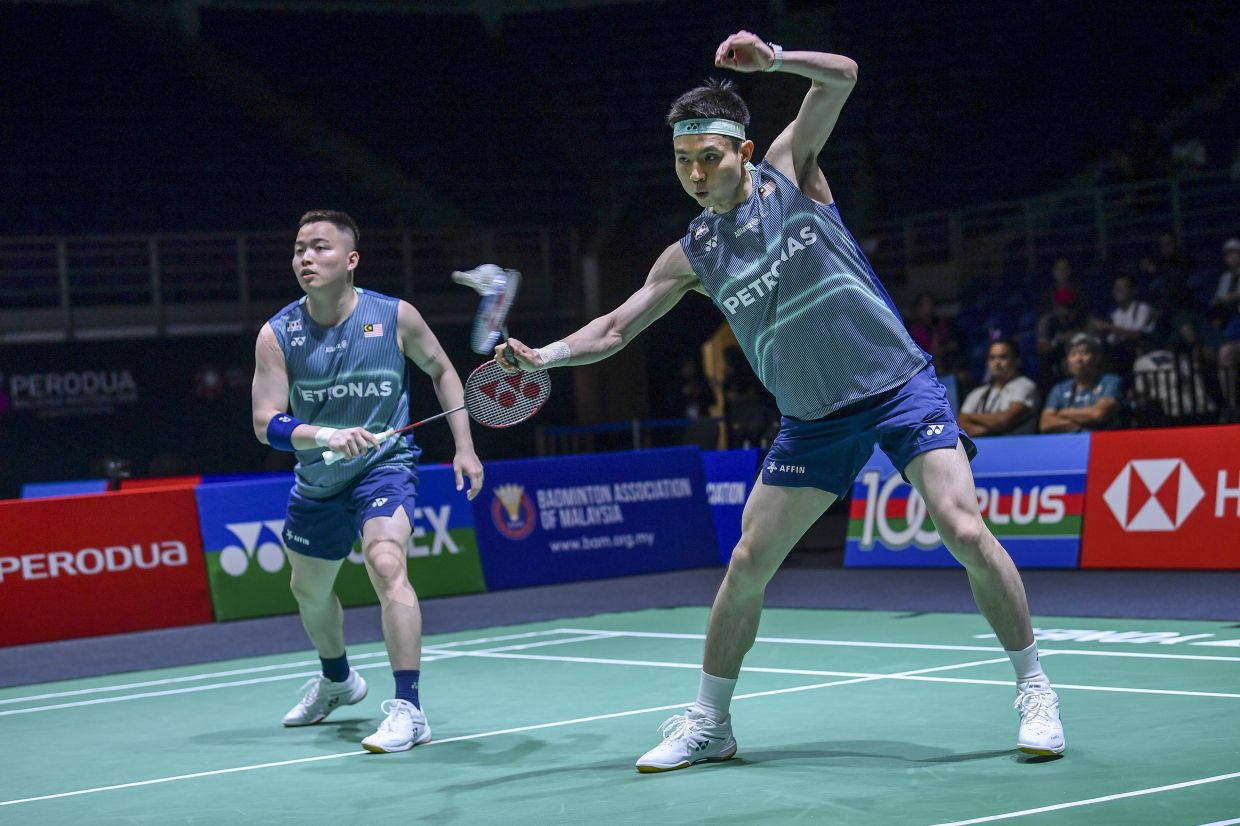
Badminton Association of Malaysia performance committee chairman Datuk Seri Lee Chong Wei has delivered a stern message to national team athletes: no individual player holds greater importance than the collective interest of the sport. The warning emerged in response to recent statements from men's doubles player Soh Wooi Yik, who indicated that he and partner Aaron Chia might explore alternatives outside the national framework unless the federation agrees to keep them paired through the 2028 Los Angeles Olympics.
Lee's intervention reflects growing tension between BAM's strategic planning and the personal ambitions of high-performing athletes. The association's newly restructured management has signalled a departure from what Lee characterises as an overly accommodating approach to player demands. Instead of capitulating to ultimatums rooted in tournament results, BAM intends to maintain firm control over team composition, training regimens, and career pathways. This hardline stance signals that the federation will not be swayed by the prospect of losing star players, even if those athletes threaten to compete independently or seek opportunities elsewhere.
Lee's rhetoric emphasised institutional memory and gratitude, reminding players that BAM nurtured them from junior levels through their formative years as national representatives. According to Lee, younger athletes developed their foundational skills within BAM's system before reaching elite status on the international circuit. This argument implies that current achievements, including medal wins and ranking points, remain inseparable from the federation's investment in player development. By reframing success as collective rather than individual, Lee positioned BAM as an institutional benefactor deserving deference rather than a service provider obligated to fulfil player preferences.
The Aaron-Wooi Yik partnership has emerged as a focal point in this broader dispute over BAM's governance. After capturing silver at the World Championships in New Delhi, the pair publicly signalled their intention to remain together until the Los Angeles Olympics, viewing their chemistry and track record as justification for this arrangement. Yet BAM's coaching hierarchy continues to experiment with alternative pairings, testing different combinations to optimise performance across the Olympic cycle. This systematic exploration reflects a coaching philosophy that prioritises flexibility and depth over the continuity that individual athletes might prefer.
Recent tournament results illustrate the scope of these experiments. Over the preceding two months, Aaron Chia competed alongside Aaron Tai, the pair finishing runners-up at the Taiwan Open, while Soh Wooi Yik initially struggled when paired with Man Wei Chong before reaching the Korean Masters final. Rather than treating these outcomes as feedback supporting the case for reuniting Aaron and Wooi Yik, BAM's coaching team has scheduled another reshuffle for the China Masters beginning September 1, pairing Aaron with Wei Chong and Wooi Yik with Aaron Tai. This rotation strategy suggests the federation views player partnerships as tactical variables rather than permanent arrangements, a philosophy that fundamentally conflicts with the athletes' personal preferences.
Lee's willingness to engage in dialogue, however, tempered his warnings. He stated that BAM's management remains receptive to discussions with players who wish to address grievances or negotiate terms. The association will consider requests and provide support wherever feasible, but only through formal channels and within boundaries the federation deems acceptable. This openness appears calculated: BAM can present itself as reasonable while simultaneously rejecting player demands through a framework that privileges institutional authority over individual preference.
The financial and regulatory consequences of any departure would substantially complicate matters for Aaron and Wooi Yik. Both players remain contractually bound to BAM through 2028, creating potential liability should they attempt to compete independently or represent alternative sponsors. Beyond contractual penalties, independent athletes risk exclusion from international tournaments sanctioned by the Badminton World Federation, a consequence that could severely impair their ability to accumulate the ranking points essential for Olympic qualification. This structural arrangement effectively neutralises the credibility of any exit threat, rendering the athletes' negotiating leverage minimal in practical terms.
For Malaysian badminton enthusiasts and regional observers, this dispute encapsulates broader tensions in professional sports governance across Southeast Asia. As athletes become increasingly conscious of their market value and personal brand management, traditional federations struggle to balance institutional control with athlete autonomy. BAM's approach prioritises long-term competitive depth and systematic player rotation over the stability that star performers might demand. Whether this strategy enhances or diminishes Malaysia's competitive prospects at future Olympics remains uncertain, but the federation appears determined to test the hypothesis.
The implications extend beyond badminton. Other Malaysian sports associations likely monitor BAM's handling of this conflict closely, assessing whether similar firmness might strengthen their bargaining position against athlete demands. The message Lee conveyed—that federations need not capitulate to individual star power—could reshape how national sports bodies negotiate with high-performing competitors. Conversely, if Aaron and Wooi Yik successfully generate alternative opportunities or if BAM's experimental pairing strategy produces inferior results, the federation's hardline stance could face serious pressure from both athletes and public opinion.

