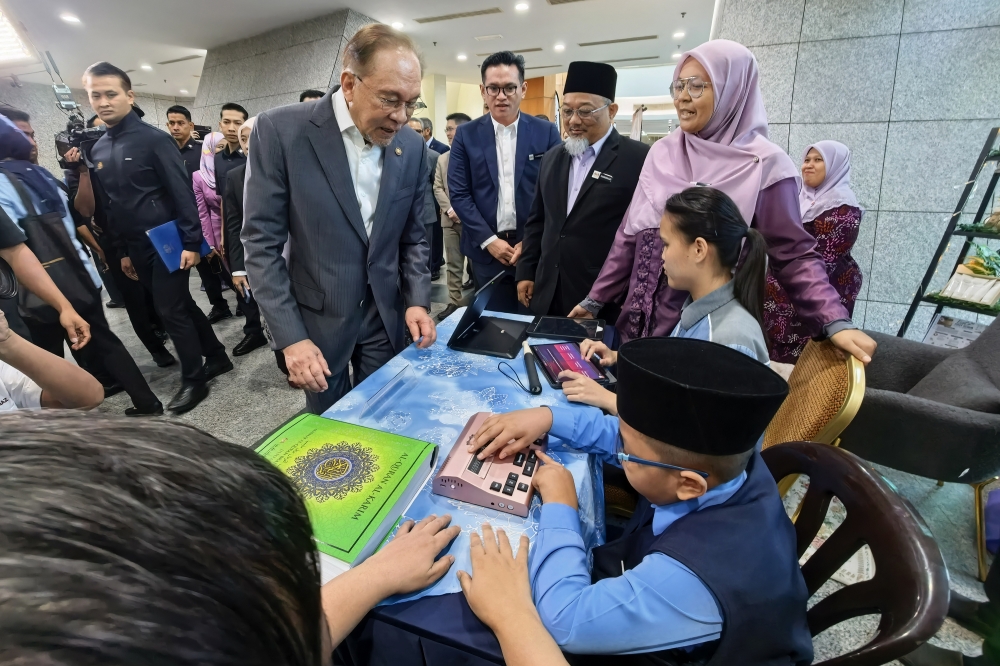
Prime Minister Datuk Seri Anwar Ibrahim has moved to dispel concerns that encouraging Malaysians to learn foreign languages poses a threat to Bahasa Melayu's position as the nation's official language. Speaking in Putrajaya on July 28, the Premier articulated a vision of linguistic pluralism that positions multilingualism as an asset rather than a liability for Malaysia's development and global competitiveness.
Anwar's remarks come at a time when education policy debates frequently centre on the balance between strengthening proficiency in the national language and equipping students with skills in globally dominant tongues, particularly English and Mandarin Chinese. The tension between these objectives has long featured in Malaysian political discourse, with some commentators fearing that an overemphasis on international languages could erode support for Bahasa Melayu among younger generations. The Prime Minister's intervention appears designed to move beyond this zero-sum framing.
The Premier's position reflects a pragmatic understanding that nations functioning in an interconnected global economy require citizens capable of engaging across linguistic boundaries. Malaysia, as a major trading hub and destination for international investment, depends on professionals and entrepreneurs who can communicate fluently in multiple languages. This reality has informed government initiatives to improve English language teaching in schools and to encourage Chinese language learning, particularly among non-Chinese communities, as a means of strengthening intra-regional commerce and cultural ties within Southeast Asia.
Yet Anwar's clarification also addresses underlying anxieties about national identity and cultural preservation. For many Malaysians, Bahasa Melayu remains more than a practical communication tool; it embodies the constitutional foundation of the nation-state and represents a unifying symbol across ethnic and religious lines. Constitutional Article 152 establishes Bahasa Melayu as the official language, a provision that carries deep historical and political significance. The Prime Minister's assurance seeks to alleviate concerns that government support for multilingual education programmes might be interpreted as a dilution of this constitutional commitment.
The Malaysian education system has increasingly incorporated language diversification into its curriculum framework. Primary and secondary schools now typically offer English as a compulsory subject, with many institutions providing Mandarin as an elective. Some private schools offer trilingual or even quadrilingual instruction. These developments reflect both market demand from parents seeking competitive advantage for their children and educational philosophy recognizing that exposure to multiple languages enhances cognitive development. Anwar's comments implicitly endorse this trajectory while emphasizing that such expansion need not come at Bahasa Melayu's expense.
International experience suggests that Anwar's assertion holds merit. Countries such as Singapore, which adopted English as a working language while maintaining Mandarin, Malay, and Tamil in official curricula, have not experienced erosion of these heritage languages. Instead, a generation of Singaporeans has emerged comfortable switching between languages according to context—a phenomenon linguists term code-switching. This multilingual competence has arguably strengthened rather than weakened Singapore's cohesion and global standing. Malaysia, with its own multilingual heritage and diverse population, potentially possesses similar latent advantages if education policy deliberately nurtures rather than discourages linguistic versatility.
Anwar's intervention also carries implications for Malaysia's positioning within Southeast Asia and the broader Indo-Pacific region. As regional integration deepens through initiatives such as the Asean Economic Community, the capacity to communicate across linguistic divides becomes strategically important. Younger Malaysians equipped with functional proficiency in English, Mandarin, and other regional languages will be better positioned to capitalize on opportunities in trade, technology transfer, and cultural exchange. From this perspective, multilingualism functions as infrastructure for regional leadership rather than a threat to national identity.
Educational authorities will likely interpret the Prime Minister's remarks as tacit approval for continued expansion of language programmes, particularly in light of Malaysia's stated ambition to become a regional education hub. International schools and private institutions, which have long positioned multilingualism as a key differentiator, may see their model increasingly reflected in public institutions. Yet the government also faces pressure from constituencies demanding stronger emphasis on Bahasa Melayu proficiency, particularly following periodic concerns about declining standards among school-leavers entering tertiary education and the workforce.
The challenge ahead involves operationalizing Anwar's vision—translating the theoretical compatibility of Bahasa Melayu preservation and multilingual development into concrete curriculum design and resource allocation. This requires training educators capable of delivering high-quality instruction across multiple languages, developing pedagogical materials that reinforce rather than compete with one another, and establishing assessment frameworks measuring genuine proficiency rather than superficial exposure. Without these structural supports, rhetorical assurances about complementarity may fail to convince sceptics who observe that in many school systems, languages do vie for limited classroom hours and student attention.
The Premier's statement ultimately reflects an evolving consensus among policymakers that Malaysia need not choose between linguistic nationalism and pragmatic internationalism. Rather, the nation can aspire to nurture generations of Malaysians who command Bahasa Melayu with authority while wielding additional languages as tools for economic advancement and cross-cultural understanding. Whether education systems can deliver this ambitious vision remains an open question, but Anwar's clarification establishes political space for such experimentation.

