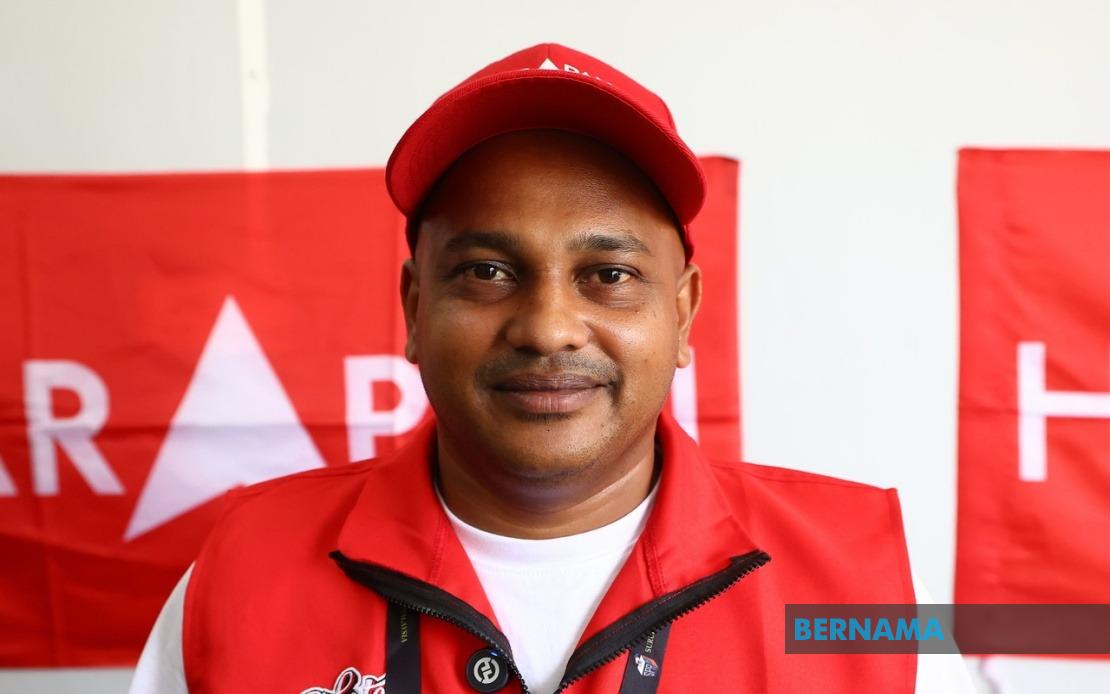
Pakatan Harapan's candidate for the Layang-Layang state seat is positioning infrastructure remediation and socioeconomic revitalisation as central planks of his campaign as the 16th Johor state election approaches on July 11. Guna Balakrishnan has identified critical development gaps that have undermined living standards and economic prospects in the constituency, with particular emphasis on communities historically dependent on agriculture and small enterprise. His candidacy represents one of three competing visions for the rural seat, where voters will choose between his PH platform, Barisan Nasional's Chua Jian Boon, and incumbent Perikatan Nasional representative Abd Mutalip Abd Rahim.
Through extensive ground engagement across the constituency, Guna has documented persistent complaints reflecting systemic neglect. Flash flooding emerges as the most pressing concern raised by residents, a problem that has recurred seasonally without meaningful mitigation for the past decade. Equally troubling is inadequate street lighting infrastructure, another chronic issue that compounds safety concerns and restricts evening economic activity. These complaints coalesce around a broader narrative of underdevelopment relative to urban areas, suggesting that rural constituencies like Layang-Layang have been deprioritised in state planning frameworks.
The demographic composition of Layang-Layang—characterised by FELDA settlements, plantation estates, and traditional villages—has created distinct vulnerabilities. Guna contends that the area's economic base remains fundamentally stuck in primary industries, with no meaningful diversification into modern manufacturing, processing, or technology sectors. This structural limitation has forced young residents to seek opportunities in urban centres, contributing to demographic drain and the loss of human capital that communities need for sustainable development. His campaign narrative frames infrastructure investment as inseparable from employment generation, positioning both as prerequisites for reversing outmigration patterns.
The candidate's development philosophy emphasises comprehensive intervention rather than piecemeal fixes. Rather than treating flash flooding and lighting deficiencies as isolated technical problems, Guna situates them within a holistic vision of socioeconomic transformation. His approach suggests that resolving basic infrastructure failures is foundational work that must precede higher-order economic development. Without reliable drainage systems and secure public spaces, attracting business investment or retaining young talent becomes implausible. This sequencing reflects an understanding that rural constituencies operate under different constraints than urban areas and require targeted, sustained commitment.
Guna's emphasis on direct community engagement distinguishes his campaign methodology from traditional political messaging. Rather than relying primarily on rallies or media appearances, his team is conducting systematic ward-by-ward consultations, attempting to create space for residents to articulate grievances and aspirations directly. This approach acknowledges that rural constituencies often feel disconnected from state-level policymaking and benefit from personalised attention and visible accessibility. The strategy carries implicit criticism of incumbent governance, suggesting that previous representatives may have under-invested in such constituent relationship-building.
The candidacy unfolds within Johor's complex three-way political competition, where Perikatan Nasional's tenure as the incumbent governing coalition creates both advantages and vulnerabilities. An incumbent facing persistent infrastructure challenges must defend their record while the opposition can offer alternative vision without accountability for implementation gaps. Chua Jian Boon's Barisan Nasional candidacy represents a claim to institutional competence and federal-state coordination benefits, while Guna's PH platform emphasises populist responsiveness and willingness to prioritise neglected communities. The electoral outcome may reflect broader voter sentiment regarding which coalition has more credibly addressed rural development.
The invocation of Malaysia MADANI—the government's prosperity framework—represents an attempt to embed his local campaign within national messaging. By connecting constituency-level aspirations to federal developmental priorities, Guna suggests that investing in Layang-Layang aligns with broader national objectives around inclusive growth and equity. This rhetorical move matters particularly for rural voters who may otherwise feel peripheral to national discourse. It reframes infrastructure investment in Layang-Layang not as local pork-barrelling but as contribution to Malaysia's development compact.
Digitalisation of campaign messaging reflects recognition that rural constituencies are not monolithic in their media consumption patterns. Younger residents, particularly those working in nearby urban areas, remain plugged into social media ecosystems where targeted messaging can reach them. Guna's campaign acknowledges that effective rural politics increasingly requires hybrid strategies bridging traditional face-to-face interaction with digital platforms. The emphasis on broadening message reach through technology suggests an attempt to mobilise diaspora voters—those who have left the constituency for economic reasons but maintain ties and voting eligibility.
The infrastructure priorities articulated carry broader implications for understanding rural development challenges across Johor and beyond. Flash flooding and inadequate street lighting are endemic problems across much of peninsular Malaysia's agricultural constituencies, suggesting that Layang-Layang's challenges reflect systemic rather than localised failures. If elected representatives cannot reliably deliver basic services—managing storm water, maintaining public lighting—their legitimacy erodes regardless of party affiliation. This structural issue may prove decisive in constituencies where infrastructure neglect has become normalised.
Guna's positioning as a challenger to both established coalitions carries risk alongside opportunity. As an opposition candidate in a state governed by Perikatan Nasional and previously by Barisan Nasional, his capacity to deliver promised infrastructure investment depends on either winning the seat and securing state-level budget allocation, or demonstrating sufficient local influence to extract concessions from the incumbent state government. His campaign therefore must convince residents not merely that his vision is superior, but that he possesses the political leverage to realise it. This represents a persistent challenge for opposition candidates in rural constituencies where voters remain sceptical about opposition capacity to navigate state administrative structures.

