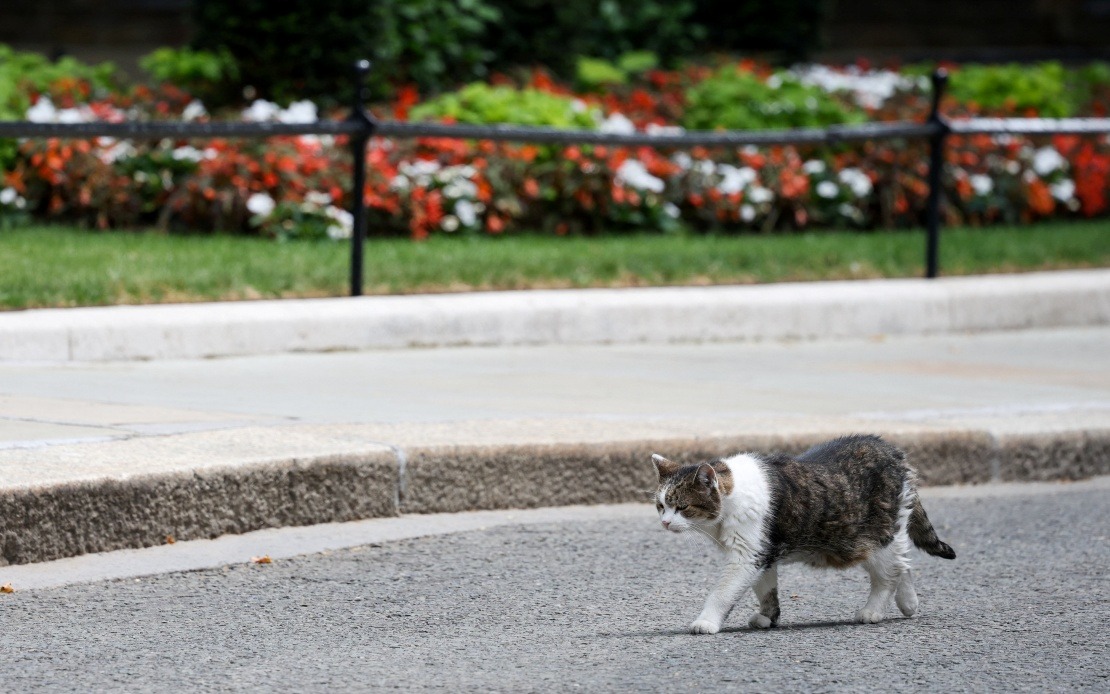
Larry, the celebrated feline occupant of 10 Downing Street, has become something of a fixture in British political life, having now witnessed the tenure of six different prime ministers. As Andy Burnham took the helm as Britain's new Prime Minister and convened his inaugural Cabinet meeting, the grey tabby was spotted roaming the grounds outside the official residence—a small moment that underscores the continuity Larry provides amid the flux of political leadership.
The sighting on July 21 carried symbolic weight, as it occurred while Burnham and his ministers gathered inside for their first formal meeting as the new government. While the machinery of state shifted into gear with a fresh administration, Larry remained unbothered by the political transition, pursuing his own leisurely routine around the iconic London address. The image of the cat padding about the premises while ministers convened inside offered a gentle reminder that some constants endure even as governments change.
Larry's longevity at Number 10 is remarkable by any measure. The tabby has navigated the administrations of six prime ministers, each bringing their own style and priorities to the office. Through electoral victories, policy defeats, international crises, and domestic upheaval, Larry has remained a steady presence. For many Britons, the cat has become more recognizable than some of the politicians who have served under him, a testament to his celebrity status and the public's affection for the Downing Street institution.
The role of chief mouser at 10 Downing Street carries historical significance in British governance. The position is an official one, recorded in government records, and Larry has taken his responsibilities seriously—or at least, seriously enough to justify his continued tenure despite the periodic turnover of political leadership. His presence lends a sense of institutional stability and continuity that transcends the often turbulent world of politics.
For Malaysian readers accustomed to their own political transitions and governmental restructuring, Larry's story offers an intriguing contrast. While Southeast Asian nations frequently experience significant shifts in their political landscapes, the notion of a single institution maintaining continuity through multiple administrations reflects the stability that Westminster systems, for all their recent turbulence, attempt to preserve. Larry embodies this principle—he is neither appointed nor dismissed with each new government, but persists as an independent fixture of the state.
The cat's ability to outlast political figures speaks to broader questions about the nature of institutional memory and national identity. In the United Kingdom, certain symbols and traditions remain stable even as the personnel managing them change. Larry represents this stability, a living link between different eras of governance. His presence at Downing Street grounds the office in continuity and history, reminding both politicians and citizens that individual leaders are temporary stewards of institutions larger than themselves.
The phenomenon of Larry's fame also reflects something deeper about contemporary politics in Britain and beyond. In an era when political discourse often becomes heated and polarized, a cat has managed to unite people across partisan lines. His apolitical nature—he serves all prime ministers equally, showing no preference based on party or ideology—has made him a genuinely beloved national figure, perhaps more so than many of the politicians themselves.
Burnham's first Cabinet meeting therefore occurred under the watchful, if indifferent, eye of a creature who has seen much of recent British political history unfold. The new Prime Minister inherits not just the office and its considerable burdens, but also a predecessor in the form of a tabby cat whose institutional memory, metaphorically speaking, spans six administrations. Whether this continuity will provide any comfort or guidance to Burnham as he navigates the complexities of leading the nation remains to be seen, but Larry's presence offers reassurance that some things do endure.
As British politics continues its often chaotic trajectory, with prime ministers coming and going with increasing frequency, Larry stands as a monument to institutional permanence. He has outlasted the political storm, remaining at his post through thick and thin. His roaming about the grounds on this significant day for British governance serves as a quiet affirmation that while politicians may rise and fall, some denizens of Westminster will remain, unbothered and unmoved by the dramas of human power and ambition.

