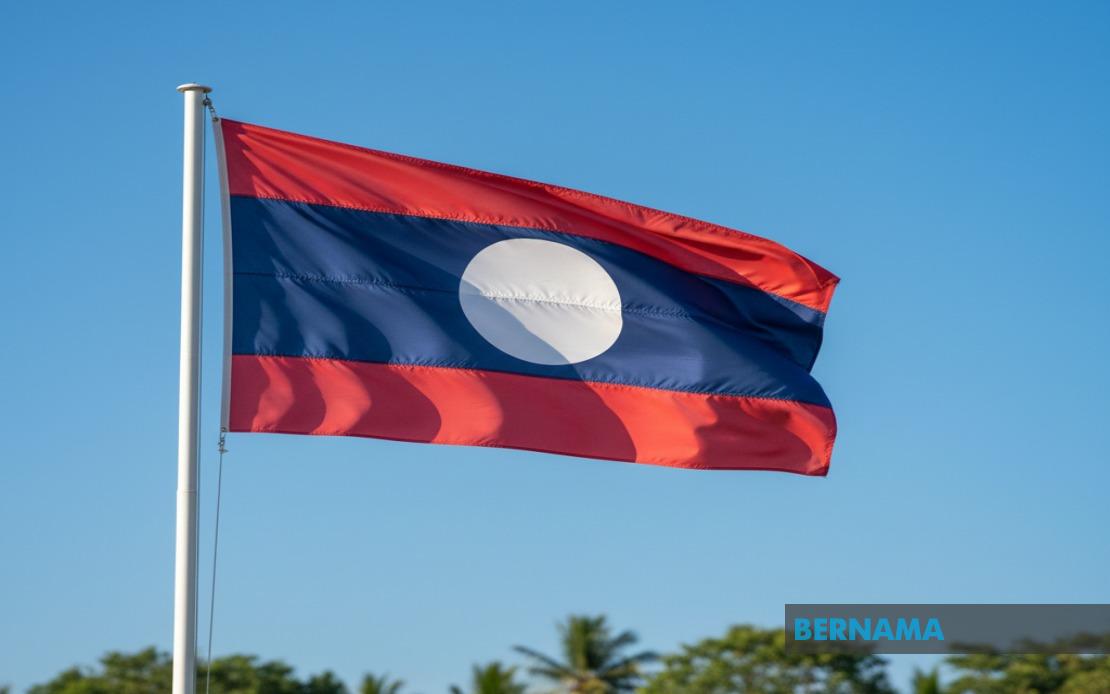
Laos has taken a significant step toward reforming its media landscape by hosting the country's first National Media Congress in Vientiane, where government and industry leaders endorsed a comprehensive roadmap for modernising the sector. The three-day gathering, which concluded this week, brought together senior officials, news executives, journalists, and communications specialists to chart a new direction for media development in the Southeast Asian nation. The congress, themed "Strengthening Party Leadership and Developing the Media Toward a New Level of Quality," represents an acknowledgement by Laotian authorities that their media infrastructure requires strategic upgrades to meet contemporary information standards.
The timing of this inaugural congress reflects broader regional trends across Southeast Asia, where governments are grappling with the challenge of maintaining media control while simultaneously modernising journalism practices to remain credible in an increasingly digital and interconnected world. For Malaysian observers, Laos's approach offers insights into how one-party communist states are attempting to navigate the tension between party leadership and professional journalism standards. The congress provided a platform for discussing how Laotian media can better serve national interests while adopting modern practices that enhance audience trust and content quality.
Khamphan Pheuyavong, leading the Commission for Information and Education, presented the congress's conclusions, emphasising that the gathering successfully evaluated past media performance, identified systemic weaknesses, and established actionable benchmarks for future development. This structured assessment approach suggests that Laotian policymakers are attempting to move beyond generalised media directives toward a more systematic framework for sector improvement. The emphasis on reviewing achievements and challenges indicates recognition that sustainable media reform requires honest institutional analysis rather than simply imposing top-down mandates.
President Thongloun Sisoulith's address at the closing ceremony underscored the government's strategic vision for media evolution. His first priority—promoting greater unity and cooperation among media organisations through mutual learning and improved literacy regarding the contemporary information ecosystem—acknowledges that Laotian media outlets currently operate with limited collaboration mechanisms. The call for media professionals to distinguish between constructive criticism and unethical attacks reveals government awareness that credibility requires demonstrating capacity to engage with legitimate public discourse while filtering out malicious content.
The second priority addressing cultural preservation through journalism practices reflects concerns common across Southeast Asia about maintaining traditional values amid globalisation pressures. By urging journalists to uphold humility, generosity, and respect while rejecting vulgarity and dishonesty, Laotian leadership is attempting to anchor modern journalism in culturally-rooted ethical frameworks. This approach differs markedly from Western journalism models that emphasise adversarial independence, instead seeking journalism that operates within culturally-defined boundaries of acceptable public discourse.
The presidential emphasis on defending truth and justice through responsible reporting and resisting misinformation targets a growing challenge across the region. Laos, like many Southeast Asian nations, faces sophisticated disinformation campaigns and struggles to distinguish between legitimate criticism and coordinated falsehood. The government's explicit call for journalists to maintain public trust suggests recognition that media credibility—essential for both government effectiveness and social stability—depends on demonstrable commitment to factual accuracy rather than propaganda.
Thongloun's fourth priority—requesting government agencies to provide stronger guidance and support to media organisations—formalises what many analysts understand as the reality of state-media relations in Laos. Rather than obscuring the reality of party-media interdependence, this framing presents state involvement as constructive partnership rather than coercive control. For regional analysts, this represents a more transparent acknowledgement of the structural relationship between authoritarian governance and media operations compared to rhetoric in some neighbouring states.
The final priority encouraging continuous professional development resonates with practical challenges facing Laotian journalists, who often lack access to international training, advanced technology, and exposure to evolving global journalism standards. Investment in skill enhancement, technological adaptation, and professional evolution could genuinely improve content quality and audience engagement, potentially creating positive spillover effects for media credibility. This emphasis on journalism as a developing profession rather than merely a party transmission mechanism suggests at least rhetorical openness to treating journalists as skilled workers deserving ongoing education.
For Malaysia and the broader Southeast Asian region, Laos's media modernisation agenda offers both cautionary lessons and potential model elements. The congress demonstrates that even authoritarian media systems can pursue quality improvements without necessarily liberalising, though the durability of such improvements depends on whether government commitment extends beyond rhetoric to sustained resource allocation and genuine professional autonomy. Malaysian policymakers and media analysts should observe whether Laos follows through on these announced priorities, as implementation patterns will reveal whether the congress represents genuine sector reform or primarily a public relations exercise designed to rebrand existing media structures as modernised.

