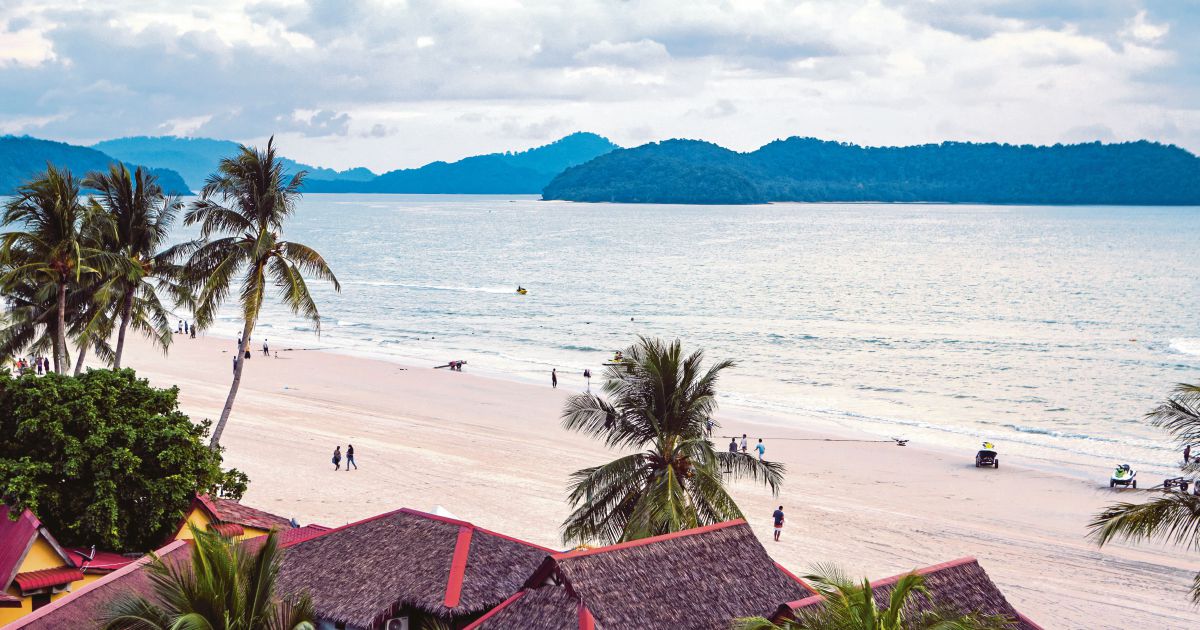
Former Prime Minister Tun Dr Mahathir Mohamad has delivered a sobering assessment of Langkawi's economic trajectory, arguing that the popular Malaysian island destination has captured merely half the commercial opportunity available to it since being granted duty-free designation almost four decades ago. Speaking from his vantage point as the initiator of Langkawi's development strategy, Dr Mahathir's observation signals broader concerns about whether the archipelago's privileged tax status is translating into sustainable competitive advantages in an increasingly crowded Southeast Asian tourism market.
The duty-free framework granted to Langkawi was conceived as a transformative economic instrument, designed to position the island as a shopping and leisure destination comparable to established regional hubs. The rationale behind this policy leaned heavily on tax incentives to attract foreign investment in hospitality, retail, and related sectors, coupled with the natural appeal of Langkawi's beaches, marine biodiversity, and cultural attractions. Yet the gap between policy intent and measurable outcomes suggests systemic constraints that have prevented the island from maximising its designated advantages.
Dr Mahathir's assessment warrants particular scrutiny given his instrumental role in crafting Langkawi's initial development vision. His comparison of actual performance against potential implicitly highlights the distance between the island's considerable assets and its current economic contribution. This gap raises uncomfortable questions about governance, infrastructure investment, regulatory efficiency, and the effectiveness of incentive structures designed to lure both tourists and business operators.
The competitive landscape surrounding Langkawi has intensified substantially since the 1980s. Thailand's Phuket, Indonesia's Bali, and the Philippines' Boracay and Palawan have aggressively developed their tourism infrastructure and marketing capabilities, often leveraging comparable natural attractions and cultural experiences. Meanwhile, newer entrants such as Vietnam's coastal provinces and Cambodia's Siem Reap have captured significant market share by offering distinctive experiences and increasingly sophisticated hospitality options. Langkawi's relative underperformance suggests it has struggled to maintain differentiation in this crowded marketplace.
Several structural impediments appear to constrain Langkawi's growth trajectory. Access to the island remains geographically constrained, with air connectivity dependent on limited flight routes and schedules. Road and sea infrastructure, while functional, may not meet the expectations of premium tourists increasingly accustomed to seamless connections and modern amenities. The retail sector, historically anchored to duty-free shopping advantages, has faced headwinds from e-commerce disruption and changing consumer preferences toward experiential tourism over product accumulation.
Malaysia's tourism ecosystem has also undergone significant reorganisation, with competing domestic destinations developing their own appeal. Penang's Georgetown has positioned itself as a cultural and culinary destination, while newer beach developments on the east coast have attracted leisure seekers. This internal competition, combined with Langkawi's geographical isolation within Malaysia, complicates efforts to create cross-destination tourism networks that could enhance visitor value propositions.
The investment climate for major hospitality and infrastructure projects in Langkawi appears insufficiently robust to attract the calibre of international operators and capital deployment that competing regional destinations have secured. Regulatory frameworks governing land acquisition, business licensing, and labour practices require periodic assessment to ensure they remain competitive relative to alternatives elsewhere in Southeast Asia. Infrastructure gaps in areas such as wastewater management, renewable energy provision, and transport connectivity potentially deter environmentally conscious operators and visitors.
Infrastructure development costs escalate significantly on island destinations due to geographical constraints, yet such investments are prerequisite for tourism competitiveness. Langkawi's development trajectory suggests underinvestment in foundational infrastructure relative to visitor growth, creating bottlenecks that undermine the visitor experience and limit capacity expansion. High-speed internet connectivity, essential for digital-era tourism and business operations, has historically lagged behind standards available in competing destinations.
Dr Mahathir's cautionary assessment carries implications beyond Langkawi itself. It suggests that policy instruments such as duty-free status, while potentially valuable, do not automatically generate sustained economic advantages without complementary investments in human capital development, technological infrastructure, governance quality, and strategic marketing. The island's experience offers a instructive case study for other Malaysian tourism destinations contemplating their own development pathways.
Revigorating Langkawi's trajectory would require a comprehensive strategy addressing multiple dimensions simultaneously: upgrading air and maritime connectivity, modernising hospitality infrastructure, developing experiential tourism offerings that transcend shopping-focused narratives, strengthening environmental governance to protect natural assets, and fostering professional service sectors capable of supporting high-value tourism operations. Such transformation demands sustained political commitment and substantial capital investment spanning both public and private sectors.
The Malaysian tourism sector's post-pandemic recovery creates opportune timing for strategic interventions on Langkawi. International travel demand has rebounded strongly, yet destinations that failed to modernise their competitive positioning during the downturn risk losing market share to rivals who leveraged recovery periods for infrastructure enhancement and brand repositioning. Addressing the gap between Langkawi's potential and current performance requires acknowledgment that historical advantages, without renewal and reinvestment, prove insufficient in dynamic markets.

