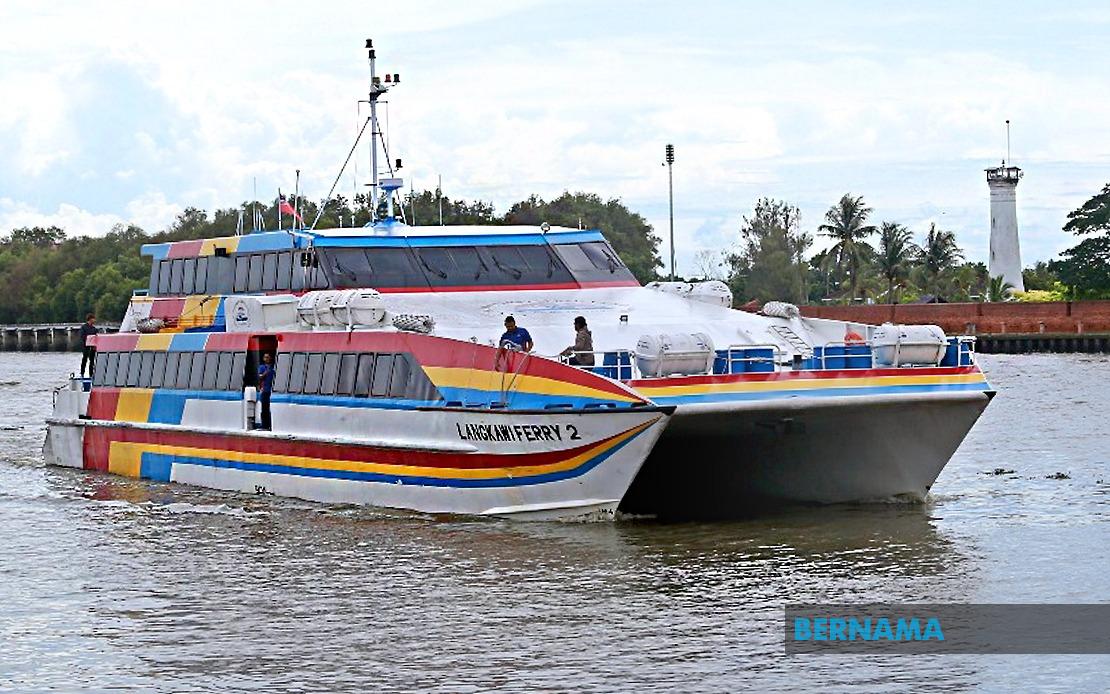
The maritime transport sector serving Langkawi faces mounting operational challenges as sediment buildup continues to restrict navigation channels along two critical shipping corridors, prompting industry representatives to seek urgent government intervention. Ferry Line Ventures Sdn Bhd has raised alarm over deteriorating conditions in the waterways connecting the island to the mainland, warning that without comprehensive remedial action, the consequences could extend beyond individual operators to impact Malaysia's broader tourism ambitions.
Operations manager Lieutenant Commander (Retired) Norhafiz Abdul Wahid articulated the gravity of the situation during recent discussions in Alor Setar, emphasising that increasingly diminished water depths create compounding hazards for the passenger vessels that form the primary transport backbone linking Langkawi to Peninsular Malaysia. The shallowing of these lanes simultaneously elevates navigation risks and constrains operational capacity, introducing volatility into service schedules precisely when demand reaches its highest levels. During favourable conditions, the ferry network demonstrates remarkable throughput capability, with documented records showing the potential to accommodate approximately 25,000 tourists daily during peak visitor periods—figures that underline the sector's significance to the island's economy and reputation as a travel destination.
The timing of this dredging imperative carries particular weight given the calendar of major events approaching within the next year. The Langkawi International Maritime and Aerospace Exhibition, anticipated to draw international attention and visitor numbers, could face logistical impediments if the waterway constraints persist. A scenario in which ferry services experience delays or capacity restrictions during such a high-profile gathering would generate negative publicity and potentially diminish the promotional value of hosting the exhibition. The convergence of routine tourism demand, school holidays, national commemorative periods, and international events creates a compressed window during which any service disruptions would prove especially costly.
Normal operational variance already strains the system during peak seasons, and the added friction introduced by navigation hazards compounds scheduling difficulties. Ferry operators must balance passenger expectations against safety protocols, and marginal water depths force difficult choices between maintaining schedules and ensuring vessel security. The psychological dimension of operational reliability matters significantly in the competitive travel market; passengers who experience delays or cancellations develop alternative travel preferences, with consequences that ripple through related economic sectors including hospitality, retail, and attractions.
Addressing these infrastructure challenges requires sustained commitment beyond one-time intervention. Norhafiz advocated for comprehensive and periodic dredging regimens rather than reactive emergency measures, acknowledging that the environmental and usage patterns necessitating sediment removal constitute ongoing phenomena rather than singular events. This perspective aligns with international maritime standards and reflects professional understanding that port maintenance demands cyclical attention. Establishing predictable maintenance schedules would provide ferry operators with confidence in planning expansion and investment, while assuring tourism stakeholders of reliable access to the island.
The immediate operational context underscores the urgency of these appeals. During the school holiday season stretching from late August through early September, combined with Malaysia's National Day celebrations, Ferry Line Ventures scheduled 242 total departures across the dual Langkawi-Kuala Perlis and Langkawi-Kuala Kedah routes to accommodate anticipated passenger volumes. Preliminary ticket sales data indicated strong demand, with nearly 87,000 advance bookings recorded through digital platforms and physical counters. These figures suggest that the ferry network is approaching or exceeding sustained capacity levels, leaving minimal margin for operational disruptions caused by navigation constraints.
The appeal to passengers to secure tickets through advance online channels via dedicated applications represents a pragmatic management response, yet simultaneously reveals underlying capacity anxieties. When operators must encourage advance purchasing to prevent sellouts during predictably busy periods, it signals that existing infrastructure operates near saturation. Adding navigation difficulties to this already-tight operational equation transforms routine peak-season management into a crisis scenario requiring proactive prevention rather than reactive remediation.
From a national economic perspective, Langkawi's tourism sector constitutes a significant revenue stream and employment generator, particularly for northern Peninsular Malaysia. The island receives hundreds of thousands of international and domestic visitors annually, and the ferry services represent the primary access point for most arrivals. Any systematic degradation of transport reliability threatens competitive positioning relative to alternative regional destinations, potentially redirecting visitor flows to competing jurisdictions in Southeast Asia. Thai island destinations and Indonesian facilities actively compete for the same regional tourist market, and Malaysian operators cannot assume that dissatisfied visitors will return after experiencing service disruptions.
The political dimension of this infrastructure issue extends beyond immediate operational concerns. Responsive government action on such matters demonstrates administrative responsiveness to industry concerns and reinforces investor confidence in Malaysia's commitment to maintaining supporting infrastructure for established economic pillars. Conversely, sustained neglect of critical maritime corridors sends counterproductive signals about governance priorities, potentially influencing investment decisions by both domestic and foreign stakeholders evaluating operational risks in Malaysian destinations.
The ferry operators' advocacy reflects not merely sectoral self-interest but rather a reasonable assessment of interdependent economic realities. Tourism revenue generation depends upon seamless visitor access; visitor experience quality correlates directly with transport reliability; and regional competitiveness hinges upon reliable infrastructure that exceeds, rather than merely meets, operational demands. The federal government's response to these appeals will signal broader policy priorities regarding infrastructure maintenance, tourism sector support, and the balance between preventive investment and reactive expenditure.
Looking forward, addressing the Kuala Kedah and Kuala Perlis waterway challenges requires coordination among multiple government agencies responsible for maritime infrastructure, ports, environmental management, and tourism promotion. The technical scope of dredging operations remains straightforward, yet procurement, scheduling, and environmental compliance requirements introduce complexity typical of infrastructure projects. Ferry operators evidently believe that political will rather than technical capability represents the constraining factor, hence their appeals emphasising urgency and potential consequences of continued postponement.

