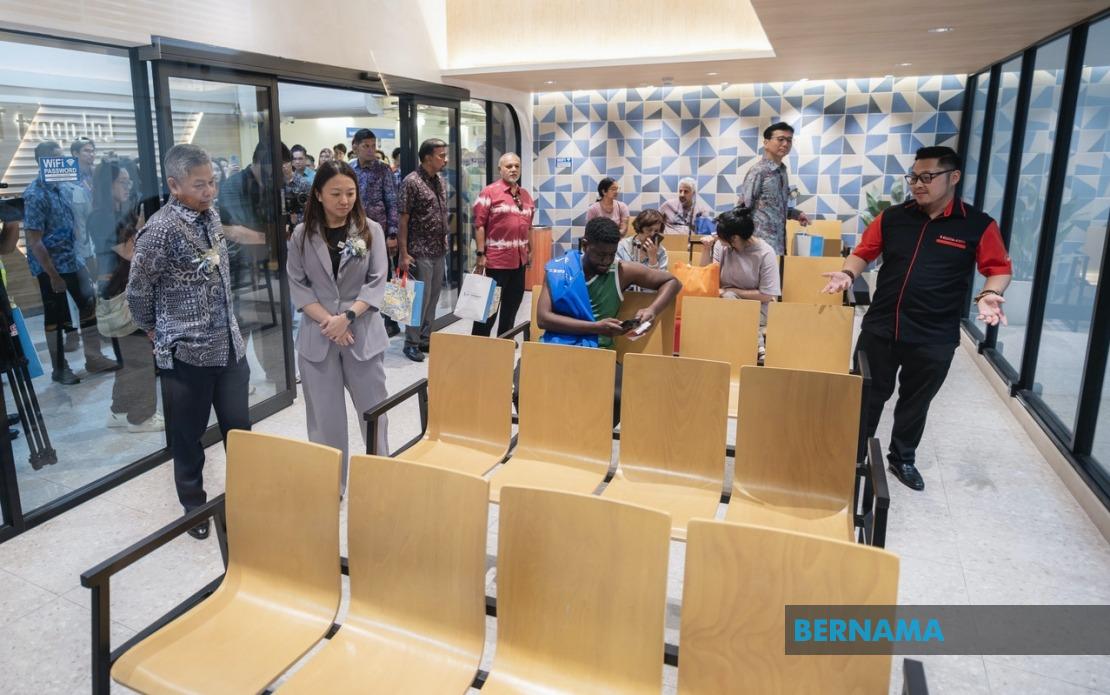
Kuala Lumpur has taken another significant step toward modernising its urban transport network with the official launch of the LaLaport Transportation Hub (LTH), a comprehensive integrated terminal facility designed to streamline passenger movement across the city centre. Located beside the Hang Tuah LRT and Monorail interchange, the new hub is positioned to manage up to 10,000 daily travellers while facilitating seamless connections between multiple transport modes including rail services, express buses, e-hailing platforms, traditional taxis, and shared mobility solutions. The facility represents a strategic investment in addressing the city's escalating transport demands and improving the overall commuter experience for residents and visitors alike.
Minister in the Prime Minister's Department (Federal Territories) Hannah Yeoh unveiled the hub during a formal ceremony, emphasising its significance within the broader context of Kuala Lumpur's rapid urban growth. She highlighted that the city currently witnesses approximately 1.2 million people crossing its boundaries daily, with transportation networks collectively recording around 5.5 million individual journeys throughout the metropolis. These substantial figures underscore why policymakers have prioritised infrastructure investments that enhance mobility options and reduce congestion on existing routes. The LaLaport Transportation Hub arrives as a carefully calibrated response to this mounting pressure on the city's transport ecosystem.
The physical design of the terminal reflects contemporary thinking about passenger comfort and accessibility. Situated on the LG1 level of the East Atrium, the facility operates as a fully enclosed, climate-controlled environment featuring eleven dedicated bus parking bays, an air-conditioned waiting zone, staffed customer service counters, self-service information kiosks, and a real-time Passenger Information Display System that furnishes up-to-date bus schedules. This comprehensive amenities package distinguishes the LaLaport hub from conventional transport terminals, offering travellers a more dignified and informative boarding experience while protecting them from Kuala Lumpur's often-intense tropical weather conditions.
A particularly noteworthy feature of the hub involves its role as a crucial link between Kuala Lumpur and Singapore. Approximately thirty bus operators are anticipated to utilise the terminal as their primary city-centre transit point, with a substantial portion specialising in cross-border services connecting Malaysia's capital with the neighbouring city-state. The hub facilitates roughly 150 bus trips daily and operates a round-the-clock express service between the two major regional centres, positioning itself as an essential gateway for business travellers, tourists, and regular commuters navigating the busy Kuala Lumpur-Singapore corridor. This cross-border function amplifies the facility's strategic importance within the broader Southeast Asian transport landscape.
Beyond intercity buses, the terminal incorporates multiple ancillary services designed to address various traveller needs. The Boleh-Boleh Ride on-demand van shuttle service provides flexible connections to strategically important destinations throughout the city centre, while dedicated shuttle arrangements serve both Kuala Lumpur International Airport terminals, offering passengers an integrated journey experience from their departing bus straight through to airport check-in. Such interconnected services reflect modern transport planning principles that prioritise convenience and reduce unnecessary transfers for time-conscious travellers, particularly those managing tight flight schedules or business appointments.
The regulatory framework supporting the hub's operations has also evolved to provide greater certainty for transport service providers. The Dewan Bandaraya Kuala Lumpur (DBKL) has transitioned from annual operating licence renewals to a three-year licensing system, creating more stable conditions for hub operators and encouraging longer-term investment in service quality improvements. This policy adjustment signals municipal recognition that sustainable transport infrastructure requires dependable regulatory environments, allowing operators like Asia Success Resource Sdn Bhd—the hub's managing entity—to plan investments with greater confidence and implement continuous service enhancements.
Aaron Chuah, the chief executive officer of Asia Success Resource Sdn Bhd, articulated the operational vision for the facility, detailing how the hub's architecture supports diverse service providers and passenger flows. The terminal's capacity to accommodate thirty different bus operators demonstrates recognition of Malaysia's relatively fragmented long-distance bus industry, where multiple private companies compete across various routes. Rather than imposing a monopolistic structure, the LaLaport design encourages competition and service diversity while providing operators with professionally managed infrastructure that enhances their collective market offering.
The security infrastructure underpinning the hub aligns with broader municipal safety initiatives. DBKL is simultaneously deploying approximately ten thousand operational CCTV cameras across Kuala Lumpur's public spaces, with the LaLaport Transportation Hub benefiting from integrated surveillance systems that enhance passenger safety and deter opportunistic crime. This multi-layered security approach addresses legitimate commuter concerns about personal safety during transit, particularly during off-peak hours when passenger volumes diminish. The visible investment in camera coverage sends reassuring signals to regular users and potentially attracts previously reluctant transit passengers who prioritise safety considerations.
International dimensions underscore the hub's wider significance. Japanese Ambassador to Malaysia Noriyuki Shikata attended the launch ceremony, reflecting bilateral cooperation in sustainable urban development. He contextualised the facility within the broader Malaysia-Japan relationship, noting that Prime Minister Datuk Seri Anwar Ibrahim's recent visit to Japan reaffirmed mutual commitments to closer partnership across energy security and other critical domains. The two nations will commemorate seventy-five years of diplomatic relations next year, and collaborative infrastructure projects like the LaLaport hub exemplify deepening practical engagement between neighbouring countries with complementary development priorities.
The hub's emergence also reflects Malaysia's growing emphasis on sustainable urban mobility and reducing transport-related carbon emissions. By consolidating multiple transit modes within a single, efficiently managed facility, the LaLaport Transportation Hub encourages mode-shifting away from private automobiles toward shared transport options. This transition aligns with international climate commitments and metropolitan environmental management objectives, as concentrated transit hubs typically generate lower per-passenger emissions than dispersed transport patterns requiring individual vehicle journeys across fragmented networks. The facility thus represents not merely a commercial venture but part of a wider societal shift toward environmental responsibility in urban planning.
Kuala Lumpur Mayor Datuk Seri Fadlun Mak Ujud and Land Public Transport Agency (APAD) deputy director of development Azrin Borhan were present alongside government ministers, demonstrating institutional coordination across multiple administrative levels. Such multi-agency attendance signals genuine governmental commitment to the project's success and reflects recognition that integrated transport infrastructure requires sustained support from municipal, federal, and specialist transport authority bodies operating in deliberate coordination. The convergence of these institutional actors at the launch ceremony suggests this facility will receive ongoing attention and resource allocation necessary for maintaining operational excellence.
Moving forward, the LaLaport Transportation Hub serves as a testbed for integrated transport management principles that could inform future development of similar facilities across Malaysian cities. The hub's performance metrics—particularly daily passenger throughput, operator satisfaction levels, and customer safety assessments—will generate valuable data for transport planners considering comparable projects in Johor Bahru, Georgetown, or other rapidly growing metropolitan centres. Early operational success could therefore influence regional transport infrastructure investment patterns across Southeast Asia, where multiple cities grapple with comparable urban mobility challenges requiring innovative institutional and physical solutions.

