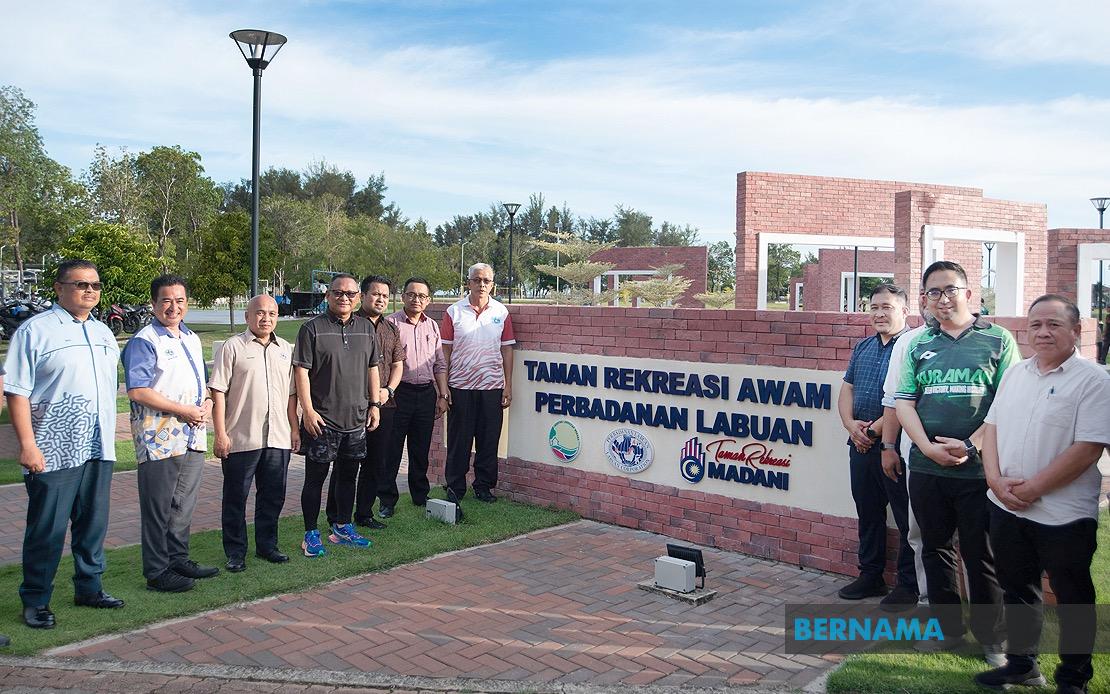
Labuan has taken a significant step toward enhancing public health infrastructure by officially opening the Labuan Public Recreation Park at Tanjung Purun, a centrally located development that marks a deliberate pivot toward creating accessible wellness spaces for the island's residents. The RM495,382 facility represents part of a broader effort to reimagine underutilised urban spaces, transforming what was once the LDA Field into a modern recreational hub designed to serve families, fitness enthusiasts and leisure seekers alike.
According to Rithuan Ismail, chief executive officer of Labuan Corporation, the park embodies a strategic commitment to fostering healthier lifestyles while simultaneously strengthening the social fabric of the community. The initiative reflects growing recognition across Malaysian local authorities that well-maintained public recreation facilities serve as catalysts for increased physical activity, mental wellbeing and neighbourhood cohesion—outcomes that extend far beyond the immediate beneficiaries to influence broader public health metrics.
The project was funded through the National Landscape Department under the Ministry of Housing and Local Government in 2024, demonstrating coordinated effort between federal agencies and local governance structures to improve living standards. The selection of the Tanjung Purun site was deliberate, capitalising on its downtown accessibility, adequate land area, and absence of complicated land tenure issues that often complicate public infrastructure projects. These practical considerations proved essential in accelerating development and ensuring the park could be delivered efficiently.
The original site faced significant challenges that rendered it unsuitable for public use. Poor illumination created safety concerns, while aging casuarina trees posed hazards to park visitors, and the sparse recreational amenities failed to attract regular users despite the location's strategic prominence. These deficiencies exemplify how neglect of public spaces contributes to their gradual deterioration and declining community engagement—a pattern familiar to many Malaysian towns struggling with ageing infrastructure.
The upgraded facility now showcases several key amenities designed to cater to diverse user preferences. An 800-metre jogging track accommodates runners and walkers, while concrete seating areas provide rest points and social gathering spaces. Outdoor fitness equipment extends the park's appeal to those pursuing structured exercise routines without memberships or fees, democratising access to recreational resources. A welcoming garden component adds aesthetic value and environmental benefit, improving air quality and visual amenities for surrounding neighbourhoods.
Future enhancements will further broaden the park's appeal and utility. Labuan Corporation has committed to completing three open courts designated for pickleball and sepak takraw by year's end, sports that hold particular cultural resonance in Malaysia and Southeast Asia. These additions respond to demonstrated community interest in organised recreational activities and reflect the corporation's phased approach to park development, allowing prioritised improvements while remaining responsive to user feedback and maintenance capacity.
The evening hours represent a particularly important use period for the facility, as cooling temperatures and reduced daylight heat make outdoor recreation more comfortable. Tropical climates like Labuan's necessitate careful attention to lighting, shade provision and hydration infrastructure—design considerations that require both capital investment and operational planning. The park's emphasis on evening activity patterns acknowledges how local environmental conditions shape community behaviour and recreation preferences.
For Malaysian readers, particularly those in smaller urban centres and federal territories, the Labuan project offers a tangible example of how modest capital investment, strategic site selection and phased development can revitalise deteriorating public spaces. The RM495,382 expenditure, while significant, remains within reach for many local authorities and demonstrates proportionate resource allocation toward community amenities. The project's success in converting an abandoned field into a functioning recreation hub suggests replicable models that other towns might adapt to their own contexts.
Beyond immediate recreation benefits, such facilities generate secondary positive effects. Regular park usage establishes natural surveillance that deters antisocial behaviour, creates informal community meeting points that strengthen social networks, and provides cost-free health interventions that reduce burden on medical systems. For a federal territory like Labuan with a concentrated population, these multiplier effects assume heightened importance in supporting quality-of-life outcomes.
Rithuan Ismail's emphasis on public stewardship reflects an implicit reality: infrastructure sustainability depends fundamentally on user responsibility. Parks across Southeast Asia have suffered premature deterioration due to inadequate maintenance, vandalism and neglect of shared facilities. By explicitly calling upon residents to preserve the park, Labuan Corporation seeks to cultivate ownership mentality that extends beyond government provision to community participation in resource management.
The Labuan initiative also signals alignment with Malaysia's Madani framework, which prioritises creating inclusive, prosperous communities through improved public amenities and services. Recreation parks advance this agenda by providing tangible improvements to daily life, particularly for income-constrained households that cannot afford private fitness facilities or club memberships. Equitable access to wellness infrastructure represents a fundamental social policy objective.
Looking ahead, the park's performance will serve as a benchmark for evaluating similar projects across Malaysian towns. User frequency, demographic diversity of visitors, maintenance requirements and community feedback will collectively determine whether the facility achieves its stated objectives of promoting active lifestyles and strengthening social cohesion. Labuan Corporation's commitment to ongoing enhancement suggests a learning orientation that positions the park as an evolving asset rather than a completed static project.
The opening of this recreation park illustrates how thoughtful urban planning, appropriate resource allocation and community engagement can transform neglected spaces into vibrant community assets. For Labuan residents, the facility provides tangible infrastructure supporting healthier, more connected living. For Malaysian policymakers observing similar challenges across different municipalities, the project demonstrates a replicable model for addressing the recreation and wellbeing gaps that characterise many towns seeking to improve residents' quality of life.

