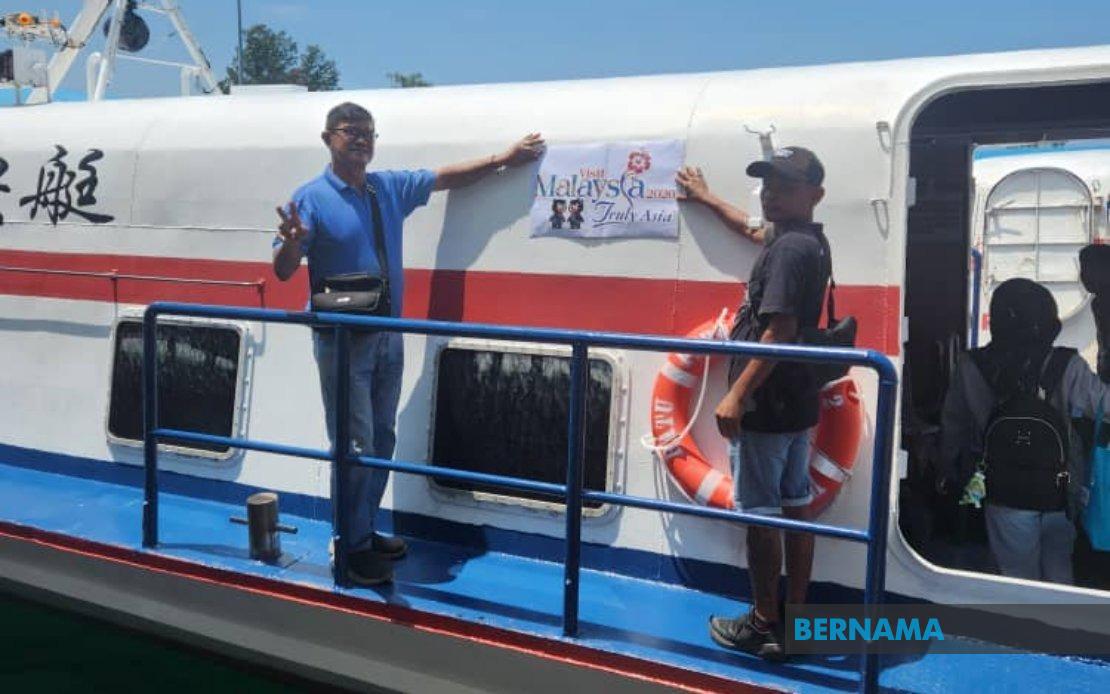
A critical maritime link serving thousands of students and patients across Labuan and Sarawak has ceased operations, marking an unprecedented halt to a service that has operated continuously for over 30 years. RPL Shipyard Co, the operator responsible for ferrying passengers between Labuan and Lawas, announced a three-month suspension beginning July 14, with resumption targeted for October 14 at the earliest. The decision has rippled across the region, disrupting travel patterns for a population that has come to depend on this affordable and reliable connection.
The suspension emerges from a complex confluence of operational pressures that have rendered the service financially unviable under current conditions. The operator cited three primary challenges: an unresolved diesel supply problem that has plagued boat operations, a relentless climb in expenditure across multiple cost categories, and passenger fares that have become insufficient to sustain daily operations. This combination has created a squeeze that management argues can no longer be absorbed without jeopardising the company's financial stability. According to RPL Shipyard's formal notification to LDA Holdings Sdn Bhd, which manages Labuan's ferry terminal, the temporary shutdown is necessary to allow the operator to stabilise finances and restructure its business model.
The ramifications extend beyond the ferry terminal into the daily lives of thousands relying on this service. Students from Lawas and neighbouring areas pursuing tertiary education at Universiti Malaysia Sabah and Labuan Matriculation College have historically used this route as their primary transport link to reach their institutions. Beyond the student demographic, residents from Lawas township and outlying settlements have depended on the ferry to access healthcare facilities, particularly Labuan Hospital, which serves as a major regional medical centre. This dual functionality—connecting an educational hub with a healthcare destination—underscores how integral the service has become to the social and economic fabric of both communities.
Noor Halim Zaini, chief executive officer of LDA Holdings Sdn Bhd, acknowledged receiving formal notification of the suspension and indicated an intention to engage directly with the operator to understand the full scope of challenges and identify potential solutions. His statement suggested that terminal management would pursue discussions aimed at facilitating an earlier return to service, though no concrete timeline or intervention measures were immediately articulated. The approach hints at recognition within the port authority that this is not merely an operational matter but one with broader implications for regional connectivity and public welfare.
The diesel supply issue represents a particularly acute vulnerability for maritime operators in this region. Sarawak's energy infrastructure, while substantial, sometimes struggles to deliver consistent fuel supply to peripheral maritime hubs, leaving operators exposed to rationing or price volatility. When combined with the structural challenge of rising maintenance and labour costs—persistent pressures across Southeast Asian shipping—the economic model supporting smaller inter-regional ferry services becomes progressively strained. RPL Shipyard's decision reflects not a sudden crisis but rather the culmination of mounting pressures that have eroded the viability of a service operating on what are likely thin margins.
The pricing structure for passenger fares represents another layer of complexity. The operator explicitly flagged that current tariffs can no longer sustain operations, yet raising fares would directly impact the affordability that has made this service indispensable for students and lower-income residents requiring hospital access. This creates a policy dilemma that extends beyond the immediate operator—it touches on questions of transport subsidisation, public service obligations, and the role of government in maintaining connectivity between regions. Labuan's unique status as a federal territory compounds these considerations, as decisions affecting its transportation infrastructure carry implications for federal-state relations with Sarawak.
Historically, such suspensions in Malaysia have occasionally become permanent when alternative transport modes or route abandonment occurs. The three-month timeframe should be interpreted as a genuine attempt at recovery rather than a guaranteed resumption deadline. If market conditions do not improve—if diesel supplies remain constrained, fuel costs continue escalating, or passenger demand fluctuates—the operator may face pressure to extend the suspension or seek alternative commercial arrangements. Potential solutions might include fare adjustments, government subsidy mechanisms, or operational restructuring, though none have yet been formally proposed.
The broader context of Malaysia's maritime transport ecosystem suggests this situation, while acute in Labuan, reflects systemic challenges affecting regional ferry operators nationwide. Smaller inter-island and inter-state services have faced increasing difficulty competing against ground transport infrastructure improvements and managing the fixed costs of vessel maintenance and crew compensation. The Labuan-Lawas route's suspension sends a signal that even services with three decades of operational history and established passenger bases face viability questions in the current economic environment.
For the immediate term, affected communities must identify alternative travel arrangements. Overland routes via Brunei exist but involve considerably longer journey times and potentially higher costs. Air services remain prohibitively expensive for regular student commutes. This gap in connectivity will likely persist unless the suspension is lifted, placing particular pressure on educational institutions in Labuan that depend on Sarawakian student enrolments and on Labuan Hospital's role serving the Lawas population. The suspension thus represents not merely a business decision by a private operator but a disruption with social and economic consequences extending across a multi-state region.

